Monday, August 03, 2009

Bug Jabbers in NewsWeek


The Manson Murders at 40

'Helter Skelter' author Vincent Bugliosi looks back.

Published Aug 1, 2009

From the magazine issue dated Aug 17, 2009

The leaves were turning on the summer of love. Vietnam was droning on. Racial unrest was rising. And then, it happened: a crime so heinous, it sent shock waves through the country that are still palpable today. The Manson "family" murders are more than grisly crimes. They marked the close of an era. As Joan Didion wrote in her memoir of the time, The White Album, the '60s "ended abruptly on August 9, 1969," the evening Sharon Tate and four others were brutally slaughtered in cold blood, a night before another round of senseless killing claimed two more lives. >Vincent Bugliosi, the chief prosecutor in the case, secured first-degree murder convictions against Manson and his codefendants; the jury returned verdicts of death, which were subsequently reduced to life imprisonment when California set aside the death penalty in 1972. Bugliosi went on to co-author a book about the case with Curt Gentry titled Helter Skelter (after the Beatles song name printed in blood at one of the murder scenes), which became, according to his publisher, the bestselling true-crime book of all time. Bugliosi spoke with NEWSWEEK's Tom Watson on the eve of the 40th anniversary of the Manson murders about what it was like to prosecute the case, and why Manson's chaotic charisma continues to attract global attention to this day.

Watson: Set the scene for us. What was the mood of the country, and of Los Angeles, on the eve of the Manson murders?
Bugliosi: I can't speak for the rest of the country, but I can tell you that in L.A., it was a time of relative innocence. I've heard many people say that prior to these murders, there were areas of the city where folks literally did not lock their doors at night. That ended with the Tate-LaBianca murders. The killings were so terribly brutal and savage: 169 stab wounds, seven gunshot wounds. They appeared to be random, with no discernible conventional motive. That induced a lot of fear throughout the city of Los Angeles, particularly in Bel Air and Beverly Hills, the heart of the movie colony, where the Tate murders happened (the LaBianca murders happened across town, near Griffith Park). Names were dropped from guest lists. Parties were canceled. No one knew if the killers were among them. Overnight, the sale of guns and guard dogs rose dramatically.

Why did the crimes penetrate so deeply in the American psyche? How did the culture change in the immediate aftermath?
I was just involved prosecuting one murder case after another, so I'm not someone who's a sociologist. But the killings tapped a feeling of dread … if you're not safe in your own home, where are you safe? And the very thought of young women dressed in black, armed with sharp knives, entering the homes of complete strangers in the middle of the night and mercilessly stabbing them to death … it's difficult to even contemplate a thought like that.

The other thing that terrified the nation so much is when the identity of the killers became known. And who were they? Young kids from average American homes with fairly good backgrounds. There was a feeling that this could be our own children. Tex Watson, Manson's "chief lieutenant" at the murder scene, was from Farmersville, Texas, hometown of World War II hero Audie Murphy. Watson was a football, basketball, and track star. He had almost an A average in high school. And when the people in Farmersville learned he was being charged with these murders, the general consensus was this is absolutely impossible, it must be a case of mistaken identity. Patricia Krenwinkel—another one of the main killers—her father was an insurance executive; she sang in the church choir; got good grades in school; at one time she even wanted to attend a Jesuit college in Alabama. Leslie Van Houten—another killer—she was a homecoming princess at Monrovia High School here in L.A.

How did Manson seduce these kids?
Manson is this 5-foot-2 guru with a long and checkered criminal history. He gets out of Terminal Island federal penitentiary off Long Beach, Calif., in 1967, goes up to the Haight-Ashbury district of San Francisco. He's got his guitar, and his street rap, and he sings—a pretty good composer of music, by the way. Guns N' Roses and the Beach Boys have recorded Manson songs. So he mesmerizes these young kids and tells them things they can identify with—about the need for the preservation of wildlife, that there's pollution of the environment by big corporations, that the poor man's fighting the rich man's war in Vietnam …. Their lifestyle was sex orgies and LSD trips. He convinces them he's the second coming of Christ and the devil all wrapped up into one person, and ultimately, as you know, he gets them to kill for him. He tells them the purpose for these murders is to start a war between blacks and whites, which he called Helter Skelter, after the Beatles song.

Fast-forward to the trial. What was the atmosphere at the courthouse, and the most dramatic moments in prosecuting the case?
It was the longest murder trial we'd ever had in America up to that point: nine months. And it was the most expensive up to that point, at $1 million. Outside the courthouse, there was a group of Manson family members conducting a 24-hour-a-day vigil for him. The media was interviewing them every day. Manson came into court one day with an X carved into his forehead, and the next day they all had X's on their foreheads. One day during the trial, he got ahold of a sharp pencil, and from a standing position, he leaps over the counsel's table with this pencil and starts approaching the judge. The bailiffs immediately tackled him and, as they were dragging him out of the courtroom, he shouted to the judge: "In the name of Christian justice, someone should chop off your head." The judge started carrying a .38-caliber revolver under his robe in court after that.

Even President Nixon got into the act. He was in Denver at a law-enforcement convention. He gives his opinion that he thought Manson was guilty. Ronald Ziegler, his press secretary, tried afterward to correct that, saying that the president meant to say allegedly guilty. But it had gone out over the wires. The main headline in the Los Angeles Times: MANSON GUILTY, NIXON DECLARES. Manson got ahold of that paper—no one knows how—stands up in front of the jury with a little silly grin on his face, and shows the jury the headline. It was almost as if he was somehow proud the president had taken notice.

Then near the end of the trial, a defense attorney vanishes from the face of the earth. Ronald Hughes was the defense attorney for codefendant Leslie Van Houten. The judge said, "Well, we're going to have to be in recess." Every morning we were hoping that poor Hughes would walk through the courtroom door, but he never did. So the judge had to appoint a substitute lawyer to take his place. On the last day of the trial, Hughes's body was found out in the forest, but the Ventura County coroner's office was unable to determine the cause of death because of the decomposition … I can't say positively one way or the other, but my leaning is that Hughes was murdered by the Manson family.

Give us an example of how widespread the interest in the case has been over the years.
Let me tell you a story. Years ago, I spoke at a book convention in Richmond, Va. I arrived at the station at the same time as William Manchester and Arthur Schlesinger, both Pulitzer Prize winners. The whole cab ride, Manchester and Schlesinger are tossing me questions about Charles Manson. That's all they wanted to talk about: tell me about him. Tell me about his eyes. Did you ever talk to him? How did he get control over these people?

Have you talked with Manson since the trial?
No. He wrote me four letters. I didn't respond to any of them; I turned them over to the Department of Corrections... The latest one could have been 20 years ago. [Bugliosi declined to discuss the letters' contents.]

Leslie Van Houten comes up for parole soon. Have you ever gone to a hearing for one of the family members?
No. If it came down to a point where they were seriously considering releasing, let's say, Manson or Watson, I would intervene—not that I have any clout at all. But I would write to the governor. But it's not going to happen.

Place Manson in the pantheon of American criminal outlaws.
Most mass murderers have turned out to be of rather low intellect—drifters, loners. Basically, they committed the murders for one reason only: to satisfy their own homicidal tendencies. Manson not only is very bright—but as misdirected as his violence was, his murders were revolutionary, political, and therein lies his main appeal to those on the fringes. The other thing that has separated him is the fact that all these other mass murderers committed the murders by themselves. Manson, on the other hand, was pulling strings and getting people to go out and kill strangers at his command without asking any questions. And that makes him more frightening to people.

And people are frightened of his impact still.
Let me just read to you a letter I received from the BBC in 1994. This reporter wrote to me about many British and German rock bands playing Manson songs and songs in support of him. "For some reason the neo-Manson cult seems to center in Manchester, where there are five stores selling "Free Charles Manson" t-shirts, which are fantastically popular on rave dance floors, and bootleg records of his music …. The majority of the supporters of these bands are under 25. The truly frightening part is that many, when asked, turned out to be Manson buffs who have read all they can find about Manson, and strongly approve of 'Helter Skelter.' That was 15 years ago, but Manson is still big.

Find this article at http://www.newsweek.com/id/209940

Tuesday, July 28, 2009

Yana Repeats Her Tales


History to tell 'Manson' story

Family's lookout driver featured in Sept. 7 special

By James Hibberd

July 27, 2009, 11:00 PM ET

Charles Manson's lookout driver will tell her story to viewers for the first time in decades in a History special on the Manson Family murders.

For the 40th anniversary of the shocking Hollywood murder spree, the network has scheduled the two-hour "Manson" on Sept. 7. It features an extensive interview with Linda Kasabian, who stood guard while her fellow cult members murdered actress Sharon Tate and others.

The star witness for Manson's prosecution, the reclusive Kasabian hasn't been extensively interviewed since an "A Current Affair" special on the 20th anniversary of the murders in 1989.

The special recounts the nine months leading up to what Manson dubbed Helter Skelter, a two-night murder spree that he and his LSD-addled followers thought would incite a race war.

Susan Werbe, Nick Godwin and Simon Lloyd will executive produce the special.

Sunday, July 05, 2009

Yana Kites


So this is something none of us knew- Linda went so far as to fuck up dumb Sadie. Nice lady.

From LA MAG
-----

FLYING KITES

Manson Family member Susan Atkins, aka Sadie Mae Glutz, broke the case when she told fellow jail inmates at the Sybil Brand Institute the details of the Tate and LaBianca murders. Initially the prosecution intended to call Atkins as its star witness, but the deal fell apart. The explanation typically given for the collapse is twofold. First, Atkins provided an account of the crime to the Los Angeles Times, thereby polluting the jury pool. Second, she fell back under the sway of Manson. Both stories are true. However, there was also something else

GARY FLEISCHMAN, Linda Kasabian’s lawyer. Now 75, he practices in Northern California. Linda Kasabian had seen them committing mayhem at the Tate house. She had driven the killers to the LaBianca residence, but she hadn’t done anything. Still, she was technically guilty of first-degree murder. I said to her, “You’re broke. You’re pregnant, and you were there. You must become a prosecution witness.” The prosecution already had Sadie. I call her Sadie, but her name is Susan Atkins. She was an active participant in the murders and was going to testify against Manson. I told Linda, “Sadie is flaky, and they’re gonna sell her out before it’s done. They promised her no death penalty, but they will screw her over. She killed people. We have to help this process along.” I told Linda, “You start passing Sadie kites.” A “kite” is a letter that goes into the prison system. I said, “Hand her a kite and talk Charlie-talk to her.” Linda knew exactly what I meant. Charlie Manson always spoke in these sort of backward riddles. So I told Linda, hand Sadie some kites that say, “Your lawyer is the D.A., the D.A. is your lawyer, the D.A. is Charlie, Charlie is selling you out, and you’re being sold.” So Linda starts passing these kites to dumb Susan Atkins. This goes on for a couple of months, and Susan clams up. She ain’t gonna say anything else to help the prosecution. They have to find somebody else to testify.

One day Aaron Stovitz, the head of the trial division, called me. He said, “I want to talk to you.” I said, “I’m going to get my hair cut at the barbershop at the Beverly Wilshire hotel. Come on over.” So he drives out, and he makes me an offer. A very strange confluence of events had occurred. They needed Linda Kasabian, and she needed them. They gave her total immunity. They couldn’t make their case without this girl.

Linda Kasabian wasn’t scared of Charles Manson at all. She wasn’t built that way. She was a flower child. The Family started bugging me to get her not to testify, pestering me. Lynette Fromme, you know, Squeaky, was sent by Manson to see me. She would come and sit in my office. One day I threw her out physically. She only weighed about 90 pounds. She looked like a rat. Another woman, Catherine Share, who was even weirder, would also show up. She played the violin. I just saw her on television—she looks like a matron today, very pretty lady. Squeaky and Share kept showing up. So finally one night we went to the jail to see Linda, and they confronted her. They said, “You should be one with us.” And Linda answered, “I am one with myself, and that’s all.” That was the end of that.

Thursday, July 02, 2009

Freaky Crime


You should go read this article from October 1969 Los Angeles Magazine here. I copy it to the blog for the inevitable day when the link goes dead and we need it for research.

---------

The New Violence: An Age of 'Freaky' Crime?

Los Angeles magazine published this fearful story in October 1969, just two months after the Tate and LaBianca murders shocked L.A. Writer Myron Roberts' search for the connection between drugs, madness, and “freaky crime”—not to mention a handy “reasonable person’s guide” to self protection—reveals a city desperate for understanding and a return to order

Los Angeles magazine, October 1969

Some murders, like some men, are singled out for fame because they are peculiarly symbolic of their times.

In the ‘20’s it was the Leopold-Loeb case, with its trappings of flaming youth and the New Rich produced by a runaway stock market.

In the ‘40’s it was the Black Dahlia. The label, affixed to a then anonymous young woman found mutilated in Los Angeles, somehow suggested all those millions of young girls who had left home and family to seek wartime jobs and adventure in the big city, just like in the Betty Grable movies, only with a different ending.

In the ‘50’s it was the Finch-Tregoff case in West Covina, with its cast and setting of the wealthy dentist, an aging, expensive and unwanted wife, the country club, the suburban ranch home with a new station wagon parked in the driveway, and weekends in Las Vegas with a pretty young nurse.

And now we have the Sharon Tate case, surrounded by a dazzling array of exquisite symbols of our time: drugs, strange sex games, a bizarre new culture, “rich hippies,” ritual murder and a poor dumb kid from El Monte who wandered into the midst of this freaky scene to die.

Why, among the thousands of “cheap murders” which occur every year in this country (the current rate is one every 43 minutes) were these crimes pounced upon by the press and the public? Clearly the “celebrated” murder tells us something about where the public’s head and heart are at a given moment.

Homicides very much like the Black Dahlia case occur with depressing regularity these days, for example, and hardly anyone but the police and those close to the victim bothers to regard the event.

Clearly, too, the Sharon Tate case would have been a spectacular event in any era. But it seems to belong to this time and this place. Somehow people identified with it, in the way people seem to identify these days with strange movies like Rosemary’s Baby. Within days there was another, similar murder in Los Angeles which police believe to have been the work of a “copycat killer.” A kind of fear ran through the city that was almost palpable. One overheard women standing in line at the supermarkets comparing, not hair styles or washing powers, but doorlocks. Tract salesmen in places as far away as Palmdale reported they were getting inquiries and actual sales from people who said they’d had it with living in the city, where they were afraid not only to walk the streets at night, but to stay at home as well. On a nationally televised talk show, originating in New York, Peter Fonda, himself a sometime symbol of the “freak” culture, casually remarked that he was going home to his family in Los Angeles—if they were “still alive” by the time he got there.

In the days following the Tate case residents of Beverly Hills and Bel-Air rushed to hire guards and install expensive alarm systems. Most of the city’s plusher pet shops were cleaned out of guard dogs. A Studio City kennel had to airlift German Shepherds in from Iowa to meet the demand. Even so they sold every dog they could supply at prices ranging up to $1250 for a full grown, attack-trained German Shepherd.

What seems to be most frightening to people in Los Angeles and elsewhere is the unpredictability of so much contemporary crime. Note some of the crimes which have happened in Southern California recently:

A woman was trying to cross a street when a car swerved out of its lane, deliberately struck her and knocked her down. The driver stopped, saw her trying to crawl back to the sidewalk, listened to her moaning with pain, then backed up and ran over her again, killing her. He then got out of the car, grabbed her purse and fled.

A couple stopped to give a ride to two young men. The men raped and beat the woman to death, knocked the man out and robbed him.

A man was stalled on the freeway. Somebody stopped to help him. After trying for several minutes to get the car started, the benefactor turned in disgust upon the stranded motorist, slugged him, robbed him and drove off.

Pasadena police report finding jagged bits of broken bottles carefully but lightly covered by sand at the bottom of children’s slides in parks throughout the city.

A semi-official document prepared by the LAPD estimates there are 700,000 paranoids in the U.S., according to the best psychiatric estimates. That means at least 70,000 in California, mostly in large cities.

No one knows how many of these are potential or actual killers. As for the number of potentially homicidal drug addicts or users, the figure is probably astronomical.

Is the sense of public terror real or hoked-up to sell newspapers and magazines and elect politicians who prey on fantasy and fear? Bald figures alone do not tell the story, although the story they do tell is grim enough. In brief, one American in every 22 committed a major crime last year. (In Los Angeles 250,000 serious crimes were committed last year. This means that if you have lived here for five years or more and have not been a victim, statistically, you’re a lucky man.) On the other hand your chances of being killed in a traffic accident are 15 times greater than the probability that you will be murdered. And there is no great hew and cry about auto safety which even remotely compares to the uproar about Law and Order.

Former LAPD Police Chief Thad Brown, for 18 years Chief of Detectives, puts it this way: When he was working homicide during the early ‘forties, there were about 70 murders a year. (Now there are over 400.) In those days he was proud of the fact that 90% of the murders he investigated were solved within a year. The procedure was fairly simple: check out a victim’s family, friends and associates. Find someone with a motive for killing him and in most cases you had the killer. Today police are reluctant to divulge the proportion of solved to unsolved murders. But they admit it’s nothing like 90%. The problem is that so many of today’s murders seem “senseless.” “Homicide used to be a fairly easy crime to solve,” says LAPD Sgt. Don Ferguson. “But today you have so many cases like those Michigan college girl murders— we’ve had many similar cases here in California—where it’s almost impossible to tie the victim and a logical suspect together.”

In Thad Brown’s day, logic, reason, and careful detective work almost always brought results. He likes to tell, for example, about the case of a young woman homicide victim. The only clue was a pack of matches found in the room. He noticed that the matches on the left side of the pack had been used. Deduction: find a left-handed male acquaintance of the victim and he had his killer—and it worked. Or about how he carefully forged a chain of evidence that sent L. Ewing Scott to prison for the murder of his wife despite the absence of a corpus delicti. (He has a theory about where the late Mrs. Scott’s remains are stashed away which may be of interest to San Diego Freeway commuters.)

One difficulty with crime today is that we are beginning to know how little we know. The Victorians could pontificate with great certitude, for example, about “the criminal mind.” But Beverly Hills Police Chief Joseph Paul Kimble, for one, believes “most criminal acts today are committed by so-called normal people who react abnormally to a stress situation.” To disabuse ourselves at the outset of some of the most enduring and least credible clichés held by partisans of the left and right about crime, consider these facts:

1. For many years, liberals and intellectuals have believed and preached that crime was the fruit of ignorance, poverty and social injustice.

Fact: Crime in America seems to rise and fall during given periods for reasons no one really understands. The prosperous ‘20’s, for example, were a period of soaring crime rates, as are the affluent ‘60’s. The depression decade of the ‘thirties was generally a time of falling crime rates. Thus crime seems to rise and fall in inverse ratio to the general prosperity. Finally, in prosperous Sweden where there are almost no extremes of poverty or teeming slums, crime is rising even faster than here in America.

2. Sociologists, psychologists, etc., often argue that crime is the result of a “climate of violence.”

Fact: The violent World War II era saw the lowest crime rate of this century in America.

3. Policemen and other exponents of the hard line in America insist that the real source of much of today’s crime lies in the increasing “permissiveness” shown to the young in this “Spock-marked generation.”

Fact: The most crime-ridden part of the U.S. is the South, instates like George Wallace’s Alabama, where neither Dr. Spock nor the permissive-liberal philosophy is in great vogue. The last time we had a great “crime wave” was in the ‘twenties, a heyday of conservatism, hanging judges and the KKK.

4. The ordinary citizen tends to believe that criminals are a class apart who prey on basically honest and decent folk “like ourselves.”


Fact: Police have surveys which demonstrate that, under the right conditions, 90% of the American people admit to having committed some offense for which they might have been jailed if caught. In an official publication, the LAPD agrees with Rapp Brown that indeed “violence is as American as cherry pie.” And Chief Kimble observes, “crime is an American Way of Life. From the blue collar worker to the white collar executive, it penetrates every strata of our society.” To which Thad Brown (now doing private detective work for business firms) adds, “Hell, I thought I knew something about crime during 42 years on the force. But most of that was penny ante compared to the capers these business men pull on each other every day.”

5. “Crime does not pay.” “Tell that,” says Chief Kimble, “to the slum kid who sees the rich pimps and dope pushers driving around town in caddies and wearing silk shirts.”

6. “Education is the best means of preventing crime.”

Fact: Most educators agree that this is the best educated generation of young people in our history. It is also the most prone to crime. One in every six teenage boys was brought before juvenile authorities last year alone. Those peace-loving, gentle, idealistic Under Thirties are responsible for fully 70% of the crime in the country, including an unprecedented number of rapes, armed robberies and mass slaughters. Both Kennedys were cut down by members of the Now Generation. It was a young man who killed fifteen people and wounded twenty-five one afternoon in Texas. It is a young man who is charged with the murder of the Michigan coeds. This is not meant to indict an entire generation. But even the most violent partisan of the young can hardly deny that this is perhaps the bloodiest and most lawless generation of young people to come along since Hitler’s Storm Troopers turned Europe into a graveyard. Incidentally, the Germans, too, were well educated.

It is practically impossible to travel anywhere in the urban U.S. now without encountering forms of behavior which would have been considered unthinkable even five or six years ago. Girls as young as 14 and 15 hitchhiking alone at night as if they’d never heard of rape. Attractive kids of apparently comfortable backgrounds begging on the streets. Others, sitting hollow-eyed on sidewalks or curbs looking like zombies.

Is there a connection between all this unconventional behavior and soaring crime rates? The police, among others, think so. The common denominator, they believe, is drugs. Perhaps they are drawing an oversimplified picture of the situation, but recent research on the subject doesn’t exactly prove them wrong.

All of the kids’ rationalizations notwithstanding, the fact is, as Dr. Edward R. Bloomquist documents in his carefully researched recent study entitled Marijuana (Glencoe Press), that pot “releases inhibitions and impairs judgment with such predictability that a user with criminal tendencies will readily commit crimes.”

As everything we know about history, psychology and human nature confirms, with certain rare and saintly exceptions, men, particularly young men, are seldom very far from violence. To maintain civilization at all, we usually need all the judgment we can get.

“I tend to be evangelistic about the drug scene” admits Lt. E. E. Kearney of the LAPD. “There simply is no question that there has been a tremendous fallout of violence as the result of widespread use of drugs.”

Moreover Kearney believes that the violence associated with drug use is likely to grow a great deal worse in the immediate future because of two factors: Relatively mild Mexican pot is being replaced by hashish, a form of marijuana made in the Middle East which is approximately twenty times stronger than the now familiar Mexican variety. Secondly, the increasing use of amphetamines, “speed,” by kids promises some charming new developments on the social landscape. In the words of Dr. Donald B. Louria of Cornell University (interviewed by Gail Sheehy in New York magazine), speed is a drug “taken solely for kicks by a subculture increasingly populated by thrill-seekers, psychopaths, angry sociopaths and young persons incapable of functioning in society.” After a few months of use, observes reporter Sheehy, it leads to “depression, weight loss, sexual deviations and finally paranoid psychosis. Speed simply makes people behave as if they were crazy.”


There is not much doubt that most young people in Southern California try some kind of drug at some point in the process of growing up today. Just as not every young man who gets loaded during his adolescence winds up a drunk, so not every youngster who tries pot winds up a heroin addict, a speed freak or a card-carrying member of the “drug culture.” That drugs have transformed hundreds of thousands, perhaps millions of the young into unpredictable and occasionally criminal personalities is also inescapable, however, in the face of current crime statistics and the expert testimony of virtually everyone, including those entirely sympathetic to the youth revolt. And yet our society remains curiously ambivalent in the face of such a threat. A good many respectable intellectuals, people who wouldn’t dream of shooting speed themselves, seem to regard the right to take drugs as one of our Civil Liberties and have confused the drug scene an the crime scene with political dissent, opposition to the Vietnam War and improved race relations. The fact that young Negroes and Mexican-Americans were the first victims of the drug-pushers has led to a number of people to confuse sympathy for the cause of civil rights to tolerance of drugs—when in fact, as even the most militant black leaders themselves testify, dope is the enemy of the black man’s struggle for liberation.

Of late we have even seen public drug festivals, such as the much publicized Woodstock Festival, where hundreds of thousands of young people, most of them stoned out of their heads, sat listening for days to the drone of rock music. A number of commentators, including Life Magazine (which rushed into print a few days later with a special $1.25 supplement devoted entirely to the festival), have described this as a cultural event of monumental import, just behind Genesis and the landing on the moon. The fact that these rock fans did not engage in the widespread violence which we have come to expect as more or less normal at such gatherings was also widely hailed by commentators in the press. No one stopped to ask why the absence of violence at a large, public gathering of the young should be considered any more remarkable than the fact that the fans who go to a football game every Saturday afternoon in the fall do not, customarily, tear up the stadium or attack one another.

Life’s own house youth apologist, a young columnist named Barry Farrell, found himself somewhat confused by the mass acceptance of the rite. “The press and even the police seem content to write it off as a victory for peace and love,” puzzles Farrell, who had undoubtedly expected to adopt that line himself. “In a way, it was. But I would have thought that the significance of a half-million young Americans spontaneously creating a society based on drugs would have caused some slight concern.”

He then proceeds to define his own “bad vibrations” to the event:

“As one who has believed that the justification for using drugs lay somewhere in the zone of psychic freedom, I was disturbed by the bovine passivity they induced in this mass of free minds. For almost everyone present, the freedom to get stoned together was more than freedom enough.

“The Rubicon we felt ourselves crossing was the line of restraint between the old drug culture of the underground and some new authorized form, dangerously adaptable to the interests of packagers, promoters, the controllers of crowds. It was a groovy show, all right, but I fear it will grow groovier in memory, when this market in our madness leads on to shows we’d rather not see.”

Farrell’s misgivings are quite understandable. Those with somewhat longer memories, in fact, tend to regard the Woodstock syndrome not so much as a new social phenomenon but as a contemporary variation of another youth festival—the Nuremberg Rallies—where Hitler, Goebbels & Co. were the featured group and the multitudes of fans were stoned on slogans instead of grass.

“Don’t put on a black jacket and dark glasses unless you are prepared to kill,” Stokely Charmichael is reported to have advised some of his young followers. It is sound advice. It demonstrates that Stokely understands symbols and their consequences. Charmichael is saying that those who wish to merely talk about “revolution” and dress up as revolutionaries without being prepared for violence, death and prison, are fools or charlatans. So the educated middle class youngster who plays at “freaking out” has, consciously or not, set off along a certain path, and unless he is prepared to go all the way, he is simply a fool. The victims in the Tate massacre would seem to demonstrate how quickly and unexpectedly game-playing can turn into something more serious.


The price of membership in the “drug culture” is firm and fixed: To paraphrase Thomas Hobbes’ description of the miserable conditions of factory workers in the 19th century, the life of the drug addict is “nasty, brutish and short.” This, of course, is hardly true of the occasional pot smoker, but even here some facts tell a much grimmer story than most young people believe. For example, the LAPD recently did a study of 229 juveniles arrested in 1961 for possession of marijuana. The department wanted to know what had happened to these people five years later—in 1966. They found:

38, or 16%, were subsequently arrested for possession of heroin.

76, or 38%, were arrested again for possession of marijuana.

46, or 20%, were arrested for robbery.

17 were arrested for rape.

Of the entire group, almost four in five were re-arrested and 16% served time in a state penitentiary.

The irrationality, the mindless capriciousness of the New Violence, has inspired a new kind of fear among people, which in turn breeds its own alarming consequences.

Because people suspect that criminals are often “dope fiends” who will behave unpredictably, they fear becoming involved in reporting a crime. Police find themselves embattled in an effort to protect themselves and a public which often behaves irrationally. Every policeman can tell stories of neighbors watching someone’s house being broken into, of armed robberies, assaults and even murders without anyone even going to the phone to call the police, let alone trying to help the victim. Vigilante groups and neighborhood “protective associations” often wind up shooting each other and their families. There are more guns in Los Angeles today than in Saigon. “Sportsmen’s” magazines suggest sub-machine guns, even anti-tank guns (just $99.50) as an “ideal Father’s Day gift.” Conservatives, such as Governor Reagan, militantly oppose all efforts to unilaterally disarm the public. “WHEN GUNS ARE OUTLAWED, ONLY OUTLAWS WILL HAVE GUNS” read the bumper stickers on the pickup trucks and campers.

But gun nuts are only another kind of freak, and the same grim epitaphs could just as easily apply to them: Live violently, die violently. Live freaky, die freaky. Somehow, when and if the Sharon Tate case is finally solved, we are likely to see it not simply as the made act of one or more abberant individuals, but as a symptom of the sickness of our time—just as the St. Valentine’s Day Massacre, for example was not so much the act of cold-blooded killers, as the inevitable fruit of the way it was in Chicago in the ‘twenties.

Whatever its short term benefits, the drug culture at its worst equals madness, crime, violence and early death. It seems a disproportionate price to pay for the pleasure of “freaking out.”


PROTECTING YOURSELF FROM THE 'FREAKY' CRIME: A REASONABLE PERSON'S GUIDE

What can be done to protect the young—and ourselves—from the “freaky,” drug-related crime?

Some steps are being taken, although they admittedly represent only a beginning. The Sheriff’s Department of Los Angeles County, for example, has launched an educational program at 41 junior highs, high schools and adult schools throughout Los Angeles. The program, called The Citizen and the Law, brings officers into the schools, and takes school children on field trips to police stations, courts, etc. in an effort to break down some of the barriers between the police and the public.

The Sheriff’s Department, meanwhile, is actively seeking innovative approaches to crime prevention in a radically changing society.

Police generally feel that drugs have become so much a part of the scene among the young today that it is unrealistic to hope for complete eradication. “The best we can hope for is control,” says Lt. R. E. Kearney of the LAPD’s Crime Prevention Section. (Psychologists, educators, etc. are generally even more pessimistic. “The best we can hope for,” they believe, “is a reduced rate of growth in the number of drug-associated crimes.”) Kearney believes that control has to begin by isolating known heavy drug-users within the school or college population, “the same way we would isolate someone carrying a dangerous disease.”

Crimes against property are far easier to guard against than crimes against people, particularly of the “freaky” variety. “If someone wants to kill you,” the LAPD lamentably concludes, “and is willing to take some risk, there probably isn’t much you can do to stop him.”

You can, however, avoid associating with freaks. (Most murders are still committed by someone known to the victim.) If attacked, particularly if you are a woman, scream, resist, fight like hell. When driving alone, keep your car windows closed. If stalled on a lonesome stretch of road, stay inside the locked car until the police arrive. Don’t open the door or windows to strangers. Keep your purse out of sight.

Young girls wearing light, flimsy clothing while traveling about the city alone at night are still the favorite targets of rapists—who frequently do not set out intending to commit rape; something about the attractiveness or vulnerability of the victim gives the rapist his clue. Countless rapes, of course, go unreported, especially among female hitchhikers. Most criminals are opportunists. The more opportunities you create for crime, the more likely you are to be victimized.

Armed robbers are usually violent men seeking a bloody confrontation with their victims as an excuse to prove their “manhood.” Burglars, on the other hand, are more often gentler types who simply want to steal your stuff and get out. Usually, if challenged, they run.

The locks on most tract houses are worthless. Ordinary dime store chain locks are useful chiefly to keep the kids inside the house. For minimal protection against burglary, police recommend a good dead bolt lock. Also, a noisy dog is helpful. Burglars ordinarily do not like fuss.

If you see someone acting strangely in your neighborhood, call the police and they will be glad to come out and investigate. They can usually tell within minutes whether the person is engaged in a legitimate activity or not. It’s too bad that “support your local police” became a political slogan for the crank. Right since, generally, it’s a damned good idea.
Wednesday, June 24, 2009

Los Angeles Magazine- 40 Years of Charles Manson (final)


Los Angeles Magazine- 40 Years of Charles Manson (seven)


Los Angeles Magazine- 40 Years of Charles Manson (six)


Lots of old names show up again to repeat themselves- including the Bug cause there is no show without Punch.

Los Angeles Magazine- 40 Years of Charles Manson (five)


Catherine Share is a criminal above and beyond Charles Manson.

Los Angeles Magazine- 40 Years of Charles Manson (four)


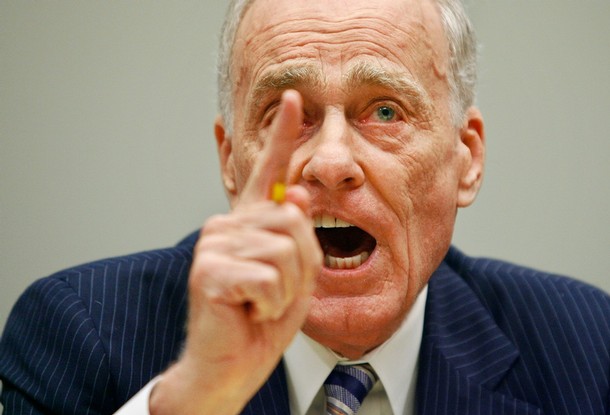
Look it's Jabba! Grab Harpoon!

Los Angeles Magazine- 40 Years of Charles Manson (three)


COLSCOTT is your hero. Love him.

Los Angeles Magazine- 40 Years of Charles Manson (two)

Los Angeles Magazine- 40 Years of Charles Manson (start here)


Los Angeles Mag has an amazing oral history. Click on pics to enlarge.

Friday, June 05, 2009

Deceptive Headline- It was Merely Postponed

Manson follower Susan Atkins, with six months to live, granted parole hearing

8:14 AM | June 5, 2009

Susanatkins Last year, doctors diagnosed Susan Atkins with terminal cancer, prompting a failed bid by the convicted murderer and Charles Manson follower to receive a "compassionate release" from state prison.

But Atkins, who gained infamy for her role in the 1969 slayings of pregnant actress Sharon Tate and others in a bloody two-night rampage in Los Angeles, may get one last chance to convince state parole officials she should no longer be kept behind bars.

Officials with the California Department of Corrections and Rehabilitation said Thursday they have scheduled a Sept. 2 parole hearing for Atkins in Los Angeles.

Atkins has served 38 years in prison, longer than any other female prisoner, officials said. Before last year's attempt, she was most recently considered for, and denied, parole in 2000.

In early 2008 Atkins was diagnosed with brain cancer. With one leg amputated and the other paralyzed, Atkins has only six months to live, doctors say. Atkins petitioned for so-called compassionate release, igniting a debate about when mercy is appropriate.

Those backing her release argued unsuccessfully that the cost of keeping Atkins in prison, which by now could be well over a million dollars, should have favored her release because it would save the state substantial amounts of money.

Others, including former Manson prosecutor Vincent Bugliosi, said it was a question of mercy and told The Times it was wrong to say "just because Susan Atkins showed no mercy to her victims, we therefore are duty-bound to follow her inhumanity and show no mercy to her."

But most were unwavering in their contention she should die in prison considering her crimes.

Tate, the wife of film director Roman Polanski, was 8 1/2 months pregnant when she and four others were killed at her hilltop home in Benedict Canyon. The actress, who was stabbed to death, had begged Atkins for her life.

"She asked me to let her baby live," Atkins told parole officials in 1993. "I told her I didn't have mercy for her."

Atkins was housed at the California Institution for Women in Corona from April 1971 until March 2008, when she was transferred to a local hospital for treatment.

-- Andrew Blankstein

Thursday, June 04, 2009

Dave Edwards is a Spazz


Okay, so we let the Pugh guy post here, and join here and he doesn't like it here. He can stay or go that's up to him. But first I want to get to the bottom of something? Can he read?

--------------
Back in May there was a comment in the section that reprinted the original article- by member Force 17. It read...

Simon Wells has written a book called Coming down fast and he has done some original research on this rather than another cut and paste job. Dont think it has a US release yet.

In the letter Dave Edwards wrote us, he defensively states that his article is not a cut and paste job. Fine. The comment is clearly referring to other books like the GoRightly one and two others.

-------------
Dave responds to my comments. One of his comments is

Of course newspapers aren't necessarily right but they've always been, and remain, forums of free expression. Sure, sometimes articles are skewed to toe a particular line but this wasn't the case with my piece.

Dave- If you've taken a look around you will see that this site, Bret's site and Cat's site all have one thing in common. We want the truth. A tabloid newspaper wants to be sold. It doesn't, by definition, care about the truth. We do....

I'm sorry, but nothing in my piece expresses admiration for Vincent Bugliosi. Incidentally, didn't Susan Atkins refer to him as the 'Bug'? I really, really hope that you haven't taken to quoting her. That would suggest this is a pro-Manson site rather than something more even-handed.

...And we have been able to, via research and actual free thinking, establish that someone who stalked his milkman thinking he was his son's birth father, who assaulted his mistress and who made up a bullshit motive for the crime of the century should not be trusted, cited or referred to. The moment you cite BUGliosi you lose. Because he is the cause of all the lies out there. His win at any cost ploys helped him to win (although ironically tied him to Manson for life) and helped us lose out on understanding what really happened. And you stand corrected- all of the Family referred to him as BUGliosi (not just Susan, even though BUG dwells on her in his novel). We are not pro Manson. For the record I once again state- Charlie Manson was a short, charasmatic, con artist, a punk who had spent 18 years taking it in the ass. When he got out he continued a life of petty crime. And he never KILLED anybody, so painting him as Satan, as Bug does, is just bullshit. So face that truth, Mr. Edwards. It's where the facts actually start.

If British tabloids really are as bad as you suggest, why on earth are you reprinting my loathsome, inaccurate and sensationalist article? And as far as a response goes, how about sending something to the letters page? It's not hard to do. Try google. Alternatively, there's a forum for comments on the paper's website.

Well Dave, I reprinted it so we can examine and dissect it- not because I assumed that it was the truth because the great Dave wrote it! And why do I care to respond to the paper? Are they official? We are! And why comment on the site? I don't care about the site at all.

This has me at a total loss. And what's with the swearword? This blog follows every twist and turn of the Manson story, happily devoting thousands of words to unsubstantiated rumours but then gets its knickers in a bunch when someone goes out and does some investigative reporting. The reason I looked into Joel's life was because I wanted to tell his story which, as far as I'm aware, had never been properly told. Why has that created such animosity?

Total loss? No doubt. Swear word? Aren't you a grown up? Unsubstantiated rumors? Not sure what you mean but if so I will FUCKING swear that I labelled them as such. Unlike- well, you. Telling Joel's story is a good idea... the question we are discussing is, did you? It appears many people think not. Sorry.

As far as 'sticking around' and learning the truth goes, rest assured, I'll do just that but I'm starting to thin this isn't the place to do it.

Ah, well, there you go. I'm sorry we didn't bow down and accept your tabloid article as God's word.
But at least we got that picture out of it!
Oh and as far as your "truth" goes, Cats from the other great site has a letter for you- she don't think much of your shit either-

Dear Mr. Dave Edwards,

I take note of your presence here yesterday reading this thread, then alas, you appear on the Colonel's site addressing what we have posted here concerning your article.

I take offense to what you said concerning us here, and we do not have hostility nor think we know everything about the TLB case. We just call bullshit bullshit and I am sorry that you did not deem it necessary to address us here on the points made in this thread. You are a member and can post.

The autopsy report has been seen, and Simon too has spoken to Joel's brother Daniel.

The infamous letter with the line about what happened to Joel not happening to the writer is reproduced in full in Simon's book, and when taken into proper context and seeing the letter in full, that single solitary line doesn't mean what has been gathered all these years.

Cats

----------David Gets Snarky in The Comments, Col Dissects----------

Gosh, my own thread. I’m honoured.If the guy could READ he would notice this is his THIRD thread.

Colonel,It's COL thanks I’ve read your comments and, after due consideration, I want to apologise. The points you’ve raised are not only pertinent, beautifully put and well argued; they’re also accurate. You mean this as a snarky asshole, but in fact are correct.

This isn’t easy for me to do but… I want to say sorry. no you don't. This makes you a liar.

First, I want to apologise for writing an article about the Manson case without seeking your permission. I thought it was about Joel Pugh- and you still keep being a smug limey asshole..Given how you, and you alone, possess the truth, I WISH I possessed the truth it was simply inexcusable. After much soul-searching, I’ve realised that somehow I have become part of the Great Media Conspiracy that has turned a basically nice guy like Charlie into the devil incarnate. The media didn't do this, BUGliosi did- with Charlie's complicity. LEARN TO READ.

May I also apologise for quoting Vincent Bugliosi who (you’re absolutely right) knows nothing about the case. Hey guys, CAN THIS GUY READ? I never said he knows nothing- he knows quite a lot. What he SAYS cannot be trusted though. You, Susan Atkins and the others are absolutely right -- he really is a bit of a ‘BUG’, isn’t he?He's a lying, woman attacking former DA.

I also want to – hand on heart – apologise if I suggested your website was in any way pro-Family or that you’re a Manson apologist.Anyone that could READ would realize this isn't true. That’s clearly not the case at all. Having looked over your site, it’s now clear to me that Manson is an unfortunate, misunderstood and largely harmless individual who should be freed immediately so he can spread his gospel of peace, love and death.See what I mean, loser- no where does it say that- too bad you cannot READ. Sure, he may have directed the residents of Spahn to commit mass murder,likely did not he may have tied up the terrified LaBiancas not "may"- didbefore they were horrifically killed, he may have orchestrated the murder of Shorty Shea depends on what you mean by orchestrated, he may have sliced off Gary Hinman’s ear,Hinman's corpse clearly has an ear in the autopsy record so he DID NOT do this he may have shot Lotsapoppa did, he may have raped teenage girls who found themselves at Spahn,we can agree to disagree about this he may have ordered the murder of poor Joel except he didn't and NOBODY but you, the poor reader, thinks that he did.but, as you rightly say, he was merely a short, ‘charasmatic’ con artist. Boy, did I get my facts wrong!And you continue to. Again, I’m sorry.

Sometimes it takes a man to stand up and admit his mistakesWell since you are a poorly educated limey fool who could only sell his 6 months of work to a British tabloid, let me know when you find a man. Well, I’m doing just that. Colonel, you’re truly a one-off. A fearless seeker of the truth and someone clearly unafraid to courageously ask the big questions that most shy away from.This is accurate May I also compliment you on your spelling and grammar – you’re also a commander of the English language. My prose is pretty solid, thanks. You CAN'T FUCKING READ so please don't try to teach.I salute you! I’m also glad you haven’t lost your sense of humour during our tête-à-tête. I can’t remember the last time I was called a ‘Spazz’ but I think it was in a playground.No. It was yesterday. By me. Because? Well, you are a spazz. Anyway reading your letter thinks to themselves "Wow, what a spazz!"

Peace, brother, and fingers crossed Charlie, Susan, Linda and all the other victims of disinformation in the media finally win their long overdue parole. God I hope Susan never gets out. Charlie never will no matter what I hope. And Linda IS NOT IN JAIL.... SPAZZZZZZZZ!


The Guy Who Wrote The Pugh Article writes to us (and joins us?)


Hi everyone,

Apologies for leaving it so late but I thought I'd respond to all your comments regarding my article. Very briefly, I spent six months writing the piece.

I've been a journalist for the past 13 years and came up with the idea of writing a piece on Joel Pugh after re-reading Helter Skelter last year. Over many, many nights, I contacted Ed Sanders, Vincent Bugliosi, Curt Gentry and others looking for leads. They were all extremely helpful and, after a very, very long time, I was able to contact Joel's brother, Dan, to find out a little about what became of him. I then put together the article you now see and placed it with a newspaper.

While I'm proud to have been the first to piece together the life and times of Joel (a warm, witty and idiosyncratic guy), I'm bemused at the hostility my article has caused. This is something I noticed on many of the Manson websites. It's as if there's a hardcore of people who believe they know the truth of the murders who dismiss those who come up with anything off their radar. I can understand this given all the disinformation out there but, still, the patronizing air is stifling. I'm as fascinated as them about the killings but am not arrogant enough to think I'm the sole keeper of the Tate/Labianca flame.

Incidentally, if the webmaster sees fit to post all my hard work here, I'm offended s/he uses the intro 'but how much do I believe?' Why didn't they have the courtesy to get in touch with me first? I'd have been happy to answer any questions they had. Believe it or not, I didn't make this piece up. Every word was drawn from first-hand testimony, contemporaneous newspaper reports and documents.

As far as Force 17's comments go, may I suggest s/he actually reads my article, which is comprised entirely of original research. It's depressing when people dismiss newspaper articles as 'cut and paste jobs' but even more depressing when the critics don't appear to have actually read them.

As for Simon Wells' book, I finished reading it this week. I thought it was an interesting summary of the phenomenon that, rightly, steered away from the whole Helter Skelter mythology. I notice on other websites he's unhappy at my article, suggesting I've twisted the facts to make a suicide look like a murder. Again, the criticisms are delivered in a familiarly patronizing tone, suggesting I've trivialized Joel's life and death for tabloid readers. I refute this and refer Simon to the blurb on the back of his own book that refers to 'new evidence linking a cult member to a murder in London'. Murder, huh?

Having spent a long time perusing this site, it seems clear the users have a distinct distrust of the media (just like Manson himself, incidentally). That doesn't mean all newspaper articles are wrong.


David Edwards


------

Col Writes-

Nor does it mean that they are right. You start off expressing admiration for BUGliosi who wrote a self-aggrandizing book full of lies. How should we respond? That newspaper is a UK Tabloid. How should we respond? You decided out of a clear blue fucking sky to do a story about Joel Pugh- it doesn't get more obscure than that. How should we respond?


Welcome to the Blog. Stick around and you might learn a thing or two.

The Harlot Who Wouldn't Die


Dying Manson killer seeks parole; hearing put off

By LINDA DEUTSCH

AP Special Correspondent

LOS ANGELES (AP) — Susan Atkins was expected to succumb to brain cancer months ago, but the former Charles Manson follower imprisoned for killing actress Sharon Tate nearly four decades ago still clings to life.

Now, a hearing that is perhaps her last chance at freedom has been abruptly put off until September.

Her lawyer husband doesn’t know if the 61-year-old Atkins will make it. But that’s fine with the family of Tate, among seven people killed by Manson followers in one of the most notorious murder cases of the 20th century.

"They all should live out their natural years in institutions," said Debra Tate, the younger sister of the slain actress. If they are released, she said, "I can’t trust that they won’t inspire other individuals to do similar acts."

It’s been more than a year since prison doctors gave Atkins only a few months to live. She lost a bid for compassionate release from prison last July. Now, her parole hearing, initially scheduled for last week, has been delayed three months because parole board members were unavailable.

"I don’t know if she’s going to make it through that long," said her husband, James W. Whitehouse. "She is deteriorating."

Whitehouse said his wife has undergone surgery to remove a brain tumor, is paralyzed over most of her body, can’t feed herself and has lost most of her ability to speak. Still, Whitehouse said, Atkins plans to attend the hearing, even if she is on a gurney.

The gruesome murders that made the cult infamous were discovered on Aug. 9, 1969, when a maid ran screaming from the home shared by Tate and her husband, director Roman Polanski.

Five people were killed in a ritualistic manner, including Tate, who was 8½ months pregnant; coffee heiress Abigail Folger; and celebrity hairdresser Jay Sebring. Two other people were killed at another home. Polanski was not at home at the time of the slayings.

Atkins admitted stabbing Tate to death even as Tate begged for her life, claiming she and other cult followers acted on orders from Manson and were on LSD.

The chaotic, nearly yearlong trial concluded with Manson, Atkins and two other followers, Patricia Krenwinkle and Leslie Van Houten, convicted and sentenced to death. The sentences were commuted to life when the death penalty was temporarily outlawed in the United States in the 1970s. They all remain in custody.

Deputy district attorney Patrick Sequeira said he planned to argue that "the enormity and the severity of the crimes" weighs against granting her parole.

At a hearing in 2000, Atkins acknowledged, "I sinned against God and everything this country stands for." She said she wanted to make amends for what she did.

Whitehouse, 46, said his wife has made him a better person in their 21 years of marriage and should be released, if nothing else, to save taxpayers her hefty medical expenses.

Debra Tate, 57, the last surviving member of her family, said brain cancer can go into remission and she doesn’t know if Atkins’ condition is as grave as her husband says.

She said she remains in touch with her sister’s widower, Polanski, and feels that he has designated her the keeper of the victims’ rights in the case. Polanski remains in exile in France, having failed recently to get a decades-old child-sex charge dismissed.

Although many life-term prisoners have come and gone from behind bars while Atkins was incarcerated, none of the Manson killers has been paroled. Krenwinkle and Van Houten remain at the California Institution for Women at Frontera. Every few years they appear before parole boards and ask for release. Manson, now 74, has ceased to request parole.


---------------------

Col's Note- Debra "feels" this way like I feel I need a scotch.

Wednesday, June 03, 2009

John Bis a Fucking Idiot


Now we all know, or at least SHOULD know, that Wikipedia is a stupid website that is run like an online role playing game. ANYONE can edit it, even special needs children, so therefore NOTHING can be taken as accurate. Its founder recently had his semen encrusted shirt auctioned on ebay, so that gives you a good profile of the place.

That being said, it takes a special kind of idiot to spend a lot of time playing on Wikipedia and becoming an editor. A fucking idiot. This of course is today's topic of discussion, John B.

John has anointed himself the Manson expert on Wikipedia, because, well he read HELTER SKELTER once. And of course, like the fucking idiot he is, he believes it to be an accurate depiction of what happened.

So Helter Skelter, the bullshit theory that even the Bug's fellow prosecutors believe is bullshit? John buys it.

And so he writes this article
on Wikipedia. And it is just so full of bullshit that I want to throw up and then throw up some more. But don't point out that even fellow prosecutors thought Bugliosi was full of shit. No, then this lame ass bitch Wildhartlivie will show up and change things and get you banned.

So what we have is a wrong, provably stupid article that is treated as encyclopedic by the web and thus more and more people are told INCORRECT information by this guy.

It's kind of a shame. But then I guess if people treat Wikipedia as truthful they get what they deserve.

Tuesday, May 26, 2009

He's a Little Bit CUNTy, I'm a Little Bit Devastated


So I woke up on Memorial Day and found out that Savage Jim From NY had had the Col's entire YOUTUBE account nuked.

Like removed.

Gone.

Hours and hours of research now removed.

I don't know what to say.

Saturday, May 16, 2009

Teh Internest Full of Lies? Oh Noes!!!!


So there was this bullshit piece in a goddamn gossip column about Oliver Stone making yet another version of HELTER SKELTER. This didn't ring true thought the Col. Oliver Stone was way too smart than to fall for the Bug's point of view. So rather than spread internet lies I called up Oliver Stone. I am please to report that this is 100 % bullshit. His next film is Wall Street 2. I'm not sure THAT'S a good idea, but at least it won't hurt our search for the truth.

Tuesday, May 12, 2009

The Fires Are Burning


Barker Ranch, the old Death Valley mining camp notorious as Charles Manson's hide-out, has been gutted in a suspicious fire, according to the National Park Service.

“The building is gutted, burned out,” said Terry Baldino, chief of interpretation at Death Valley National Park.

The homestead’s rock walls and tin roof were still intact, but its hand-hewn wooden interior beams and window and door frames were all reduced to ash, he said. An outbuilding, originally built as a garage or workroom, was destroyed, Baldino said.

Park officials said the fire might have started last weekend; it was reported Wednesday. No cause has been identified and the fire is under investigation, Baldino said.

The cabin is in a remote area of the park and used by backcountry campers. It had a stove and a fireplace, but there was no water source in the area. If the fire was inadvertently set, there was no water available to put it out.

“The thing that is really sad,” Baldino said, “is that a month ago we had a restoration crew out to stabilize the place. We were afraid the wood lattice and tin roof would come off. We replaced wood timbers in the sagging roof and cleaned up the interior and the grounds. It was actually in fairly good shape when we finished.”

The simple cabin was built in the 1930s by a retired Los Angeles Police Department officer, who, with his wife, had staked a gold claim. The Barker family then bought the house and worked the claim.

In the late 1960s, the Manson gang roamed the barren Death Valley landscape in dune buggies and prepared for "Helter Skelter," a race war Manson was trying to spark. The phrase was taken from a Beatles song, which Manson believed was encoded with predictions that the conflict would destroy modern civilization. Manson and his followers planned to survive by living in a tunnel, then emerge as leaders of some new world order.

Manson eventually was arrested in the cabin, hiding in one of the cupboards, after a 1969 murder spree in Southern California that included the killing of actress Sharon Tate, three friends and a teenager at the pregnant actress' Benedict Canyon home, and the slaying of a couple in Los Feliz.

The ranch was the subject of renewed attention recently when a local police detective searched the site for possible clandestine graves. The excavation revealed little more than a few bullet casings.

—Julie Cart

Monday, May 11, 2009

Movies That Won't Happen for 300, Alex


CANNES -- Bill Gottlieb's U.S. production banner Gorilla Pictures and L.A.-based American Media Group are ramping up their co-production partnership with a slew of projects including Jesse V. Johnson's "Debt Collectors."

Going into preproduction in the fall, "Debt Collectors" is written and will directed by Johnson and is billed as neo-noir drama centering on the story of two professional debt collectors.

The project marks the second collaboration for Gorilla and AMG on a Johnson movie. The first will see the duo unspool the filmmaker's noir drama "Charlie Valentine" here in the Marche du Film.

"Valentine" stars Raymond J. Barry, Michael Weatherly, Tom Berenger and Steven Bauer and details the story of a gangster and his relationship with his son.

Also in development at AMG is "Within Screaming Distance," written by Joseph Stefano before his death in 2006. Stefano was living next door to Sharon Tate when she was savagely murdered by Charles Manson in 1969. His screenplay centers on a Hollywood party occurring next door to Sharon just before she was murdered.

Also heading into the preproduction phase in early 2010 is "Dead Man's Party," a horror pic written by Lou Aguilar, and "Hard Dazed Night" written by Steve McKean, Frank Elkins & Jack Airey.

Sunday, May 10, 2009

There Was NO PARTY- But the Myth Continues.


'ALLO 'Allo creator Jeremy Lloyd may only have been married to Joanna Lumley for six short months in 1970.


But without her there wouldn't have been Rene, Yvette, Herr Flick and all the rest of the French resistance gang.

Jeremy's not surprised by her stand against the government on behalf of the Gurkhas.

"Like my father, who was a colonel, Joanna's father was an army man, a Gurkha commander, and she was born in the Himalayas.

"Our friendship's outlasted our marriage," he said.

Joanna is just one of a host of beautiful women Jeremy worked with over the years, and there would probably have been no 'Allo 'Allo without her.

Jeremy returned home from a spell in America where he'd won an Emmy for his part in TV comedy Rowan and Martin's Laugh In, co-starring with Goldie Hawn.

"I'd just come back to collect some things," he said. "But then I met Joanna and that rather delayed going back. But she didn't want to go to America, so I stayed over here."

Maybe it was a wonder he had time for a writing career at all. He giggled at the idea that as a stunning-looking young actor he was an It boy of the time.

"I was engaged to an It girl, Charlotte Rampling, in fact she's coming to see me in three days as we're still friends.

"It was an amazing time. I appeared with Goldie Hawn, Bing Crosby, Danny Kaye, Ronald Reagan, Frank Sinatra, they were all on the show."

Jeremy also confirmed what is often thought of as an urban legend, that he should have been at actress Sharon Tate's house the day Charles Manson murdered her in one of the most notorious incidents from Hollywood's past.

"Sharon's husband director Roman Polanski had asked me to look up Sharon while I was out there. I was staying with Leslie Bricusse who worked on songs with Antony Newley and from his house we could see Sharon Tate's roof.

"I rang her and she invited me over for tea the next day. But I went out drinking with the actor George Hamilton and we were back very late, slept in till five the next day – I'd been asked round for four. I tried to phone to apologise, but there was no answer as Manson's people had cut the wires. So I should really have been there when it all happened."

As well as appearing in Beatles movies A Hard Day's Night and Help!, Jeremy acted in West End plays and had TV roles such as a sooty chimney sweep in the first colour episode of The Avengers.

"I took Diana Rigg out for a while after that," mused Jeremy.

And in movies he went from uncredited performances such as Man Doing The Twist in 60s film Play It Cool to roles in Murder On The Orient Express and Tom Jones.

"I wasn't just a writer or a performer, I was a performer who broke into America. Because I looked very silly."

But maybe not that silly. Jeremy revealed he was getting 5,000 fan letters a week from across America.

"They were from girls all over the country – some of them sent photographs!"

You'd never guess Jeremy had a broken leg, injured while falling downstairs.

As well as a packed social life, he's working on a new sitcom called Here Comes The Queen, written with his 'Allo 'Allo co-writer David Croft.

"We've made it and we're trying to sell it and I'm working on another play called Last Tango For A Gigolo, I'm looking for finance.

But Jeremy already had form when he and David Croft first got together to write 'Allo 'Allo.

His first sitcom had been Are You Being Served? in 1972, the hit show based on the antics of the staff of an old-fashioned department store.

"I based it on my own experiences working in the suit department of a big shop in London called Simpson's," said Jeremy. "And that is the most true to life of the sitcoms I've worked on. It really was like that to work in shops like that in those days.

"When I'd come back from America, David and I had been asked to write a show to be one of a number of pilot shows – that was the one that took off!

'Allo 'Allo notched up a victory for international relations last year.

Jeremy said: "German TV bought the 85 episodes and they're translating them all into German.

"I think it's had a harmonising effect with all the different countries represented in it – a lot of Germans have liked it over the years. I think it's like in the First World War when both sides got together and sang Christmas carols."

Jeremy revealed that people like to turn up to see the tour of 'Allo 'Allo in costume.

"It's like audiences do with the Rocky Horror Show," he said.

"I went to see the production in Bournemouth and about 100 German generals came walking down the street towards me."


Friday, May 01, 2009

We're Back // Bobby and Jane Doe


Hi
I didn't post for an entire month. I'd love to tell you that I was on vacation but I wasn't. Or that I was in prison but I wasn't. Or maybe I was on an Amazonian exploration with BRET (whose goddamn site is goddamn down again) but I wasn't. You know what?

I didn't have anything to say!

Sorry kids... I tried. I wanted to. Truly I did.

But I just didn't have much new to add to the discussion. And the Col doesn't like to flap his mouth off. So I shut my pie hole and kept earning major dollars and ignored the ONLY Official Tate LaBianca Blog in existence.

I'm not sorry. I'm just sayin.....

But now I'm back. And I promise to make up for it in the Merry Month of May.


---------------------

Today's Topic

Did Bobby Beausoleil kill a girl before he killed Gary Hinman?

Cats and others are discussing this here.


The Col's Thoughts

I'm friendly with Bobby.
I kind of doubt it.
It came from the Zodiac message board, which tried to charge me $5 to join.
How come this has never ever ever ever been mentioned before? Even by the BUG during the trials? They were desperate to get a conviction the second time around and would have used anything.

on the other hand

It takes a lot to kill people. I mean I there are people I'd LIKE to kill but it ain't gonna happen. Conscience, blood and all. Now once you have done ONE, two or three more, it gets easy. Look at Tex for example. And if you study the Hinman story as much as I have (the fringe stories, Hinman, Lotsapoppa, Shea, are where I believe you will find the truth) you'll see there comes a point on Sunday where Bobby just decides in his head, Fuck it, and kills him. And do not underestimate, that is an amazing step- major- unless he has done it before.

So I don't know.

What do you all think?