Showing posts with label Bug. Show all posts

Friday, October 04, 2013

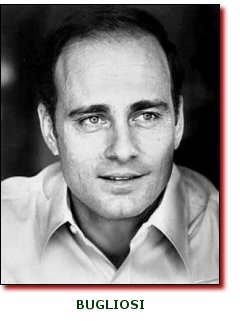
The Secret World of THE BUG

Some people think that Lee Harvey Oswald killed John F. Kennedy back in 1963. In order for him to have done this he would have to have been one of the greatest marksmen of his time.

He wasn't.

Referring to the last post, for Rudy Guede to have entered the cottage and murdered Meredith Kercher without Amanda Knox letting him in he would have to have suction cup hands.

He doesn't.

The basic premise of this Blog is that we don't know the motive of TLB because BUGliosi was BUGfuck insane and invented a motive to promote himself.

He did.

SO

There is a new book out called RECLAIMING PARKLAND.  It is about the JFK assassination. Because BUG wrote a shit book about it he was supposed to get his own Chapter.  But the lawyers cut it out.

Our friends at Feral House have posted it.

The Col has put it into Dropbox for you.

Let's read and discuss.

Thursday, March 21, 2013

BUG Swatting

We heard not too long ago on TMZ of all places that the BUG was very sick.  Now Sadie was sick and still breathed oxygen I could have used for almost three years before she rung down the curtain and joined the choir invisible.  So for all I know the BUG will outlast the COL and then some. We all saw Sandy Hook and know first hand there is no justice in this world.

Now I don't expect that the solution we seek will magically appear a day, a week or even a year (cue FRIENDS music) after the old mistress puncher is morte.  But I wonder.  The fiction was maintained so well all these years.  The mysterious Tom O'Neill of the unseen opus told me over a decade ago he had found the true motive, but we ain't seen nothing from him except hearsay lawyer tapes leaked to FOXYCUDA!  I was sure that one more martini with Aaron Stovitz would have been the breakthrough but then he went and passed on me.  The facts remain- in a world where if two people know a secret then that secret is kaput, a true, realistic version of why the TLB murders happened remains the Holy Grail.

I am not saying that I think people have been mum because they are afraid that a milkman stalking, Latin music listening Lawyer might sue them for shits and giggles. Wait, yes I am.  Clearly many of the participants were out of their minds high and thought after the fact that yeah, it was a race war thing, that's the ticket.  But somebody has to know the answer.  Bryn maybe? Tex? Bruce?  Some random fucker knows and isn't talking.  That has to be the case or I'll cry.

I am not wish the BUG to die. I don't have that power.  But yeah, when he does I do wonder what it will mean for the truth.

Monday, January 21, 2013

BUGGY BUG

Over at EvilLiz they are linking to THE VINCENT BUGLIOSI STORY by George Denny. It is also at Cat's site.  I am fairly certain that this thing originated with the Col.  I bought several years back a big trove of Trial Transcripts and stuff like that.  I had a relative, NYPD, pick it up and ship it to me.  That was crazy because he found a plugged gun in the boxes!  I still wonder what that was about.

Anyway, we analyzed some of the transcripts and I was faced with a dilemma.  You see, BUG is still a lawyer and if this shit was made up, I really didn't need a lawsuit.  So I tried to get Denny's permission and verification but it turned out he was dead.  So I dug up the LA Times articles and we started running those.  This was back when I was breaking news like this fairly regularly and the fact that BUG was a milkman stalker and girlfriend beater was pretty explosive.

All that stuff is in storage now but Matt has inspired me to get it scanned and prepared for upload, so I will.

Why don't I break more stories like this?  Well because I just don't care enough these days.  I desperately seek the motive, like all of you.  But I think it may die with Charlie.

Have any of you seen this?  A special site all set up to walk you through BUG's lies and deceit?  I guess no one else is worried about his lawsuit potential.

Sunday, July 01, 2012

Somewhere a Mailman and a Mistress Raise their Ears to the Wind

Charles Manson Prosecutor
Hospitalized
After Cancer Surgery
Exclusive TMZ
0629_vincent_bugliosi
The man who put Charles Manson in prison is currently hospitalized in California, following complications from cancer surgery ... TMZ has learned.

Former prosecutor Vincent Bugliosi's wife tells TMZ, her husband underwent surgery back in April for stage 2 cancer.

According to his wife, the surgery appeared to be successful at first, but Vincent experienced complications shortly after, and was admitted to the ICU. Vincent's wife wouldn't specify the nature of the complications.

Vincent's wife adds, "He has been in very bad shape for some time. He regained consciousness this week, finally starting to be on the road to recovery. He's going to be in rehab for a long time."

Vincent left the ICU last week but is still hospitalized.

Thanks to Vincent's badassness back in the day -- Charles Manson was convicted of seven murders in 1971 and sentenced to death. Manson's death sentence was reduced to life in prison a year later when California abolished the death penalty.

77-year-old Manson's latest request for release was denied in April -- and since he's not up for parole again for another 15 years, chances are he'll die behind bars.

Thursday, April 12, 2012

Latin Music Specialist Speaks

"After My Trial..." - Freudian Slip?

It's amazing how this fool sticks to the fairy tale- just repeats it year after year.


Monday, July 25, 2011

Weary Dreary Leary7


There's a heated debate in the comments which serves to illustrate that people can be SO close to having good reading comprehension and yet SO far. I'll be your little helper in red.

----
Blogger leary7 said...

one of the things that always sticks with me is Danny DeCarlo's early statement that while out at Barker before they were arrested, Ruth Ann Morehouse said to him, "I can't wait to kill my first pig."
The cute Ouisch couldn't wait to emulate Katie and Sadie and Leslie. It is strong testimony that the "death trip" that Charlie preached seriously took hold with many in his family.

It is strong testimony ONLY that the youngest child at the ranch felt left out that she wasn't doing what the "cool" kids were doing. It says NOTHING about Charlie except in your head.
Ruth Ann was one of Danny's favorites so it is doubtful he was making that up.
Point?
Maybe the Bug colored up the facts to sell it to the jury, There is NO maybe about it. You lose all credibility when you state maybe. ALL the other attorneys say he made this shit up.but there is NO DOUBT Charlie was preaching an impending race war as well as the thrill and need to kill.There is plenty of doubt. Charlie talked smack. Bullshit. BUG and Watkins created the "theory" of the case.
For 42 YEARS folk have been trying to rewrite the TLB murders as a drug burn or mafia hit or Tex thing. They have been throwing shit against the wall for nearly a half century and none of it has stuck.Again, no, MUCH of it has stuck. And for sure, no one educated in the case believes HS as a motive.
How's about this, Col? What if the motive is simply Charles Manson's assholeness - his anger and resentment and ego and schizoid and megalomania etc etc.But wait? You just told me it was HS. That the BUG was right. Now you want to offer a new theory? Without evidence? Can you not reason logically?
Maybe all those people died because Charlie was one angry evil asshole, and he convinced several drug adled idiots that it was cool to kill. Maybe Charlie is exactly like his idol AdolphHis idol? This was again Bug and Paul creating a boogey man for the ages. and just a pure evil asshole who was adept at getting idiots to do his dirty work.
Sorry, no disrespect, but it just seems like the Col and others spend a whole lot of time trying to apply logic and rationale to a completely irrational act. And a completely irrational person.Charlie was many things. But irrational? Not even close. Man was wicked smart.
Manson did not need a motive to order the killings.But you just said it was a race war? It was just what got him off.

7:50 PM, August 05, 2011

Delete
Blogger leary7 said...

my attempt to clarify....
For 48 years several dozen people have dedicated their lives to proving Oswald was not the lone assassin.what do you mean, prove? IT has been established through science that he could not have fired all the shots.
Even though I knew the case well because of my relationship with his daughter, I could never argue Lee's guilt/innocence on better than a 60/40 proposition. Why?
Because without a confession or eyewitness all you had was circumstantial evidence. And there was strong circumstantial evidence BOTH WAYS.
But one problem arguing for Lee's guilt was the lack of motive. Several who knew him testified he liked JFK. So why do it?
Because he was a miserable asshole with an enormous ego. He was seriously pissed off that the world did not recognize his greatness. He was convinced Cronkite should interview him, that the NY Times should publish his life story and so on. He had no friends, a love/hate realtionship with his wife, and hated his mother. But he was convinced of his destiny to be famous while living seperated from his family in a $7 a week boarding house and working a $2.65 an hour job packing books into cartons.
So when he read the leader of the free world was going to be driving right under his work window, maybe he thought...the world will know me now.
No motive, just an egotistical asshole determined the world should know his name.except of course he had motive...and Ruby was there to shut him up
Maybe, likewise, Charlie was convinced the Beatles should know his name and that he should be on the cover of Rolling Stone. Certainly his behavior at the trial was fantastically self-destructive, and self-promotional. He basically convicted himself with his antics. He was convicted of ordering the murders by a Prosecutor with a made up motiveBut maybe that is what he wanted all along - to show the world how little regard he had for it and how everyone should not just know him but fear him.
No motive, just an egotistical asshole determined the world should know his name.
It was the 60's. Everyone wanted to be famous. Oswald and Manson are certainly two of the top ten famous names from that decade

Blogger leary7 said...

really, do people still want to wave the "Charlie is no killer" banner?Yeah, isn't that weird. He never killed anyone so I say he isn't a killer. A loser, yes. A punkass bitch? Yes. But to be called a killer usually you need to, you know, KILL someone.
He shot and believed he had killed Crowe. Several eyewitnesses put him in the car when Shorty got shafted. And by his own admission he went in and tied up the LaBiancas who were subsequently killed and by the letter of law Manson was guilty of their murder as much as if he had weilded the knife.Agreed. Never said he was innocent as charged. Never said he should be released. Just said he was falsely prosecuted and didn't kill anyone. I remain accurate.
Charlie no killer? Come on, order yourself a reality sandwhich. And maybe watch the taped interview of Charlie shouting out "that he wished he had killed 500 or so people, then maybe everyone would take him seriously.Hey, I'll scream out that when I next see JimNy I would like to kick his ass so he never walks again. That don't make me an ass kicker.

7:11 AM, August 06, 2011

Delete
Blogger leary7 said...

one last thing, I promise.

Col Scott...though I have the upmost respect for you, here is why I have always thought your obsession/hatred of the Bug and Helter Skelter was somewhat misplaced.
I simply do not believe that Vincent and HS were responsible for Manson being convicted of murderEven if I grant you this point (which I do not) the fact is by manufacturing motive and making shit up, the REAL reason why 9 people are dead is still obscured this many years later. I don't care about Charlie. I want to understand what happened. And the pathology of the Bug makes that almost impossible. I think Charlie Manson convicted Charlie Manson of murder.
The Bug put forth HS because a number of people, from Sadie to Danny to Al Springer to Watkins and others - told him that Charlie controlled everything and everyone in the Family and had ordered the killings. The Bug packaged the story in the Helter Skelter fairy tale.
But do you know, Col, if anyone ever did a comprehensive follow up with the jury as to why they convicted Charlie?That wasn't the norm back then. There are a couple of interviews I think but nothing comprehensive.
My belief is that it wasn't the Bug and Helter Skelter that convinced the jury, it was Charlie's own antics and outbursts during the trial that convinced them he was a certified sociopath.
And it was his leaping over the defense table and lunging for the judge that convinced the jury that Charlie was capable of violence.
And it was the girl's idiot robot behavior - their singing and head shaving and proclaiming that Charlie was Christ - that convinced the jury that Manson had a Svengali control over them and probably had it on August 8th and
9th as well.
One of the Great Questions that hovers over the TLB story is this...if Charlie had had a quality lawyer and had sat quietly at the defense table clean shaven and wearing a tie, and the girls had likewise behaved, would Manson have been convicted of murder? Or would he, like the obviously guilty OJ and Casey Anthony after him, have gotten off? Imagine Charlie walking around a free man these past 42 years. It could easily have happened.
But I am convinced Charlie wanted something more than his freedom.This is true. He wanted to be famous anyway he could. He wanted the world to know how little he thought of it. And he wanted everyone to know that he was the real deal, and everyone else was just a two-bit supporting actor. Charlie was the Oscar winner in his mind, everyone else was just an extra.I buy this
In short, I believe with all due respect Col, that the Bug and HS are really just a backstory to the TLB case. Charlie wanted the fame, or the infamy, more than he wanted his freedom. His behavior during the trial, and even in the countless interviews he has done since then, testify to that.
If you frame it in the old chicken and egg question....the Bug didn't make Charlie famous, Charlie made the Bug famous. And far more important and reknowned then the Bug should be.They both did everything possible to make themselves famous.


Photo is so people stop fucking asking. Sheesh.


Wednesday, July 20, 2011

Motive Matters


People come up to me in the supermarket and they say "Col, seriously, who cares about motive. Isn't it enough that these savage killers are in jail for the rest of their lives? They don't even deny their guilt anymore, we got the right people, what do you want Col? WHAT???"

Usually I ask them to move so I can get some Bomb Pops and be on my way.

Look..... I will say it again for the 900th time.

Bug wanted to get Charlie.
Before the case fucking started he already has Tex, and all the girls. Physical evidence. Clear guilt. ZERO reasonable doubt. This wasn't Casey Anthony. Bitches did it.

But there is no glory for the Italian Milkman Stalker if he just convicts some killer hippies. If he can convict their leader who MADE them kill for him- that's every parent's nightmare. That's the six o'clock news every night for a year.

So even though he was not obligated to show motive, he pulled one out of his ass and made it stick. He still shows up on TV 40 plus years later to make sure nobody blows the story.

And because of this, the meme got out that Charlie was a dangerous devil. This suited Charlie so he took it. And ANY rational attempt to look into the case is colored by people who think you are sick for looking into it.

BUG put guilty people away under false pretenses and now his lies keeps the truth away from us.

He makes me puke.

Monday, June 20, 2011

Stupid? Ignorant? Lazy? Or Hiding Something?


No the headline doesn't refer to AC, Poirot or JimNy.

I was reading some of the new Hendrickson book last night, DEATH TO PIGS. It's a fun read for all 3 of us who care about the truth. Otherwise it simply summarizes interviews he has on film I would rather see as interviews.

So in one chapter the BUG shows up (like always) and Merrick and Hendrickson try to talk to him. He mostly talks over them.

In an interesting bit of mumbo jumbo BUG kind of admits that he isn't sure why Charlie sent Linda. That she didn't kill anyone but she must have known that killing was happening on the second night. That had Sadie kept her deal he still would have only gone after Linda for 2nd degree murder. He doesn't seem to really believe the "she had a license" explanation and speculates that maybe Manson loved her and wanted to lock her in to the group.

He also talks about the "why" go to 3301 Waverly and Merrick tries to point out that someone at the house had called the cops during a party at the True house next door, but BUG says he researched that and dismisses it out of hand.

Also much babbling as BUG says he'll appear on film for free he doesn't want no stinking $500 and then hey offer him $1000. He also hates on Sanders book quite extensively for not understanding the "significance" of these murders.

ANYWAY

This all got me wondering- WHY did BUG decide to make up the Helter Skelter motive?

1- To hide something because he did not like the real motive
2-He was too lazy to find the real motive
3- He was too stupid to figure out the real motive
4- Because anyone who would stalk his mailman for fathering his child is nuts and would therefore come up with a nuts motivation like Helter Skelter.

Personally I have always believed it was #4. That was what Aaron Stovitz personally told me at dinner- it was nuts and all the attorneys tried to stop BUG from being nuts. In the new book, they actually point out a quote where BUG admits that Jakobsen, Watkins and Brooks, when first interviewed, never mentioned the Helter Skelter bullshit AT ALL and that it took multiple interviews until they did. Plant much?

So anyway that was that - and then I started wondering about #1.

BUG barely made Melcher testify.
He did everything possible to control all witnesses. He still tried to control Kasabian on Larry King.
He allowed Charlie et al to go forward with weak lawyers.
He did regular interviews with the TV people.
He was determined to not only win, he was determined to get Charlie and bring the whole thing under his control.

It was almost as if he wanted to make sure NO OTHER MOTIVE was even offered.

Why?

What would he want to put a sock in?

Drugs? Maybe. LAPD had already speculated about this but maybe sure.
Copycat? Maybe, but I don't think he ever took it seriously, so why cover it up.
Black Book? Maybe but I don't even know what the fuck that means and it only surfaced as a real theory years later.

I don't know.

But it did get me thinking. I mean, IF he did cover up the true motive, what was it and why?

Friday, April 22, 2011

A Thought or Three about the Bug


There's so much about this case which proves it comes from another time and place. Things that happened which would NEVER fly today in 2011. Lately I've been reflecting on the BUG and how he ended up becoming the unlikely lead prosecutor in the case....

I mean, people in the DA's office knew about the trouble with the milkman. Laws were broken and one would think the BUG barely kept his position.

So I follow why Stovitz gets knocked off the game board for yakking his mouth too much- but does BUG get it because he's just standing in the on deck circle? I repeat- people, higher ups, must of known he was off center to say the very least. Yet he steps up during the crime of the century.

Odd.

How different would it be if he had not ascended the throne. We might not have a conviction for Charlie, but we would likely have less shit to try and figure out as well.

Thursday, August 12, 2010

There's One Less BUG to Lie to Us


To be fair, I think the original Helter Skelter miniseries is brilliant. It started the Col's obsession and fascination with this crazy world of TLB. Sure it is full of shit just like the book- but so riveting! DiCenzo was brilliant as the BUG. Smug, self important and pompous he really conveyed the BUG of the novel. There's two moments in the miniseries where he turns and breaks the fourth wall and looks at us- when he joins the case and when he ends the show. Chilling and wonderful. RIP George. Thanks to AB for pointing this out. Oh, btw he died August 9, althought not in Los Feliz.


Character actor George DiCenzo dies

Thesp portrayed prosecutor in 'Helter Skelter'


Character actor George DiCenzo,who portrayed prosecutor Vincent Bugliosi in "Helter Skelter," died Aug. 9 in Newtown, Pa. He was 70 and had been in failing health since a near-fatal accident a few years back.

He toplined as the author of the book, Bugliosi, in the 1976 telepic on investigation and trial of cult killer Charles Manson.

Thesp, who attended the Yale School of Drama, led a career that spanned more than three decades.

DiCenzo appeared in series, including "Gunsmoke," "The Waltons," "Hawaii Five-O," "Police Story," and "NYPD Blue."

In pics he was featured in pics such as "Close Encounters of the Third Kind," "Back to the Future," and "A Guide to Recognizing Your Saints," which was his last outing.

He also did voiceover for toons "He-Man and the Masters of the Universe," "Animaniacs" and "Mafia: The City of Lost Heaven," among others.

In 1992, DiCenzo appeared with Nathan Lane in the Broadway production of George C. Scott-helmed "On Borrowed Time."

In addition to acting, DiCenzo's voice could be heard on numerous commercials and in later years, he was an acting instructor in New York and Philadelphia.

Survivors include wife, Donna, a son, three grandchildren and a sister.

Donations may be made in his name to to a Woman's Place, P.O. Box 299, Doylestown, PA 18901.

Monday, August 10, 2009

No Show Without Punch


Taking on Charles Manson
No matter what else he does, the lawyer and author will always be known for prosecuting the infamous murder case.

August 8, 2009

Vincent Bugliosi has moved on, but the world hasn't. Forty years after the impossibly grisly Tate-LaBianca murders, he is still "the Manson prosecutor." This, in spite of his many books since, arguing with magisterial fury about the JFK assassination, the O.J. Simpson trial, the Bush vs. Gore case and now the Iraq war.

His book about the murders masterminded by Charles Manson, "Helter Skelter," written with coauthor Curt Gentry, hasn't been out of print since it appeared in 1974. It's blurbed as the bestselling true-crime book of all time, at what Bugliosi figures is about 7 million copies. His 2007 JFK book, "Reclaiming History," got its start in a 1986 mock trial on television, in which Bugliosi prosecuted Lee Harvey Oswald, using actual assassination witnesses, and proved that Oswald alone killed the president. It has sold considerably fewer copies than "Helter Skelter," but, as he says, "if you want to make money, you don't put out a book that weighs 7 1/2 pounds and costs $57 and has over 10,000 citations and a million and a half words."

Bugliosi still writes voluminously -- and without a computer -- but he's had to put down his pen for the moment because journalists like me are swarming around, asking for his insights, 40 years on, about the 1969 slaughters, now known the world over as the Manson murders, and their chief instigator, the hideously and evidently perpetually fascinating Charles Manson.

Aren't you tired of people asking about Manson?

I've actually had a copilot come out of the cockpit on a trip from L.A. to New York and ask me about Charles Manson. I was at a book convention, in a cab -- on one side of me was Arthur Schlesinger, on the other side was William Manchester, real heavyweights. All they were doing was asking me about Charles Manson. The only thing that enables me not to be bored is the people talking about it -- they're so interested. The durability of this case is just incredible.

Why? There have been more prolific murderers and gorier killings since then.

Many factors. The single most important is that the murders were probably the most bizarre in American crime, and people are fascinated by things that are strange and bizarre. It's not the brutality -- they were extremely brutal murders, but like you say, there have been more brutal murders. Not the prominence of the victims. Another reason -- the very name "Manson" has become a metaphor for evil, and evil has its allure.

So he's become the Hitler of murderers, by which all other murderers are measured?

You said it -- I can't say that. Just one [example] among many: Mike Tyson's applying for renewing his boxing license before the boxing commission in Nevada. He says, "Look, I'm a bad guy, but I'm not Charles Manson." His name is used in that context. Now [O.J.] Simpson -- you don't hear [that] about the Simpson case. It was kind of a garden-variety case. The Manson case just never ends.

What do you make of the enduring cottage industry of Manson shirts, music, posters?

He's got this image, almost a glamorous outlaw type, an anti-establishment figure, like Dillinger or Jesse James, but [kids] really don't know who he is. They don't know how evil he is. I think if they really knew who Manson was, they would not be wearing those shirts.

In 1972, the Supreme Court overturned the death penalty, including those in the Manson case. Are you sorry he and the others weren't executed?

Well, that would have been the proper sentence. The execution of a condemned man is a terrible thing, but murder is an even more terrible thing. They deserved to die, these people, and I asked for the death penalty and I would do so again. I don't know if "sorry" is a good word -- I'm disappointed, of course, particularly with respect to Manson.

Yet you also supported Manson family member Susan Atkins' parole request not long ago, and got a lot of grief for it.

The visceral response would be, "Well, she showed no mercy so she gets no mercy." But there are several things which militate against that easy conclusion. She's already paid substantially for her crime, close to 40 years behind bars. She has terminal cancer. The mercy she was asking for is so minuscule. She's about to die. It's not like we're going to see her down at Disneyland.

If you were writing your own Wikipedia entry, what would you put first?

I guess it would be [Manson]. It's a shorthand way of defining me, no matter what else I do. I can no more separate myself than I can jump away from my own shadow, and it tends to dominate the other things I've done.

What are you proudest of?

Certainly my magnum opus, "Reclaiming History." It's the most important murder case in American history. I put the best of what I know as a prosecutor into that book. It was just moonshine, these conspiracies. All these allegations made no sense whatsoever, so I decided to set the record straight. Oswald killed Kennedy. He acted alone. Because of these conspiracy theorists who split hairs and proceeded to split the split hairs, this case has been transformed into the most complex murder case in world history. But, at its core, it's a simple case.

"The Betrayal of America," attacking the 5-4 Supreme Court decision in the disputed 2000 presidential election -- not at first blush a case for a criminal prosecutor.

I'm not a political activist. But whenever something is so egregious, I jump in. Even many Republican scholars [said], "The court should be ashamed of itself; we've lost respect for the court." And I kept saying, "That's all? You lost respect?" These five [justices] are among the biggest criminals in American history. How dare these people have the audacity to do what they did? I think I made my case pretty well that these people deliberately tried to steal the election.

And now your latest book, "The Prosecution of George W. Bush for Murder," published in May, makes a murder case against Bush for waging war unnecessarily and shows how he could be prosecuted for it.

Bush [told] unsuspecting Americans the exact opposite of what his own federal intelligence agencies told him. What could be more criminal than the Bush administration keeping the all-important conclusion from Congress and the American people, with the lives of millions in the balance?

Every day, I think of those people in their graves now -- no one is fighting for them. You can see that I'm upset. I don't like to see anyone get away with murder. O.J. Simpson got away with two, and I wrote the book "Outrage." If I can get that angry over one or two murders, you can imagine the way I feel about Bush.

Some people must have said, "Bugliosi's gone off the deep end on this one."

Jerry Brown called me: "I understand you have a book out about Bush, about impeachment," and I said, "No, Jerry, it's about murder."

My first challenge was to see if a president taking the nation to war on a lie fell within the conventional principles of criminal law, and I've come up with very solid evidence that it does. There are many sophisticated issues, but here's the main issue. I've established jurisdiction, federal and local. If a prosecutor could prove that Bush took this nation to war under false pretenses, then these killings of American soldiers in Iraq would become unlawful and therefore murder.

I get the feeling you wish reporters were coming to your door to talk about your Bush book instead of Manson.

Oh, absolutely. I would much prefer to talk about this, but people don't want to.

You have a theory about why the book didn't get much press.

I had a very difficult time getting this book published, and I've never had trouble getting a book published. I couldn't get on any networks, no cable. Everyone has been terrified to talk about this. My only master, my only mistress, is the facts. If a Democratic president had done this, I would have written the same identical book, so it has nothing to do with politics. I'm 95% sure the left in this country is terrified of the right. The right has no fear of the left -- the left is terrified of the right.

What do you think of televising trials?

We should not televise trials. There's only one purpose for a criminal trial. It's to determine whether or not the defendant committed the crime. Anything that interferes or has the potential of interfering with that should automatically be prohibited. The idea of education is nonsense. Televise an automobile-collision case or breach-of-contract case and see how many people watch. It's all about entertainmen

Monday, August 03, 2009

Questions for the Bug


So this radio station is interviewing Bug. Click here.
It will probably be the same old shit. In the remote chance they have testes, we have sent in these questions to be asked.


1- Why do you still put forward your theory of Helter Skelter as the main motive for the killings? Your predecessor Aaron Stovitz has publicly called it bullshit, the killers themselves have dismissed it yet you persist in this fairy tale. Why?

2- Do you still worry that Herbert Weisel might be the father of your eldest son?

3- Why is it that after 40 years you still show up on almost any program involving Manson? Is this your primary legacy?

4- Whatever happened to Virginia Cardwell, the mistress that you beat up when she lied to you about getting an abortion in 1973

Bug Jabbers in NewsWeek


The Manson Murders at 40

'Helter Skelter' author Vincent Bugliosi looks back.

Published Aug 1, 2009

From the magazine issue dated Aug 17, 2009

The leaves were turning on the summer of love. Vietnam was droning on. Racial unrest was rising. And then, it happened: a crime so heinous, it sent shock waves through the country that are still palpable today. The Manson "family" murders are more than grisly crimes. They marked the close of an era. As Joan Didion wrote in her memoir of the time, The White Album, the '60s "ended abruptly on August 9, 1969," the evening Sharon Tate and four others were brutally slaughtered in cold blood, a night before another round of senseless killing claimed two more lives. >Vincent Bugliosi, the chief prosecutor in the case, secured first-degree murder convictions against Manson and his codefendants; the jury returned verdicts of death, which were subsequently reduced to life imprisonment when California set aside the death penalty in 1972. Bugliosi went on to co-author a book about the case with Curt Gentry titled Helter Skelter (after the Beatles song name printed in blood at one of the murder scenes), which became, according to his publisher, the bestselling true-crime book of all time. Bugliosi spoke with NEWSWEEK's Tom Watson on the eve of the 40th anniversary of the Manson murders about what it was like to prosecute the case, and why Manson's chaotic charisma continues to attract global attention to this day.

Watson: Set the scene for us. What was the mood of the country, and of Los Angeles, on the eve of the Manson murders?
Bugliosi: I can't speak for the rest of the country, but I can tell you that in L.A., it was a time of relative innocence. I've heard many people say that prior to these murders, there were areas of the city where folks literally did not lock their doors at night. That ended with the Tate-LaBianca murders. The killings were so terribly brutal and savage: 169 stab wounds, seven gunshot wounds. They appeared to be random, with no discernible conventional motive. That induced a lot of fear throughout the city of Los Angeles, particularly in Bel Air and Beverly Hills, the heart of the movie colony, where the Tate murders happened (the LaBianca murders happened across town, near Griffith Park). Names were dropped from guest lists. Parties were canceled. No one knew if the killers were among them. Overnight, the sale of guns and guard dogs rose dramatically.

Why did the crimes penetrate so deeply in the American psyche? How did the culture change in the immediate aftermath?
I was just involved prosecuting one murder case after another, so I'm not someone who's a sociologist. But the killings tapped a feeling of dread … if you're not safe in your own home, where are you safe? And the very thought of young women dressed in black, armed with sharp knives, entering the homes of complete strangers in the middle of the night and mercilessly stabbing them to death … it's difficult to even contemplate a thought like that.

The other thing that terrified the nation so much is when the identity of the killers became known. And who were they? Young kids from average American homes with fairly good backgrounds. There was a feeling that this could be our own children. Tex Watson, Manson's "chief lieutenant" at the murder scene, was from Farmersville, Texas, hometown of World War II hero Audie Murphy. Watson was a football, basketball, and track star. He had almost an A average in high school. And when the people in Farmersville learned he was being charged with these murders, the general consensus was this is absolutely impossible, it must be a case of mistaken identity. Patricia Krenwinkel—another one of the main killers—her father was an insurance executive; she sang in the church choir; got good grades in school; at one time she even wanted to attend a Jesuit college in Alabama. Leslie Van Houten—another killer—she was a homecoming princess at Monrovia High School here in L.A.

How did Manson seduce these kids?
Manson is this 5-foot-2 guru with a long and checkered criminal history. He gets out of Terminal Island federal penitentiary off Long Beach, Calif., in 1967, goes up to the Haight-Ashbury district of San Francisco. He's got his guitar, and his street rap, and he sings—a pretty good composer of music, by the way. Guns N' Roses and the Beach Boys have recorded Manson songs. So he mesmerizes these young kids and tells them things they can identify with—about the need for the preservation of wildlife, that there's pollution of the environment by big corporations, that the poor man's fighting the rich man's war in Vietnam …. Their lifestyle was sex orgies and LSD trips. He convinces them he's the second coming of Christ and the devil all wrapped up into one person, and ultimately, as you know, he gets them to kill for him. He tells them the purpose for these murders is to start a war between blacks and whites, which he called Helter Skelter, after the Beatles song.

Fast-forward to the trial. What was the atmosphere at the courthouse, and the most dramatic moments in prosecuting the case?
It was the longest murder trial we'd ever had in America up to that point: nine months. And it was the most expensive up to that point, at $1 million. Outside the courthouse, there was a group of Manson family members conducting a 24-hour-a-day vigil for him. The media was interviewing them every day. Manson came into court one day with an X carved into his forehead, and the next day they all had X's on their foreheads. One day during the trial, he got ahold of a sharp pencil, and from a standing position, he leaps over the counsel's table with this pencil and starts approaching the judge. The bailiffs immediately tackled him and, as they were dragging him out of the courtroom, he shouted to the judge: "In the name of Christian justice, someone should chop off your head." The judge started carrying a .38-caliber revolver under his robe in court after that.

Even President Nixon got into the act. He was in Denver at a law-enforcement convention. He gives his opinion that he thought Manson was guilty. Ronald Ziegler, his press secretary, tried afterward to correct that, saying that the president meant to say allegedly guilty. But it had gone out over the wires. The main headline in the Los Angeles Times: MANSON GUILTY, NIXON DECLARES. Manson got ahold of that paper—no one knows how—stands up in front of the jury with a little silly grin on his face, and shows the jury the headline. It was almost as if he was somehow proud the president had taken notice.

Then near the end of the trial, a defense attorney vanishes from the face of the earth. Ronald Hughes was the defense attorney for codefendant Leslie Van Houten. The judge said, "Well, we're going to have to be in recess." Every morning we were hoping that poor Hughes would walk through the courtroom door, but he never did. So the judge had to appoint a substitute lawyer to take his place. On the last day of the trial, Hughes's body was found out in the forest, but the Ventura County coroner's office was unable to determine the cause of death because of the decomposition … I can't say positively one way or the other, but my leaning is that Hughes was murdered by the Manson family.

Give us an example of how widespread the interest in the case has been over the years.
Let me tell you a story. Years ago, I spoke at a book convention in Richmond, Va. I arrived at the station at the same time as William Manchester and Arthur Schlesinger, both Pulitzer Prize winners. The whole cab ride, Manchester and Schlesinger are tossing me questions about Charles Manson. That's all they wanted to talk about: tell me about him. Tell me about his eyes. Did you ever talk to him? How did he get control over these people?

Have you talked with Manson since the trial?
No. He wrote me four letters. I didn't respond to any of them; I turned them over to the Department of Corrections... The latest one could have been 20 years ago. [Bugliosi declined to discuss the letters' contents.]

Leslie Van Houten comes up for parole soon. Have you ever gone to a hearing for one of the family members?
No. If it came down to a point where they were seriously considering releasing, let's say, Manson or Watson, I would intervene—not that I have any clout at all. But I would write to the governor. But it's not going to happen.

Place Manson in the pantheon of American criminal outlaws.
Most mass murderers have turned out to be of rather low intellect—drifters, loners. Basically, they committed the murders for one reason only: to satisfy their own homicidal tendencies. Manson not only is very bright—but as misdirected as his violence was, his murders were revolutionary, political, and therein lies his main appeal to those on the fringes. The other thing that has separated him is the fact that all these other mass murderers committed the murders by themselves. Manson, on the other hand, was pulling strings and getting people to go out and kill strangers at his command without asking any questions. And that makes him more frightening to people.

And people are frightened of his impact still.
Let me just read to you a letter I received from the BBC in 1994. This reporter wrote to me about many British and German rock bands playing Manson songs and songs in support of him. "For some reason the neo-Manson cult seems to center in Manchester, where there are five stores selling "Free Charles Manson" t-shirts, which are fantastically popular on rave dance floors, and bootleg records of his music …. The majority of the supporters of these bands are under 25. The truly frightening part is that many, when asked, turned out to be Manson buffs who have read all they can find about Manson, and strongly approve of 'Helter Skelter.' That was 15 years ago, but Manson is still big.

Find this article at http://www.newsweek.com/id/209940

Wednesday, September 03, 2008

Long on Ego


Metropolitan News-Enterprise

Tuesday, September 2, 2008

Page 7

PERSPECTIVES (Column)

Younger Ousts Stovitz as Manson Prosecutor After Comment to Reporter

By ROGER M. GRACE

Seventieth in a Series

Evelle J. Younger made innumerable personnel decisions during his tenure as district attorney, but one, just one, spawned controversy...and the call he made is still the subject of Monday morning quarter-backing.

As Ninth U.S. Circuit Court of Appeals Judge Stephen Trott, then a deputy in the office, recalls it:

“Evelle had high standards, which explains why he removed Aaron Stovitz from the Manson case for talking too much to the media about the People’s case after Aaron had been told not to try his case in the media.”

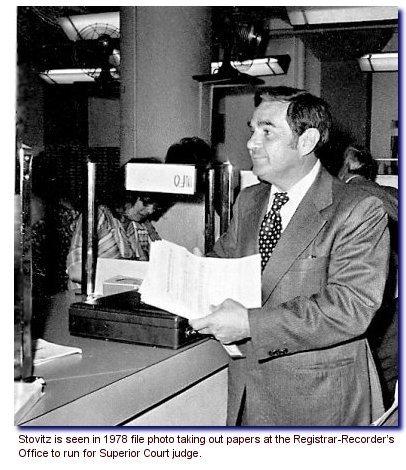
Stovitz, who was head of the trials division of the office downtown, had been chosen to prosecute Charles Manson and his cult followers for the brutal murders of actress Sharon Tate and three house guests and a groundskeeper, and for the unrelated slayings of Leno and Rosemary LaBianca. Public interest in the case was intense, and Los Angeles Superior Court Judge Charles H. Older imposed a gag order.

Nonetheless, Stovitz granted an interview to the Rolling Stone magazine in March of 1970. Stovitz’s justification was that he had talked off-the-record. In contravention of that proviso, the magazine published the remarks in its June issue, attributing them to Stovitz. The defendants moved for a mistrial based on the interview, and the motion was denied.

(The Court of Appeal, in the 1976 opinion that upheld the conviction of Manson and two of the accomplices, found that Stovitz, though sincere in his belief that he was merely engaging in a private conversation that was supposed to be confidential, did breach the gag order…but held that it was harmless inasmuch as what he provided was “only a droplet in the sea of publicity.”)

Vincent Bugliosi, who was brought in as second banana to Stovitz, recounts in his 1974 book, “Helter Skelter”:

“After the Rolling Stone interview, Younger had told Aaron: ‘No more interviews.’ Being somewhat easygoing by nature, Aaron had trouble complying with the edict. Once, when Younger was in San Francisco, he’d turned on the radio to hear Aaron commenting on some aspect of the day’s courtroom proceedings. Though Aaron’s comments were not in violation of the gag order, on his return to L.A. Younger warned Aaron: ‘One more interview and you’re off the case.’ ”

A one-line comment to a reporter in the hallway outside the courtroom—characterized by Bugliosi in his book as “a passing remark” hardly amounting to an utterance in the course of an “interview”—led to Stovitz’s ouster from the case on Sept. 4, 1970.

The Associated Press account of that action says:

The veteran prosecutor who mapped the state’s case against four defendants in the Sharon Tate murder trial has been pulled off the case, reportedly because of his statements to the news media.

The district attorney suddenly removed Chief Prosecutor Aaron H. Stovitz in midtrial Friday saying he was needed for administrative duties.

Sources said Dist. Atty. Evelle Younger had been upset about out-of-court statements by the two prosecutors.

Stovitz, 45, chief of the district attorney’s trials division, had been on the case, assisted by Vincent Bugliosi, since the actress and six others were found slain in August 1969.

Charles M. Manson 35, leader of a hippie-style clan, and three women followers have been on trial since July, charged with murder-conspiracy.

Stovitz often traded jokes with reporters in corridors outside court.

Early this week he was quoted by some newsmen as saying that testimony by defendant Susan Atkins about her health was “a performance worthy of a Sarah Bernhardt.” Miss Atkins told the judge she had stomach pains and was too ill to continue. A doctor said she was in good health.

Stovitz said later this comment, made in the corridor, was off the record.

A source in the district attorney’s office said Younger has received criticism from the legal profession about comments by prosecutors. The judge has issued an order barring principals in the trial from discussing it publicly.

….

Younger said Stovitz has “a very important position on our executive staff. He’s been away from this responsibility too long….We think the change will be beneficial all around….I will have no further comment.”

Stovitz, at the time, did not talk with the press about his expulsion. The Herald-Examiner’s issue of Sept. 5, 1970, says:

“The 46-year-old Stovitz obviously was emotionally upset by his removal from the case and left his office two hours early.

“He declined to comment on the reasons for his being taken out of the trial, saying only:

“ ‘I’m sorry but there is nothing I can tell you.’”

He did, however, discuss it six years later with Laurinda Keys, then a staff writer for the Pasadena Star News. (I knew Laurinda before she forayed to the Star News; she was a reporter for the Daily Journal, where this column appeared from 1972-77. She went on to become, for a good number of years, a globe-trotting reporter for the Associated Press.)

Her June 13, 1976 Star News article relates:

“Stovitz said that about three weeks before he was removed from the case he and Bugliosi had a conference with Younger.

“ ‘Younger told us that he wanted no more press statements and that if we violated that order we were going to be taken off the case. We religiously abided by that during the trial.’

“But one day, defendant Susan Atkins requested a delay in the trial because she had a stomachache. A doctor examined her and said her only problem was that she was constipated and refused to take a laxative, Stovitz said.

“A hearing in which Miss Atkins cried and begged for a continuance was out of the presence of the jury but most of the press were present. After the judge refused to grant the delay, Stovitz said he walked out of the courtroom and a UPI reporter who had missed the hearing asked him what had happened.

“ ‘Oh, she gave a performance worthy of a Sarah Bernhardt,’ was Slovitz’s offhand reply. The reply went out on the UPI wires.”

Hmmm. Strange that the 1970 AP story doesn’t mention that Stovitz’s courtroom corridor remark had been to a reporter for UPI…AP’s then-viable competitor. Strange also that Bugliosi’s account doesn’t reflect Younger’s apparent displeasure with him, as well as Stovitz, for talking with the press.

Stovitz, 84, now terms his hallway remark “innocuous.” He tells me he’s “really not bitter” about his removal from the case, but adds that “it was a disappointment.”

Had he remained, he reflects, he, not Bugliosi, would have written books and gained fame.

“At first I felt resentful,” Stovitz says, but adds that he was later able to convince himself, “Look, I’ve still got my job, my family,” and, in the long run, it didn’t matter.

It remains that his career may well have suffered as a result of his reassignment. Stovitz ran unsuccessfully for the Los Angeles Superior Court in 1976 and 1978. In recent years, he served as an as-needed commissioner. On the other hand, if he had led the successful prosecution of Manson et al., this would have been no assurance of advancement. Bugliosi ran for district attorney in 1972 and lost.

Stovitz continues to express a view he’s shared with reporters in the past as to the reason Younger cracked down on him and Bugliosi. Younger was a candidate for attorney general in need of coverage, and wasn’t deriving much press attention from his weekly news summaries of the Manson case. Reporters swarmed about the deputies.

Younger’s son, retired Los Angeles Superior Court Judge Eric Younger, says his late father “liked Aaron.” But, he points out, the district attorney gave Stovitz an instruction to refrain from talking with the press and “Aaron didn’t do it.” Eric Younger, now a private judge, says this was perceived as “direct insubordination, a challenge kind of thing.”

Veteran criminal defense lawyer Joe Ingber reflects that “Evelle Younger was a man who ran the office like a military organization.” Was Younger—a brigadier general in the Air Force Reserve—so consumed by a quest to maintain military-like office discipline that he may have jeopardized the outcome in the Manson case by yanking Stovitz off it?

Expressing the view that removing Stovitz was “unwise” and a “tactical error” is Robert H. Philibosian, the county’s 38th district attorney, serving from 1982-84. But Younger’s action, he opines, did not put the outcome at risk, explaining: “The case was a very strong case.”

This was one of the most watched prosecutions the office had ever handled, on a par with the earlier cases involving the McNamara Brothers (L.A. Times dynamiters) and Aimee Semple McPherson (radio evangelist charged with faking her kidnapping). Yet, Younger, after ejecting Stovitz from the case, entrusted the lead role not to a seasoned prosecutor but to Bugliosi, a lawyer short on experience and long, quite long, on ego. Stovitz was licensed to practice in 1950; Bugliosi in 1964, less than six years before becoming chief Manson prosecutor.

Former Los Angeles County Public Defender Wilbur Littlefield terms Bugliosi as having been, up to that point, “just the guy carrying the files.” In like vein, Philibosian says that Bugliosi “was the brief-case carrier for Stovitz”…but explains Younger’s decision to put him in charge by noting that outside of Stovitz, he was “the only guy who knew anything about the case.”

Now assisting Bugliosi were Deputy District Attorneys Donald Musich, a lawyer since 1963, and Steven Kay, sworn in as a lawyer only four years before. This was not a prosecutorial “dream team.”

The Sept. 4 AP account quotes Paul Fitzgerald, attorney for co-defendant Patricia Krenwinkel, as rejoicing at the dismissal of Stovitz from the case, exclaiming: “What a break.”

Could there have been a defense verdict, given the evidence? Our retired general manager, John Babigian, once aptly described litigation as a “crap shoot.” Whatever slight chance there was of acquittals in the Manson case was no doubt enhanced by virtue of Stovitz—seasoned, likeable, trusted by juries—being removed. Whether that chance was of such significance as to have rendered it unwise for Younger to overlook what he saw as a last-straw instance of direct disobedience remains a matter on which views will differ.

DEPUTY DRAWS SUSPENSION—Another personnel decision by Younger which drew press attention, but did not generate controversy, was the 10-day suspension, without pay, imposed on Deputy District Attorney Harold Prukop. The lawyer had been the Democratic candidate in a run-off with Republican incumbent Floyd Wakefield in an Assembly race. Wakefield’s campaign made use of a routine letter Younger had sent commending him for his votes on law enforcement matters. Prukop requested a letter from Younger clarifying that he wasn’t endorsing the legislator from South Gate. Younger complied, saying in the letter that he was making no endorsement in the race—but adding that he did commend Wakefield’s voting record on issues relating to law enforcement. That last part was left out when the Prukop campaign reproduced the letter in campaign literature. (Prukop lost the race.)

In a missive to the deputy advising him of the suspension, Younger said that in disseminating an altered letter, he created “the clear impression that I was denouncing Mr. Wakefield and indirectly supporting you, which was not true.”

Prukop was disciplined under a portion of an office manual which said that an employee involved in politics “should be keenly aware of the responsibility not to bring embarrassment to the department of the district attorney.”

That does seem like a rather vague standard. It’s no longer in effect.
Thursday, May 08, 2008

An Important Distinction


With everything in the media now, Sadie's impending death, Squeaky's unlikely but alleged flip and the pursuit of imaginary victims at Barker, along with Debra Tate's newfound desire to make the murder of her sister all about her (disgusting) with false interviews and stories about musty clothes, it is important as TLB scholars to focus on the truth.

Nothing Debra Tate says should ever be regarded as anything but self serving.
There are no bodies at Barker Ranch,
Sadie doesn't "deserve" to die a horrible death (nobody does) but does not deserve much sympathy either.
I think the chances that Squeaky betrayed Charlie at this point about as likely as the US "winning" in Iraq.

What annoys me most at the moment is that people just quote Helter Skelter as truth. It is FILLED with lies and slanted reporting.

Here is how to handle it-

If it is from a trial transcript it is probably correct.

If it is a "quote" then it is probably made up.

I don't believe half the shit Susan or Leslie allegedly said.

Three bodies at Barker? Sure Bug.

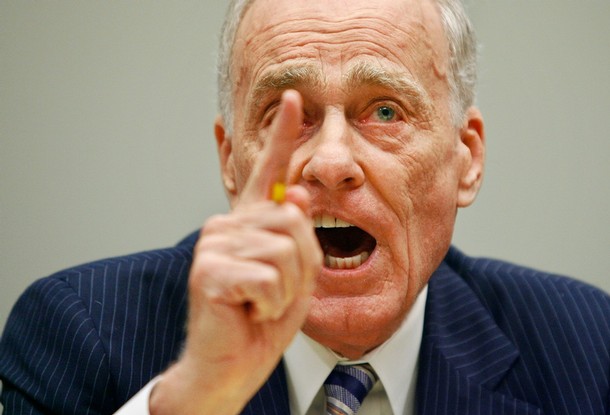
DO NOT use a novel by a deluded District Attorney who assaulted his mistress and stalked his milkman as a definitive tome about anything.

We want the truth people.

That is all.

Saturday, January 12, 2008

Do You Think They Know....?


Did anyone tell them it was mostly fiction?

If you HAD $118 to waste would you waste it on this?