Showing posts sorted by relevance for query Juanita Wildebush. Sort by date Show all posts

Wednesday, July 19, 2006

My Life With Charles Manson Chapter The Nineteenth


Chapter 19

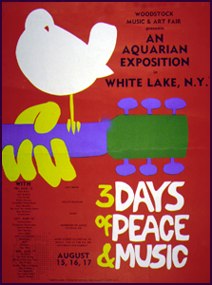
August 1969 will always remain indelible in my mind: the Tate-La Bianca murders, the bloodcurdling fruition of the Manson nightmare, demons unleashed from the bowels of a diseased man in a diseased society. In August 1969, at a rock festival at Woodstock, 400,000 gathered to listen to a moving expression of a generation’s agonized feelings for its country – for the gulf between the flower children’s aspirations and the harsh realities of what was going down in America. I felt the harshness that morning while gazing down the barrel of Don Ward’s shotgun.

Don Ward was short, balding, middle-aged, and built like a fireplug. His reputation as a lawman had spread far beyond his legal jurisdiction in the valleys around Shoshone. I’d never met him before that day, but I’d been told once in Tecopa that “old Don Ward is a little bit o’ hell.” He was that morning. When Bob asked him what was going on, he waved the barrel of his shotgun up under Bob’s nose.

“What’s goin’ on is that this gal” – he pointed at Juanita – “about two months back, she gave my niece a marijuana cigarette!”

“I didn’t even –.”

“Yes, ya did!” Don bellowed, his face turning a violent crimson. “My wife runs the drugstore in town and she seen ya. Now, you just listen: there’s six kids in Shoshone on pot. And I know where it comes from – from that goddamned ranch up by Golar Wash. If I ever hear of it happenin’ again, ever, I’m gonna come up there and clean that whole place out!”

“Don’t threaten us,” Crockett said. “It isn’t necessary, and you won’t like it.” Ward glanced at Crockett as the other co handed him I.D.’s taken from our wallets.

“It might have been necessary a couple of months ago,” I added, “but it isn’t now… you can search the truck.”

“I know what I can do!” Ward barked. “And I know this gal was passing out marijuana.”

“Not anymore,” Juanita said. “Things are different. I’m married now… this is my husband.”

Bob’s head spun around as though he’d been punched.

“I.D. says you’re Wildebush and he’s Berry. Well, we don’t go for them back-porch ceremonies around here.”

“Well, we’re getting married.”

“Ain’t that swell.”

Ward returned the I.D.’s and told us to scram. “If I hear of any more funny stuff going on at that ranch, there’s gonna be some heads rollin’.”

By noon the next day Bob and Juanita were packed and ready to go. We helped them transport their stuff to Bob’s truck at the foot of the canyon, wished them luck, and watched as they drove out across the valley. It was the last I ever saw of Juanita Wildebush.

During the next three weeks Brooks and I worked daily with Crockett – climbing mountains, digging, studying the terrain. The exercises he put us through were strenuous. With full packs, he had us running up and down the steepest trails time after time without resting, while he ran with us, suffering as much as we did. “Keepin’ up with two twenty-year-old kids ain’t that easy.”

One afternoon, while Brooks cleaned up the ranch house, Crockett and I went out to work the Gold Dollar. On the way back from digging (our packs filled), Crockett suggested we play follow the leader. “Ya just do what I do.” With that he took off down the trail at a trot. I followed him, stepping where he stepped. When we got back to the bottom, he turned around. “Now let’s run back up. You go first.” I was beat but determined to keep up with Crockett. I took off up the trail with him right behind me. By the time I reached the top, I was panting. But I’d no more than paused to catch my breath than Crockett whirled around and started back down again; wearily I trudged after him, trying to keep pace, trying to keep from falling on my face. By the time we reached the bottom, I was gasping for air. “Okay,” he said, “one more time.” I couldn’t believe it! Instinctively I turned and started back up, but my breathing was coming too hard, I just couldn’t go on. I was angry and exasperated. Mid-way up, I’d had it and was ready to cuss Crockett out. When I whirled around, he was right behind me, grinning. I don’t know what I intended to say, but all that came to my mouth was a long wheezing “Youuuuuuuu!”

As I gasped out this word, Crockett stopped in his tracks, still grinning. I looked at him dumbly, half-dazed.

“What happened to all that heavy breathin’?” he asked.

As he spoke I realized that my panting had stopped. I was calm, collected, and breathing evenly. To me, the experience was almost revelatory – off and on for years, I’d practiced yoga, trying to learn to control my breathing and energy flow. This new discovery elated me.

“No need to keep on breathin’ like that once ya stop workin’,” Crockett remarked. “Most times people get to breathin’ hard and let the momentum of it carry ‘em when they don’t need to… Let’s head back and get something to eat.”

I followed Crockett up the wash, feeling suddenly more centered and in tune with my body than I ever had squatting on a yoga mat.

“Ya know,” he said moments later, “one reason you work so hard is that you never learned how to walk.

He pointed out how I dragged my feet instead of walking with my knees raised and my steps following each other in an even rhythm. “Walking shouldn’t be work, it should be like floatin’. Tell ya what, pretend you’re walking four inches off the ground. Ya just do what I do, make every step a different step, never take two steps alike. Ready?” I nodded, and Crockett strode forward, stepping to the left, then to the right, up on a rock, down on another, walking on his toes, then his heels, on the side of his foot – taking long strides, then short ones, then in a series of tiny steps. We must have looked like a couple of spastics winding our way up the wash. But in time, during the days that followed, this exercise helped me gain an awareness of walking, and I learned to move with an easy stride that took much of the tension out of the exercises.

Crockett used to say that the body is the temple of the spirit and that the way the body moves is a reflection of the spirit. “The spirit moves the body and the muscles in a beautiful way. It doesn’t mean the spirit has to stay in the body, but mostly it does, and the way I see, it deserves a nice ride. Spirit,” he said, “occupies no time and no space. It can postulate, and perceive what it postulates.” But getting in touch with it, he insisted, was impossible unless one was turned in to the body. “It’s like all that yoga… getting’ the body lined up so’s the spirit can move around some and be in touch with other spirits, other forces.”

Charlie’s views on the body’s importance in sex closely paralleled Crockett’s. Charlie had said that what made sex “a spiritual trip” was a spontaneity – “Change the motion, change the rhythm,” or as Crockett had put it, “Never make the same step twice.” It was a way of getting free, aligning the body with the spirit, and in so doing being in touch with the greater energies around you.

“Sometimes,” Crockett said, “you hear people say that mind and spirit are one. But it really ain’t like that. A better way to look at it is to picture a man riding in a carriage. The carriage is the body. The spirit rides in the carriage. The mind is the driver sitting on top. The emotions are the horses pulling the carriage. The brain is the reins between the mind and the emotions. The mind, the emotions, and the body are all vulnerable to distraction, laziness, habit, misdirection. I mean, you just can’t let that carriage go along on its own momentum and think your spirit is okay. You got to be aware all the time. That’s why we keep on carryin’ heavier loads and climbin’ steeper trails – to keep our awareness keen. It’s like ya told me Charlie said, ‘Come to Now.’ Well that’s right, where the spirit is concerned, Now is a twenty-four-hour-a-day proposition.”

Perhaps the heaviest experience of that summer happened around eight-thirty one night when it started to rain. The three of us were sitting in the bunkhouse playing bridge. A couple of my friends – a man and his wife – had come up to the ranch that day and were sleeping in the bus with their little daughter. We were in the midst of the game, joking about how we had made it rain (it seldom rains in Death Valley in August) just by postulating it in our minds, when I remembered I hadn’t taken the mattress up to the bus for my friends to sleep on. The mattress was still leaning against the wall of the bunkhouse.

“That floor gets pretty hard,” Crockett said. “Why don’t you run the mattress up to ‘em?”

“Rainin’ too hard now.”

“ Naw, the rain will stop when you go outside… long enough for you to take it up there and come back.”

Brooks and I both looked at Crockett.

“Well are ya gonna do it?” he asked me.

“Sure… sure.” I grabbed the mattress and ran through the open door. The moment I stepped outside, the rain stopped dead. Flabbergasted, I hurried up the hill to where the bus was parked, left the mattress, and trotted back to the bunkhouse; it couldn’t have taken more than forty seconds. Not one drop of water fell on me. Yet, the moment I stepped back inside the bunkhouse, it started to pour.

Crockett was grinning from ear to ear.

“How the hell did you do that?”

“We did it,” he said.

“How?”

“Well, you saw everything I saw – you tell me how…”

“But how did you know?

“Sometimes ya just know things.”

“It doesn’t make sense,” I said.

“Postulate and percieve,” Brooks declared.

By that time Brooks and I were firm believers in Crockett’s powers. The stronger his influence, the more anxious we were that he meet Charlie. We hadn’t seen a newspaper in weeks and knew nothing about developments in the Tate-La Bianca investigation, nor that Spahn’s had been raided (on August 16), the Family arrested for possession of stolen vehicles, and later released. We asked Crockett to agree to see Charlie, but he wouldn’t until he was ready, until his own curiosity about “this guy Charlie” got the better of him.

A few days later, Brooks and I were in the garden picking vegetables while Crockett sat on the porch whittling on a piece of wood. The air was still; yet, I heard something – a low rumbing sound which seemed to be coming from some great distance.

“What’s that noise?”

Brooks looked up.

“Hear it?”

“Yeah, I hear something. Sounds like a motor… someone coming up the valley.”

For three days we heard the sound – a low, ominous vibration, a kind of psychic rumbling that seemed to echo through the canyon. But no one came. Finally, one evening after hiking back from the mine, I asked Crockett what it was.

“Your friend Charlie,” he said solemnly without looking at me. “I lifted the gate. Wish I wouldn’t have. Listen to it… sure ain’t the sounds of harmony, is it?”

Sometime around noon the following day, Brooks and I looked up at the same time. We were seated at the dining-room table across from Crockett.

“You smell that?” I asked.

“Yeah… somethin’,” Brooks mumbled through a mouthful of cornbread.

Crockett sniffled. “Sounds like a combination of honey… and pussy.”

For some reason the association struck me. “It’s Brenda… goddamn, it’s Brenda!”

Two hours later, a bright yellow dune buggy pulled into the yard, and Brenda, Tex, and Bruce Davis got out.

“Here they are,” Crockett declared in a monotone as Brooks and I walked out onto the porch.

Brenda waved. “Howdy,” she called out.

I waved back and walked down the path with Brooks, my eyes on Tex Watson. I could hardly believe it was the same person. He looked like a zombie. His face was unshaven; his hair had grown several inches and hung over his eyes. The clothing he wore – Levi’s and T-shirt – was filthy. His vapid stare unnerved me. Like Bruce, he carried a sheathed hunting knife, and I noted when he stood aside to let Brenda out of the dune buggy that a shotgun and a box of shells were lying on the seat.

Bruce was no less grungy, yet he seemed more alert. There were open sores, like boils, on the side of his neck and on both arms. Brenda, meanwhile, though she appeared slightly emaciated, was enthusiastic and greeted Brooks and me with a hug as Bruce hopped out of the jeep to deliver Charlie’s message:

“Charlie’s down at Sourdough Springs… says if he has your agreement, he’ll come up.” By that time Crockett had ambled down from the house.

“Sure,” he said, “send him up.”

While Bruce drove the dune buggy back down the wash to relay the message, Brenda and Tex followed us inside the ranch house. Brooks bought out a plate of cornbread and a pot of coffee. When I got up to go to the kitchen, Crockett followed me, leaving Bruce with Tex and Brenda. Brenda was rapping on about Helter-Skelter and how they were ready to move everything to the desert. I heard her mention something about Bobby and Mary, but the words were unintelligible. Crockett walked up beside me to say that Charlie was playing “fear games” and to keep my cool.

Less than an hour later Charlie drove into the yard behind Bruce with a full contingent of girls: Squeaky, Sandy, Ouisch, Snake, Sherry, Cathy, and Gypsy. When I went out to greet them, Charlie gave me a big hug, but his eyes were scanning the ranch house. “Where’s this guy Crockett?” he asked almost at once.

“Come on in and meet him.”

It must have been about four when we all gathered in the ranch house around the table. Crockett sat at one end playing solitaire, Tex at the other, beside Snake and Squeaky. Charlie, meanwhile, paced nervously around the room, casting an occasional glance at Crockett, while declaring that the movement of guns, jeeps, dune buggies, and supplies to Death Valley had begun. At one point Charlie came up behind Brooks, who was seated beside Crockett, and pulled out his hunting knife. He jerked Brooks’s head back and laid the blade against his throat; he spoke to Brooks but looked at Crockett.

“You know, Brooks, I could cut your throat.”

“Right, Charlie,” Brooks said jokingly, as though it were all in jest.

It’s certain Charlie was struck by the change in Brooks, who, only months before, was completely paranoid and hardly able to function. It’s equally certain that had Brooks known about the murders, he would not have been so cool.

But it wasn’t Brooks or me that Charlie was baiting, it was Crockett, who after a cordial “howdy” and a handshake, had lapsed into silence before his cards. Charlie wasted little time in sending several of the girls with Bruce Davis to check on the Meyers ranch; then he say beside Crockett and began rapping about Helter-Skelter. Crockett just listened while Charlie laid out his trip, pausing just long enough to ask Crockett for a cigarette. Crockett handed him one. A could of times Crockett muttered “yeah… uh-huh” but little else. It wasn’t until Charlie got into his “we-are-all-one” routine that Crockett seemed to perk up and listen more intently. Brooks was standing in the doorway to the kitchen. I was seated at the opposite end of the table beside Brenda.

As Charlie spoke, Crockett nodded, his hair falling in tight ringlets around his eyes. Charlie leaned forward, his elbows on the table, his hands gesturing freely.

“Dig it,” he said. “I am you and you are me.”

“No,” Crockett interrupted. “No… that ain’t true.”

Charlie’s hands came to rest on the table; he just stared as the old man went on to explain, while I exchanged glances with Brooks.

“We are both spirits… that’s true, both capable of postulating and perceiving that which we postulate. In that sense we are the same… but we have lived different lives and had different experiences, therefore I am not you and you are not me.”

Moments later, Bruce Davis come in to announce that everything seemed copacetic at the Meyers ranch… ready to move in.

Charlie glanced at Crockett, who had returned to his gama; then he addressed me. “Come on, Paul, let’s take a dune-buggy ride.”

We hiked down the trail and I climbed into the dune buggy.

“Look,” Charlie said, climbing in beside me, “get this straight – I don’t release you of your agreements. I don’t release you from nothin’!” He fired up the engine and backed the buggy into the road.

“You know, you broke my heart, man… just when I needed you.”

I didn’t say anything. I felt strangely composed as we passed the Meyers place and headed up behind the ranch.

“I gotta scene goin here now, Charlie.”

“What kind of scene? What are you doing?”

“Just doin’ things with Brooks and Crockett.”

“What things?”

“You told me never to put my business in the streets.”

I’m not the streets!” Charlie bellowed, slamming on the brakes, his eyes flashing. “What about our trip… what about the things we were doing?”

“I’m still doing them, I’m still -.”

“I ought to kill that old man is what I should do.”

When we reached the summit, Charlie stopped and faced me.

“I’m gonna get you back with me… you ain’t released from nothin’…”

“It’s too late.”

“Even if I have to torture your little ass.” He glanced at me. “Even if I have to tie you to a tree and slit your belly open; I may just tie you up and have the girls take turns givin’ you head till you’re about ready to come, then I’ll cut your prick.”

I remembered Charlie’s fear games and was determined not to let him get to me. “You’re a riot,” I said.

“You know, man, we had to kill Shorty.” He fired up the engine, his eyes still on mine.

“That right? How come?”

“Got to talking too damn much… a real pain in the ass… we cut him up real good.”

I didn’t believe him. I didn’t want to believe him. Had I gone for it, I would have been overwhelmed with fear, and that fear might have done me in. Yet, when he said it, I felt it might be true, that Charlie was capable of such an act. Only minutes before, I’d seem him put his knife to Brooks’s throat. Yet it was all for show, all done to get Crockett. Crockett was the one Charlie wanted – not to kill, but to discredit and invalidate in front of the Family. Winning me back would be one way to do it.

Charlie recognized and respected Crockett’s power (the fact that he asked permission to come up to the ranch was proof of that); there was also a part of him that sought to learn what Crockett had to teach. By that time Charlie had created a void around himself; he had fallen “into the hole” of his own madness. He could only grow if he were challenged, and by then there was no one to do so – just a band of followers programmed to heed his every whim. Just how far they were programmed to go (and had gone), I had no idea.

As we approached the Meyers ranch, Charlie described his plans to move in immediately. He spoke to me as though I had agreed to rejoin the Family, which I hadn’t. He said he was bringing in enough supplies and weapons to outfit an army. He said Helter-Skelter would go down in history as the grand finale.

We had just pulled in and parked in front of the Barker ranch when Charlie asked if I’d heard about Bobby Beausoleil and Mary Brunner.

“What about them?”

“They’re in jail, man… for murdering Gary Hinman.”

“Did they do it?”

Charlie hopped out of the dune buggy, ‘Sure they did it… you did it, I did it… we all did it.”

By the time it was dark, Charlie and the Family had moved, lock, stock, and barrel, into the Meyers ranch, leaving Brooks, Crockett, and me alone at the Barker ranch, just a quarter of a mile away.


COPYRIGHT PAUL WATKINS AND GUILLERMO SOLEDAD

Sunday, June 18, 2006

My Life With Charles Manson Chapter the Eighth


Part Two:

Charlie? Who the Hell is Charlie?

Chapter 8

I found myself anticipating the trip to Mendocino—a chance to get out on the open road, away from L.A., away from Charlie and the ranch. But we needed a vehicle. On the first of September 1968 we bought one. The girls had to appear in court for their drug bust on the tenth, so it gave us several days to ready the bus. We parked it between the saloon and George’s house, and after sanding it down, painted it a brilliant kelly green with a white stripe around it. While Tex and T.J. tuned the engine, the girls spliced together chunks of thick red carpet to cover the floors. They also made velvet curtains and a black satin headliner, embroidered with sequins. We took out all the seats and converted the interior into two rooms partitioned by a piece of blue velvet. In the back we constructed a plywood platform and beneath it a storage cabinet for food, tools, and spare parts. On top of the platform we laid out mattresses, satin sheets, and mounds of fluffy black and red flowered pillows. In the front of the bus, behind the driver’s seat, we set up a narrow table surrounded by pillows, and next to the door, a stove.

By the end of the week the bus was ready. So was I.

We set out about 4:00 p.m. from Spahn’s on a Sunday; eleven of us: Stephanie, Brenda, Mary, Clem, Kim, Sadie, Katie, Gypsy, Ella, and T.J. (Thomas Walleman), who, along with Clem, had live with the original hippies in the back ranch house before joining the Family. I was driving. We took Topanga all the way to the coast highway and headed north; we were all in good spirits. Kim and Clem lounged in the back with the girls while T.J. and I sat up front bullshitting and munching zuzus.

“Damn thing’s got some power,” T.J. mused as we barreled out of Malibu, heading toward Oxnard. “Runs better than the last bus Charlie had.”

T.J. was about five-ten, a chubby 170 pounds—an unlikely member of the Manson Family in some respects, since he was older than Charlie and going bald. He looked like the heavy in some B-grade western. He wore upper false teeth and was forever popping them in and out of his mouth, a habit that seemed to delight him. Though the girls were never particularly impressed by T.J., he had managed to cultivate their affectionate tolerance. He was useful to the Family (to Charlie), and they knew it. He was earthy and stubborn., and walked with an air of hubris which belied his insecurities. He never pulled much weight in the Family and was used primarily to score dope and was used primarily to score dope and vehicles. Later, when we got heavily into the revolutionary programming (Helter-Skelter), T.J. used his connections to score motorcycles and dune buggies. He could be obsequious at times, but for the most part I got along well with him.

We spent the night in Oxnard, then drove straight through the following day to Grapata Canyon. The next morning, near Big Sur, we stopped along the road and hiked down to the beach. I sat on a rock beside Brenda and took off my shoes. She pointed to the gulls overhead and smiled. The sky was clear, the sea dazzling. It was a rush being on the coast again. We strolled down the beach about a mile, wading in the surf and picking up driftwood and shells; then we walked back toward the car. We didn’t talk about it; but it was there, his presence. Charlie was right; we were free; there were no leaders, no controls. By noon we were headed up 101 toward San Jose.

Just north of Monterey, we stopped for gas. T.J. was at the wheel. I sat beside him. Directly behind us, Mary and Sadie discussed the effects of motherhood on the body. Mary was showing Sadie the marks on her breasts, telling her to use lots of oil on the skin. Pooh Bear and Zezos had been left at Spahn’s. Charlie insisted that children born to the Family be the responsibility of all the women so that strong dependency between mother and child be avoided. T.J. shouted to the attendant to check the oil. Sadie was the first to spot Bobby Beausoleil’s Dodge camper pull in and stop.

“Hey, it’s Bobby!”

“Where the hell has he been?” T.J. muttered, glancing at me.

“Hi, Cupid,” Gypsy hailed him out the window.

Bobby got out of the camper and trotted over to the bus. “Hey, Gypsy, what’s happening?” He flashed a smile. I rolled down my window. “Hi, Paul.” We hadn’t seen him since the second week at Spahn’s—the day he brought Gypsy to the Family.

Bobby wore bell-bottoms and a long-sleeved white shirt under a buckskin vest; he was always spiffy in his hip Hollywood style and was known as Cupid by many of his Topanga Canyon cronies. At five-eleven he was slender and rather loose-jointed, with large droopy blue eyes and soft, rounded features, handsome in a boyish, almost angelic way. I liked Bobby but always felt he was too superficial and arrogant to make it in the Family on a permanent basis. He had gotten behind Charlie’s scene on occasion but could never stick it out; he was too frenetic, too greedy—always giving orders and trying to usurp power he never really had. Yet he always came back. Before long, a pattern developed; each time he returned he gave Charlie something as a means of buying his way back—a car, a truck, a girl. Then, in the summer of 1969, when he came for the last time, his welcome was worn out. He told Charlie he’d do anything for the Family; that’s when Charlie told him: “Then you know what to do with Gary Hinman.” Hinman had been an acquaintance of Charlie’s, a musician who had apparently owed Charlie money and had refused to pay it back. Two weeks later, Gary Hinman was dead.

The day we met Bobby in Monterey he was on his way to L.A. with his wife, Gail, and a girl he’d met in Berkeley named Leslie. When I suggested we rendezvous at a campsite down the road and smoke a joint, he agreed. We gassed the bus, bought three quarts of oil, then drove south one mile to the campsite overlooking the sea. It was spectacular, lush with cypress trees and wild poppies. Bobby pulled his truck in beside the bus and joined us inside. We smoked some grass and jammed a little, then cooked up a pot of baked beans and made a salad. It was the first time I’d seen Leslie Van Houten.

Leslie was nineteen, soft-spoken, and initially shy. When I attempted to engage her in conversation during dinner, she answered my questions with little elaboration. I did learn that several months before she had left her home in Monrovia, California, to travel north and had wound up in Berkeley, where she met Bobby and Gail. When they asked her to join them, she agreed. I sat beside her on the cliff, drinking coffee. Her movements were fluid. An abundance of dark brown shoulder-length hair, hazel eyes, and rosy dimpled cheeks gave her a country-girl air. Yet, there was s softness, a reservation about her that seemed classically feminine and refined, even coquettish. I was attracted to her at once, and after talking to Bobby, it was agreed that he and I exchange sleeping quarters.

That night I made love with both Gail and Leslie in the camper while Bobby got it on with friends in the bus. After Gail went to sleep, I talked to Leslie for hours. She described her youth in southern California, growing up in a middle-class suburban neighborhood. She’d been a good student and a cheerleader; her folks, it seemed, though divorced, were pillars of respectability. Leslie’s dissatisfaction, her wanderlust, grew out of a deeper need for love and a sense of purpose—something I thought I’d found in the Family. I told her about Charlie and suggested she come to Spahn’s and meet him. She said she would. I later regretted ever having made that suggestion.

The next morning they left for L.A. and we continued north toward Mendocino. The good weather held out—plenty of sun and fresh air and not much traffic. T.J. drove while I sat back with the others. Clem dozed beside T.J. in the front seat. Stephanie, Katie, and Ella were embroidering designs into the collars and pockets of Charlie’s shirts. That’s when we heard the clanking of metal and the bus jolted to a stop.

“Son of a bitch,” T.J. groaned. “Sounds like a fuckin’ rod!”

T.J. got out and opened up the hood. The others piled out behind him, while I searched the back of the bus for tools, only to find that we’d forgotten the toolbox. We held a roadside powwow, deciding to stand beside the bus in a group looking forlorn—the old wait-for-someone-to-rescue-you routine. And sure enough, within minutes a real live hero (a middle-aged custodian) emerged from the Grange Hall down the road and offered to drive me to a garage in San Jose. There I borrowed tools and purchased a rod cap and bearing. We brought them back to the bus and set to work, only to discover that the crankshaft had been dented. The cap fit, but not the bearing. So we stuffed a hunk of leather into the hole, buttoned it up, and jubilantly proceeded down the road. We got as far as the outskirts of San Jose before hearing a horrendous bang as the rod gave up the ghost once and for all.

From there we sent a contingent of girls into town to hustle some assistance. “Try and find someone who knows something about these friggin’ buses,” T.J. barked as the girls crossed the road and extended their thumbs at the first passing car. In less than an hour Sadie Katie, Brenda, and Ella had hitchhiked into San Jose and returned with a young hippie mechanic named Daryl who proceeded to tear down the engine. After he’d dismantled much of it and had it laid out of the highway, he adjourned to the back of the bus with Sadie for a “breather.” Sadie must have taken it out of him, because afterward he got in his truck and split.

We sent the girls out again. By late afternoon they returned in a new four-wheel drive Willys jeep with a dapper-looking Mexican rancher named Diaz. Diaz was a gracious old man, obviously intrigued and charmed by the girls. When he offered to have us towed out to his ranch (some twenty miles east of San Jose) where we could work on the bus at our leisure, we were more than grateful.

By the time we pulled off a narrow, gutted country road onto Diaz’s property, it was nearly dark. But the moon provided sufficient light to see the sprawling plum orchards which spread for miles in all directions. We parked behind his ranch house in a clearing in the midst of the orchard. When we invited the old man to eat with us, he politely declined. He told us he’d send a mechanic in the morning to check out the bus. We offered to pay for the towing charge, but he shook his head. He was a genuine caballero—one of the most distinguished-looking gentlemen I’d ever seen. With a full, walrus-style mustache and thick steel-gray hair, he looked like an elderly, gentlemanly version of Emiliano Zapata. I found myself wishing that Juan was there to speak Spanish to him. Diaz mentioned that he had twelve men in his employ and that if we needed anything to ask them.

For the next two days we worked on the engine. Diaz’s mechanic, a jovial yet fiery Mexican named Gerardo, had trouble finding parts. And when he did, they were invariably the wrong ones. On the third day, I called Charlie and he said to stay with it. “Just get the mother-fucker running and get on back…make sure the girls get to court.”

Twwo days later, Katie, Ella, Mary, Stephanie, and Sadie returned from Mendocino. The case had been dismissed. By then, the engine had been twice torn down and rebuilt; it had been a marathon of hard work, but to no avail; it wouldn’t turn over, much less move. We were all getting antsy, and so were the ranch hands. We deliberately kept the girls close to the bus at night so as to avoid situations that might jeopardize our good graces with Diaz—at least until we had the bus running.

The night the girls returned from town, we ate an early dinner of peanut butter sandwiches, beans, brown rice, and ice cream. Afterwards we gathered inside the bus around a wood-burning stove. We were tired and on edge. There wasn’t one of us who didn’t need a bath. Sadie and Katie were describing their scene in court. Clem had just gone outside to take a leak. There was a full moon blazing in the heavens, and I opened a window to look out across the valley. I could hear the muted voices of the ranch hands coming from behind the bunkhouse; they were singing and the smoke and sparks from their fire were visible beyond the trees.

Clem clomped into the bus. “Those dudes are getting pretty cranked up.” He slumped into the pillow beside Brenda, who was wiping her face with a wet Kleenex. “Drinkin’ tequila like it’s goin’ out of style,” Clem drawled. “Asked me to send a couple of girls down to keep them company. Half of ‘em are already shithoused.”

“Where’s old man Diaz?”

“Didn’t see ‘im…car ain’t there…no one’s in the house, far as I can tell.”

T.J. lit a joint and took a hit. “Shit!” He winced, inhaling as he handed me the joint. “I say we leave this pig here and hitch back to Spahn’s. We’ll get Tex’s ass up here with some tools and fix the son of a bitch, or buy a new engine!”

“I’ll give Charlie a call.”

I left the bus and trotted along the furrowed path between the plum trees, toward the ranch house. I felt good to tun, to breather cold air. The valley was shrouded in a canopy of soft, brilliant moonlight. Diaz had left the porch light on as he said he would.

As I approached the building, the singing of the ranch hands grew louder—funky ranchero songs, slurred, yet spicy with yeehoos and high-pitched ayeees. I opened the screen door and went inside. The phone sat on a table next to a huge meat freezer, by the door. Charlie answered on the second ring.

“It’s me, Paul.”

“What’s happening up there brother?”

“Still hassling this fucking bus…put it together again, but no dice. I think it needs a new block, new pistons…the whole nine yards.”

“Did the girls make their gig?”

“Got back today…no sweat. Judge dismissed it.”

“Dig it, just leave the bus and hitchhike back here…is it cool to leave it there?”

“If it isn’t, we can tow it someplace else.”

“Yeah…far out.”

“What’s happening on your end?”

“Things are a little uptight. George is worked up about paying his taxes…claims he’s going broke. I think Shorty’s been filling his head with bullshit…but it’s under control. But, hey, ya remember that chick from Topanga named Cappy…Cathy? She’s here, says her grandma owns a place out in Death Valley, say we can stay up there if we want. Might be a real trip to go out there, you know. Nice and quiet, good vibes…get our scene together without all this crap.”

“Sounds okay.”

“Yeah, we’ll see what happens. How is everyone?”

Copacetic, Charlie.”

Far-out. Look, you just head on back…”

“Right.”

“See ya.”

By the time I hung up and started back through the orchard, several cowboys were mounted and riding around a small bonfire. I could see them through the trees. I decided to take a closer look and cut back behind the ranch house, coming up beside the bunkhouse. I watched from the corner of the building.

There were eight or nine of them, four on horseback, the others standing close to the fire, swilling booze out of bottles. Two of the riders wore holstered guns. I watched for a while, then crawled along the side of the bunkhouse, before sprinting across the yard and ducking into the plum groves.

By the time I got back to the bus, T.J. was searching frantically through the back cabinet for a weapon.

“Those dudes are getting pretty wild,” I panted.

“We know.” Sadie sat down beside me. “They just rode up to invite us to their party.”

“They’re packing hardware too,” Kim intoned, fastening his bowie knife to his waist. Kim was about five-six and built like the proverbial brick shithouse. Born and raised in Mailbu, he’d developed his body through years of surfing. He seemed to be enjoying the scene that night.

“Let’s not get carried away,” I cautioned.

“Bullshit,” T.J. growled. “We’re out here in the middle of no fucking where…anything could happen…no one around to hear a damn thing…I thought we had a twelve-gauge stashed back here…I found the shells…but…”

“Charlie took it out.”

“Shit!”

“Here they come!” Clem pulled the door shut.

Five riders galloped through the trees, yipping and shouting in Spanish. We jacked up the windows and gathered in front of the bus to watch them. T.J. had a tire iron in one had. Clem was toting a ball-peen hammer.

The riders raced around the bus a couple of times, then reined up outside the door. “You want to come and make a fiesta with us?”

I opened the door slightly and leaned out. “Hey, man, no tonight…really. We just got back from town…maybe tomorrow we can have a party.” The guy I addressed looked like one of Pancho Villa’s mestizo guerrillas—stocky with a round, ruddy face and a luxuriant black mustache. I’d met him before while watching them crate plums, but he was too drunk to recognize me. He was called Juancho and was pretty much the head ranch hand.

“Maybe you girls want to come to the party,” he shouted.

“Not tonight,” I repeated.

“Tomorrow night,” Brenda shouted from inside.

“Shut up!” Mary Brunner’s voice rang out.

“Really, man,” I said, “let’s just call it a night.”

Juancho gave me a long appraising look without speaking, his eyes steady, his left hand holding down the tossing head of a big chestnut mare; the other four riders, meanwhile, trotted around the bus trying to look in the windows.

“Sure,” he said at last. “Tomorrow, maybe…okay.” Then he whirled his mount around, shouted to the others, and they galloped into the trees again, firing off a volley of shots into the air.

None of us slept. We barricaded the front of the bus and took turns on watch. But nothing happened. The ranch hands stayed drunk, hooted and hollered and fired their gunss, but never really made a move on us. Only once, just before dawn, two of them staggered over on foot to request the company of “dos chamacas” to put them to bed. Neither of them had guns, and both were stinking drunk. Each carried a half-pint bottle of Jose Cuervo. They were so comical we were tempted to let them in; but we didn’t.

The next morning after leaving Diaz a note to thank him, we had the bus towed to a huge parking lot in San Jose; then we split up into groups to hitchhike back to Spahn’s.

I went alone. After weeks of confinement on the bus, I felt the need to be by myself. It was around eleven a.m. when I left the others and walked back through San Jose to the first southbound off-ramp. I had no luggage and felt energized standing in the sunlight flinging rocks at a telephone pole. I found myself anxious to see Charlie and the others. The ranch was my “home.” I felt it. I recalled too what Charlie had said about going to Death Valley. As a kid I’d gone there with my father to camp and collect rocks. I remembered the awesome expanse of sand, mountains, and sky. I remembered hiking across the salt flats and taking a bath in the hot springs. The more I thought about it, the better it sounded. I hadn’t been waiting fifteen minutes when a brand-new brown-and-white camper with a girl at the wheel skidded to a stop.

I trotted up to the window. “Where ya headed?”

“Mexico…where you headed?”

I opened the door and climbed in. “L.A.” She pulled out into the highway.

“My name’s Juanita,” she said, still gauging traffic through her outside rearview mirror. She turned and smiled. “Juanita Wildebush.”

“You’re kidding.” I beamed. “I’m Paul…Paul Watkins.”

Juanita was a big, corpulent, rawboned blonde, with thick hair, thick lips, and generous well-tanned haunches. She wore an embroidered Mexican blouse, a tight pair of white shorts, and sandals. Her teeth looked like chunks of quartz crystal when she grinned, telling me she had just returned from Mexico City but was headed right back. “This culture sucks,” she quipped. “After being down there for a year, everything up here seems dead.” She said she spoke fluent Spanish and that after stopping in L.A. she’d be driving straight through to Oaxaca.

“We could have used you last night.” I described briefly what had transpired with the rancheros. She seemed delighted with the story but felt that we should have gone to the party and had a good time. “It would have been a gas. Latin men are the greatest, let me tell ya.” She went on to recount, quite graphically, several romantic episodes that she had enjoyed south of the border. “Those guys don’t just ball; they get down!” So imbued was she with anything that smacked of Latin culture, I felt it futile to do anything but nod in agreement.

“Whereabouts you goin’ in L.A.?” she said at last.

“I live in the Santa Susana Hills at a place called Spahn’s ranch.”

“Never heard of it.”

We chatted amiably while her tape deck boomed out the Beatles and Three Dog Night. The inside of the van was completely customized, with a full leather tuck-in roll, a canopied bed, a propane stove, refrigerator, and a yellow life raft which sat perched on top of the mattress alongside some scuba diving gear. I got the distinct impression Juanita wasn’t hurting for money. And that she was horny. I told her a little about the Family and Charlie and that our lifestyle was pretty much divorced from the rat race Anglo culture she so abhorred. When she mentioned that she had recently come into a small inheritance, I suggested, circuitously, that she stop by at the ranch and meet Charlie. She said she’d like that.

When we pulled up and parked in front of the ranch house that night, Charlie was sitting outside on the porch whittling on a piece of wood.

“Made good time, Paul,” he said. “Only one back so far. Who’s your friend?” Charlie stood as we approached the porch.

“This is Juanita, Charlie…Juanita Wildebush.”

“No shit! That’s your name?…Jesus! That’s real poetic!” He laughed. “Come on in.”

We followed Charlie into the house. While I poured a cold glass of water, he proceeded to introduce Juanita to Snake, Squeaky, Sandy, Ouisch, and the new girl Catherine Gilles, who were seated around the fire. Juan Flynn was lounging around the couch playing with Pooh Bear. Brooks was in the shower, singing. Juanita and Juan exchanged amenities in Spanish and Juanita seemed pleased at this.

Later, Charlie took her aside to smoke a dube while I parked her van down by the corral. I didn’t hurry, so as to give him plenty of time to lay out his rap. I’d told him Juanita had money and that she might be willing to part with some of it. At the time, I wasn’t averse to hustling money for the Family. It was like a game. I could think of no better cause than our own communal existence. And, like everyone else in the Family in those days, I wanted to please Charlie. By the time I got back, Charlie had the full scoop. Juanita’s inheritance was no mere pittance—some fifteen thousand dollars, to be exact; what she needed most, he said, was to have her “wildbush” sucked, good and proper.

“She’s partial to you, man.” He beamed. “So just take her back to her van and ring her bell.”

I hadn’t figured on that. Generally, Charlie was first with any new girl. Had Juanita been physically attractive, he would have been. The fact is, I’d been thinking about Snake all the way home. But I didn’t have much choice.

Juanita and I spent a long and active night in the van. And some of the next morning. She was eager, she said, to move in with the Family. That afternoon she made arrangements to give us some of her money. A week later George Spahn’s four-thousand-dollar tax bill was paid in full.

COPYRIGHT PAUL WATKINS AND GUILLERMO SOLEDAD
Thursday, June 05, 2008

TIN HOUSE Part 2


This confuses me because they act like JUANITA is a made up name. But if you read Paul Watkins' book (check out July 2006 on this site) it seems to be her real name. Juanita Wildebush. And Bob the guy she married having the last name Berry. Not sure what the big deal is. But the interview is intriguing because, well, she points out the truth- big CM wasn't all that bad.

"Juanita" (not her actual name) was on a road trip from San Jose, California, to Mexico via Phoenix, Arizona. In Mexico she was going to try to reunite with her fiancé, from whom she was estranged. By her account, she had had a "harrowing afternoon" the day before, because her van had been broken into and her very expensive stereo system, which she had felt the immediate need to replace before the long trip ahead, stolen. Because of that and because of the state of her romantic relationship, she was, as are most people at the point they are inducted into cult organizations, in an emotionally fragile and vulnerable state. South of San Jose, she stopped to pick up a pregnant-looking hitchhiker who turned out to be accompanied by two men. All three were from the Manson Family. The woman was Susan Atkins, later one of the Tate-LaBianca killers. The essence of Juanita's story is this: she got into the Manson cult by accident, and she got out, nine months later, not long before the murders, by another stroke of fate, in that case probably a stroke of great luck as well. The interview was conducted circa 1984-85. At that time, Juanita was happily married and a successfully practicing professional.

WIN McCORMACK: So, Susan Atkins was the first Manson Family member you met, when you picked her and two male companions up hitchhiking in Northern California. What was she like?

JUANITA: I knew her as Sadie Marie Glutz. Sadie was a kid, a twenty-something-year-old kid. I have lots of really fond memories of her. It destroys me when I think about what happened to her, because she tried real hard to do the right thing. Sort of screwed up all along the line in her choices. Sadie was in the passenger's seat, and the guys were in the back. I remember her talking about their musical group. That was their story. They were all members of a band, and their band's name was the Family Jams. I remember TJ [Thomas Walleman, or "TJ the Terrible"] saying, "Oh yes, we record with Dennis Wilson and the Beach Boys and we use their studios." Dennis Wilson was very much a part of the "peripheral family." I remember Sadie telling me very intently what a wonderful group it was and how neat, how much it meant to her, and how it really worked as her family. I talked to her about Mexico and how I was engaged to a guy living there. This was the end of September 1968. I was going to be twenty-four next month. She talked to me about how wonderful this place was where they lived near Los Angeles. She talked with the fervor of somebody who'd been converted. [EDITOR"S NOTE: Susan Atkins was involved in the Tate murders and the prior murder of Gary Hinman, a graduate student who dealt drugs to the Family. As recounted in Vincent Bugliosi's book Helter Skelter and in The Family by Ed Sanders, during the Hinman killing, after Manson follower Bobby Beausoleil stabbed Hinman twice in the chest and he lay bleeding to death, Atkins put a pillow over his head to suffocate him. Regarding the killing of Sharon Tate through multiple stab wounds from several different knives, which Atkins participated in, Atkins once recounted to a cell mate how pregnant Sharon Tate had begged for her life and the life of her baby, and how she had responded: "Look, bitch, I don't care about you. I don't care if you're going to have a baby. You'd better be ready. You're going to die." She went on to say that the first time she stabbed Tate, "It felt so good."]

WM: Tell me about your first encounter with Charles Manson.

J: My intention had been to drop the three of them off and to drive on to Phoenix on the way to Mexico to hook up with my fiancé. I totally misjudged how long it would take to drive the length of California, so by the time we drove into Spahn's Movie Ranch near Los Angeles, I was exhausted. They said, "Why don't you stay here?" There was a whole sort of façade of Western town buildings and then off to the right was a trailer with its lights on. Everybody said, "Let's go get Charlie," and everyone went running in. Charlie came out naked. He had been making love to a woman named Gypsy, and she also came out naked. Nobody reacted to that. Nobody thought anything of this. It seemed like the most noticeable thing to me. Everyone was hugging each other, everybody was so happy to see everybody else. They said, "Oh, look what we found, look who we found," and introduced me to Charlie. And he came over and put his arms around me and said how glad he was. Of course, this was the '60s, when everybody was hugging, but there really was a lot of love around that trailer. There was real bonding. It's the same kind of stuff, that same kind of open and unthinking love that you see in the face of a Moonie. Charlie got a guitar out and everybody started singing. It was just wonderful fun, but it was very clear that nobody had any talent. I felt perfectly comfortable with them. That night, Charlie asked if he could spend the night with me in the camper and I told him no. He let me know that I was being selfish and self-centered and that there was a deficit in my character.

WM: You decided to stick around there rather than driving on to Phoenix and then Mexico to meet up with your fiancé as you had planned. Why?

J: The wooing began almost immediately. Somebody came along and brought me breakfast, then Charlie came along and brought me coffee. From dawn on I had somebody around to tell me how wonderful it was there and I don't think I ever spent another five minutes alone until several weeks later. At the time, this was a group of people who lived my philosophy - make love, not war - all of those things. At least, to all appearances, that's what they did! Life on the ranch then was just one great big make-believe time. There was a real spring back in the woods. You'd take a shower under a waterfall. You could run through the woods naked. There were horses to ride. It was a magical kind of place.

WM: You became one of Charlie's lovers very quickly, I believe. How did that happen?

J: I didn't know then how to say no to anybody. And then I was real nerdy too. And here were all these girls, women, falling all over him. And it was my door he was knocking on.

We went off to Malibu in my camper just a few days after I had gotten there. A man called Chuck, and Sadie and Charlie and I. My camper was one of those pop-up ones with a bunk at the top and a bunk at the bottom. And we had gone over there and dropped some acid. We spent the night there and on the beach, and in the morning, when dawn was breaking as it were, Charlie and I started making love, and Charlie told Chuck and Sadie to come down into the same bunk we were in. And I tolerated that, although we did not have group sex. I tolerated that, and that seemed to be significant to Charlie. And I remember after that Chuck and I went for a walk on the beach, and I said, "What's this guy all about?" And Chuck said he was this really powerful, wonderful person.

He was a good lover. Probably the most phenomenal lover I've ever had. But once I was hooked, he didn't have much to do with me.

WM: What made Charlie such a good lover?

J: What makes anyone a good lover? He was very tender.

WM: Charles Manson was tender?

J: Very. I never saw that man do anything that was hurtful. I really didn't. There is a very incongruous aspect to all of this for me.

WM: Tell me more about Charlie.

J: He was not particularly big - probably five-two. Really wiry, real agile. Almost leprechaunish in some ways, with a quick wit. There was a real playful quality about him, an endearing quality about him. He could be very much the little boy, and he showed a vulnerable side that really got you engaged in taking care of him.

WM: How did he show his vulnerable side?

J: I remember one time - this was at Spahn's, and it was even very possibly that same night I gave him all my money. There were kittens all over the place. The mother cat had stopped cleaning up after them. They had messed in the kitchen. And Charlie got down on his hands and knees and cleaned the kitchen floor. He cleaned up after the kittens. He picked them up and put them inside his shirt and went and sat by the fire and warmed the kittens and played mother cat. I remember him looking up and saying, "I now understand the pain of too much tenderness, because it hurts not to hug them. But if I were to hug them I would hurt them." It was those kinds of things. He showed himself or acted like a very, very gentle man that would never hurt anything.

WM: Would he cry?

J: I did see him cry one time. There was one night, again at Spahn's, where everybody took megadoses of acid and probably some mescaline or something else mixed in with it. Things got really out of hand. I mean really royally. The hallucination that I had that night was one of being in a tent in Arabia where horses were jumping through the tents and all this wild pandemonium was going on. People were hitting each other. The place was literally destroyed. I remember Little Paul Watkins hit me that night. There was pandemonium. Everybody was on their own trip. And Charlie came in to get a pair of shoes and he said to me , "I can't stay here, because there's no love here anymore."

He said, "Tomorrow you have to tell them that they drove me away." And the tears were just flowing down on his face. I asked him to stay, and he said no, he couldn't stay. He said that the animal had come out in them and that love had fled.

WM: You say you have him all your money?

J: It was amazing how quickly Charlie read me. He seemed to know all the right button to push. Within a month I'd signed over my camper and something like a sixteen-thousand-dollar trust fund, which in 1968 wasn't small potatoes.

WM: How did he get you to do that?

J: That's a question I've asked myself many times. Some of it was drug-included. I'm sure. I can remember the night that I told him he could have the money. That day, we started early dropping acid and doing all those kinds of wonderful things. He had been telling me that the thing stood me and the total peace of mind and heart was Daddy's money- I was not going to be free of Daddy until I got free of Daddy's money. Charlie started [saying] that I was my father's ego. And I remember thinking, That doesn't make any sense to me. Then later I convinced myself that it probably was [right], because Charlie was always right. Charlie never openly said that he was the reincarnation of Jesus Christ, but if he didn’t say it, he sure to hell implied it. He would day things about having flashbacks about having the nails driven in through his wrists. He said, "The nails weren't put in my palms, but they were put into my wrists." And, "They always lie to us. Everything's 180 degrees from the way they told me it was. And there is no difference between Jesus and the devil. So your daddy would say I'm devil, but of course I am, because if they told you that good was right, then obviously evil is right. So then I must be the devil, because I'm right."

One of the things we did with my money, which I still feel real good about, was [take care of] the sweet old man who owned the ranch, George Spahn. All of us lived there for free and ran the place for him, because George was blind and eighty-six years old. We cooked for him, and we washed his clothes, and we gave him back rubs and we told him how wonderful he was. George was in danger losing his ranch to back taxes. He hadn't paid taxes and it was coming down to the wire- pay up or lose it. I signed over the money to Charlie and we paid six years' worth of taxes on it. [EDITOR'S NOTE: Bugliosi says in Helter Skelter that one of the ways the Family kept Spahn happy was by having Squeaky Fromme- the family member who subsequently tried to assassinate President Ford- and other Manson girls minister to him sexually "night after night." ]

WM: Did you get to know Leslie Van Houten?

J: Leslie was just a really sweet, personable girl. She had short dark hair and this bubbly way about her. Her father had been or still was a big muckety-muck architect or something in Los Angeles. And my parents were very conservative and very pro-establishment, so she and I used to talk about how no matter what we did, we couldn't be good enough to please these outrageous parents of ours. I remember the last time I saw her we were all out in the desert and we were sitting around the kitchen in the ranch, and Leslie was talking about how we really were her family now, and how she had never felt so close to any of her blood relatives. I just remember how close to her I felt. I really liked her. I think a lot of us always were in awe of each other. [EDITOR'S NOTE: Leslie Van Houten participated in the killing of Rosemary LaBianca - albeit apparently somewhat reluctantly at first. As described in The Family: "Leslie was not participating. Tex [Watson] wanted Leslie to stab. So did Katie [Patricia Krenwinkel]. Leslie was very hesitant about but they kept suggesting it. She made a stab to the buttocks. Then she kept stabbing, sixteen times. Later, the nineteen-year-old girl from Cedar Falls, Iowa, would write poems about it."]

WM: Did you know Tex Watson well?

J: Tex was the mildest-mannered, most polite human being you've ever seen. He was one of those people that called you "ma'am" all the time, called everybody ma'am. He was from Texas. Real handsome but sort of baby-faced handsome. He wanted to go back to school or do something, and Charlie kept telling him not to bother, that it was a waste of time. I remember talking about him wanting to go back to school. I remember, when I heard that he was involved in the murders, being very surprised because he was just this really sweet guy. [EDITOR'S NOTE: By the accounts of Sanders and Bugliosi, Tex Watson was not only the leader but also the most savage and bloodthirsty member of the Tate and LaBianca death squads. At the Polanski/Tate property he shot Steven Parent four times in the head; shot Jay Sebring in the armpit and then drop-kicked him in the nose before stabbing him four times; sliced Abigail Folger's neck, smashed her head with the butt of his pistol, and stabbed her in various parts of her chest and abdomen.; shot Wojciech Frykowski below the left axilla and then finished him off by stabbing him in the left side of his body; and was one of those involved in stabbing Sharon Tate sixteen times. He personally killed Leno LaBianca by slashing him four times in the throat. When he had first come upon Frykowski and Frykowski asked him who he was, he replied, "I am the devil and I am here to do the devil's work."

WM: Getting back to Charlie, in addition to his expressing kinship or identification with the devil, did he ever talk about Hitler? A number of leaders of destructive cults over the years have expressed admiration for Hitler, and particularly of his treatment of Jews.

J: I remember Charlie talk[ing] about Hitler having been right - that the world needed a big purging every once in a while. And I remember saying to Charlie, "If Hitler were here now I'd be dead." And he laughed and said, "No, you missed the point. It's got nothing to do with whether or not you've got Jewish blood. It has to do with purging the world, and having only people who can survive - the only thing that was wrong with those people is that they weren't smart enough to figure out how to escape it."

WM: Manson also talked a lot about race wars, didn't he? Wasn't that the foundation of his "Helter Skelter" ideology and ultimately what led the Family to murder?

J: What was going to happen in this backward world to make it right was that the black man, who had been oppressed for years, was going to become the superior race, and the blacks would rule the world. "Helter Skelter" was Charlie's plan for and name for their uprising and also, it turned out, apparently, for the murders which he hoped would provoke that. [EDITOR'S NOTE: Manson hoped that the murders would be thought to have been committed by blacks, bringing even further oppression down on them, in turn provoking them to rise up.] The reason we had to find a place in the desert was we had to have a place to run and hide, because as whites we were going to be killed or enslaved unless we were smart enough to find a place to live until - until it all balanced out. Eventually, the black man would ask Charlie and the Family to take over, because he wouldn't be able to rule on his own.

We didn't call it "Helter Skelter" until the Beatles record came down, and then it was, "Aha, look at that - our prophets." It's only in the last two years that I've even been able to tolerate listening to The White Album.

WM: Was that really going on, what Helter Skelter describes as the mental preparation and buildup for the murders - playing the songs "Helter Skelter," "Piggies," "Revolution 9," and "Blackbird" from the album over and over? The line in "Blackbird" that goes, "All your life, you have only waited for this moment to arise," which supposedly referred to the rising up of the blacks?

J: All of that was going on.

WM: When did you first go to the desert, or, more specifically, to the Barker Ranch in Death Valley?

J: Sometime in October. Halloween weekend of 1968, I think, was when we first went to the desert. Then, in February of '69, everyone went back to the Spahn Ranch except for me and Brooks Poston, who had been one of the stable-hands at Spahn's, who always wanted to join the Family, but Charlie had never truly accepted him.

So Brooks and I stayed at Barker. They were supposed to get us in ten days, but nobody had ever come back from Spahn's. We were there alone when Paul Crockett and [his partner] showed up. They came on March 10 or 11. They had pulled up to the farmhouse and it was difficult for us to either invite them in or send them away. We couldn't do either. And Paul said that was his first clue [that we were under the influence of mind control]. We didn't know how to speak for ourselves at all. We came out and told them that the place was taken. But Paul just said, Well, it's night, code of the desert, and all that sort of stuff. He and [his partner] had food, and we had very little. [EDITOR'S NOTE: Juanita later married Paul Crockett's partner, whose name is being withheld here for purposes of anonymity.]

WM: What were they doing up in the desert?

J: Prospecting for gold. Paul Crockett had studied with one of the early, early people who were of Ron Hubbard's ilk - one of the first five people that L. Ron Hubbard, later the founder of Scientology, had studied with himself. This man had known Ron Hubbard when he used to say things like, "Well, you know how to really make it in this world is to start your own religion. Nobody can touch you, and you can really do it. Maybe I ought to take this stuff and can it." And that man had told Paul the reason he wasn't a Scientologist was that he didn't like the amount of control that was happening in that organization.

WM: In other words, Paul Crockett knew a thing or two about cults and brainwashing. And also deprogramming?

J: Paul essentially deprogrammed Brooks and me, and later Paul Watkins, Charlie's sometime right-hand man. One of the things that he talked about was the way Charlie got control over everybody by getting people to agree that he was something spectacular, and agree to his other self-serving ideas. He said the agreements are much more powerful than people realize they are, and that implied agreements are more powerful than overt agreements. It was those implied agreements that were making it very difficult for us to break away from him. Paul and Brooks and I used to stay up until one, two, three o'clock in the morning just talking. Doing what were early Scientology experiments. I don't know whether they're still done. I don't know anything about Scientology now at all, other than the fact that Paul has warned me not to get involved with them, because they are as hard to get away from as Charlie was. [EDITOR'S NOTE: According to Bugliosi, Manson went through Scientology training while in prison in the late '50s and early '60s, and claimed to have achieved Scientology's highest level, "Theta Clear." Bugliosi also claims that Manson often used the phrase "cease to exist," a Scientology exhortation.]

WM: So how did you finally extricate yourself from the Family?

J: Well, one day, Paul Watkins showed up from Spahn with a woman named Barbara. They were very interested in Brooks and me and what happened to us, because it was very clear to them that we were alive again. It was also very clear to us that they weren't alive. Barbara - Bo - was somebody that always fought Charlie. She just wouldn't give up, she just wouldn't give in. And he worked on her and worked on her and worked on her. One time she was stoned and we were all sitting with the fire going and sort of chanting and I remember her really freaking out and saying, "You're all evil, this is hell," and Charlie saying, "Well, of course it's hell. Remember everything that Mommy ever taught you is wrong. Where you want to be is hell. And we're all devils." I remember Barbara standing there and screaming at him, "I'm not going to do it. I'm not going to give myself away to you." Yet she stayed.

The word was that they had been sent up to get us and to bring us home, to bring us back down. And we told them we weren't going. And they stayed for several days, ostensibly to talk us into going. But it was very, very clear that they really wanted to find out what had happened. And Bo in particular jus kept saying, "You're really staying here, and you're happy?" And I kept saying, "Yeah, I am." Paul Crocket gave them just enough to make them interested in breaking away and getting some sense of individuality again. But Paul Watkins said, "No, I've got to go back and see Charlie. We're not looking forward to telling him that Brooks and Juanita aren't coming back."

WM: How did you leave it with Charlie?

J: Brooks and I asked Paul [Watkins] to do something very specific. We asked him to wait until the whole Family was together at night, when everybody was there, and to say that we wanted Charlie to release us from any agreements he had made with us. We asked him to do it in front of everybody because Charlie couldn't turn down requests in front of everybody, because he was the servant and not the leader, according to his teaching. He said, "Of course. They're released. Nobody has any agreements to us, to me." He said, "I don't have any holds on anybody." And so Watkins said, "Well, then, do you release me from any agreements with you?" And Charlie said, "Of course." And Barbara said, "And me?" And Charlie said, "Yeah." And Paul looked around the room at the rest of the Family members - this is the way he told the story - and said, "And what about them?" And Charlie said, "Enough of this shit about agreements," and wouldn't release anybody else.

Paul came back up in June, escaped, and never went back to Manson. I never saw or heard of Bo again. It was at Barker Ranch, by the way, that Charlie was arrested.

WM: You and your future husband left Barker Ranch in June of 1969 and the sensational murders took place in August. When did you hear about them and what was your reaction?

J: My future husband and I went off to some place out near Baker, California, to look for turquoise, and then to Kingman, Arizona, where his brother lived, to stay for a while and work. And that's where we were the August weekend that the murders happened. I'm watching the TV and the news broadcaster is saying how bizarre the murders were, and that there was a place on this door where the word pig had been written. And I looked at that and said, "It doesn't say 'pig,' it says 'die.'" [EDITOR'S NOTE: It did in fact say "pig." The word was written in Sharon Tate's blood.] I just somehow knew it was them. It had been at least since February since I had seen any of them, other than Paul and Barbara or had any contact with any of them, except for one phone call. It was intuitive, because id didn't make any sense. It was totally incongruous to what they said and how they lived when was there. But at the same time, I looked at that. I was sure it didn't say "pig," that it said "die." And that was a big part of it - there was this whole thing of you had to die and be reborn. Until you could let your old ego die and be reborn, you couldn't be free. There was this whole thing of dropping acid and experiencing death. And I remember these people writhing on the floor, and Charlie saying, "Die, let yourself go. Die." Standing there and looking at them: "Die, die."

I remember that experience. I'm a very quick study. That's how he got my money so fast. But I remember being back at Spahn's Ranch, way back, the first couple of weeks I was there - when Charlie was telling me to die. And he said, "All you have to do is just go with me and I'll take you, because I've already died. I'm not afraid." He just stared at me. And I just stared at him. The intensity of that man's eyes. I had literally given myself away to him by then.

WM: You never saw a sadistic or brutal or psychopathic side to Manson?

J: No. It's one of the things that's scariest of all. The person that I saw I was, for all outward appearances, everything he said he was. He'd give you the shirt off his back, literally. He got down on his hands and knees and cleaned up cat shit. I never saw this other side of him.

WM: The whole thing must be haunting for you.

J: Have you ever read anything about the Vietnam vet survivor-guilt business? I have survivor guilt. Real survivor guilt. Leslie and Sadie are in prison and I'm living a relatively nice lifestyle. I mean, why me? How did I get out? Why did I get out? Why did they get caught? I don't know that either.

WM: Did you ever see Charlie again, on television?

J: I saw him during the trial, on television. And it was real scary for me. He was angry and intense. Very different than I had seen him. If anybody had said to me in July of that year that these murders would happen, I would have told them that they were full of it. I would have told them that it was impossible.

WM: What if you'd been there? What if you hadn't been deprogrammed? Do you think that you would have been involved in the murders?

J: My fear is that if I were there I'd be in jail now too. Because I pretty well did whatever he told me to do. I mean, for me to walk forty miles, as I did one time - I had blisters on the soles of my feet that were two and a half inches in diameter… because Charlie wanted me to go somewhere and I didn't have a car, so I walked. The basic programming was that you had to die to be freed anyway, so death was not something to be afraid of. That we were all members of one greater consciousness. But the other thing was that if Charlie said, "Jump," my only question would be, "How high?"