Showing posts with label Bobby. Show all posts

Wednesday, August 10, 2011

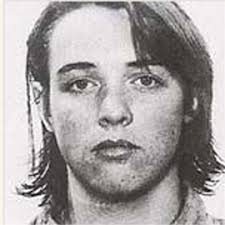
Bobby Finds Hope


Dear Relations and Friends,

I promised in my last open message to let you know if there were any developments on the parole hearing front. There have been some developments of note, and they appear to be significant, at least potentially. While I'm loath to predict what bearing they may ultimately have on my personal circumstances (we've been tricked before!), it does appear at present that the outlook is improving.

Before going into these developments, however, I want to apologize again to Joan for sending her email out in an open message, and to those of you as well who may have been confused upon receiving it. My appreciation for the kind responses that resulted notwithstanding, I regret the error and will be redoubling my efforts to insure that the privacy of persons on my mailing list will not be compromised in the future.

Now back to the parole hearing front. Please take a few minutes to review the attached article from the San Francisco Chronicle. Recapping briefly, several decades ago a misbegotten bit of tough-on-crime legislation put the California governor's office in the thankless position of having to approve each and every parole date granted to an inmate with any version of a life sentence. Needless to say, this made the parole hearing process extremely political, with the result that relatively very few prisoners with "life top" sentences have been paroled in the intervening 27 years, even in cases when the parole board had found the inmate suitable for parole.

As the article states, Gov. Jerry Brown has decided to use the governor's parole-veto option in a manner that is more in keeping with the original legislation - in only rare cases, in other words, when a genuine threat to public safety appears to be evident. Brown's track record to date bears this out. We can only surmise how much the $26 billion state budget shortfall and a federal court order to reduce the state's prison population by 40,000 inmates have influenced the stance he has taken on this issue. Not that this matters. Grace and blessings use what instruments are available.

To boot, the portion of the 2008 legislation that retroactively mandated triple the length of parole denial periods (from 1-to-5 years to 3-to-15 years) has been overturned by the California Court of Appeals. State prosecutors have appealed this decision, of course. Given the strong and persuasive language the court used in its decision to vacate the retroactive portion of the new law it seems unlikely that the state's appeal is anything but a strategy to buy some time.

Assuming that the court's ruling is affirmed by the California Supreme Court, the 5-year denial that resulted in my parole hearing last December will be modified. It seems I will soon need to begin preparing for a parole hearing likely to be scheduled to take place late next year.

The complexion of my situation appears to be changing. I attribute this to the collective power of your supportive intentions and actions on my behalf, for which I remain immensely grateful.

Peace to you all.

Bobby

Wednesday, May 11, 2011

Speaking of Bummer....


He wrote a bunch of other stuff over the last few weeks too...start at the bottom and scroll up

----
Dear J,

It's very nice to hear from you, as your remarks are uplifting and encouraging. Everyone concerned has felt disappointment over what happened in the parole hearing, and this is certainly understandable, but really, it is only a bump in the road. Defeat is in the mind. I will never buy off on the judgment of someone like the commissioner on the parole board who believes, wrongly, that he has the power too impose defeat on someone who appears before him. How absurd!

I will never give up, Joan. And in fact I've decided to file for clemency to the governor. Only because standing my ground is the right thing to do. Whatever the outcome, standing my ground is a duty I have to a higher power.

Meanwhile, my book is coming along. I got past the "mental block" I was struggling with, and the words are now flowing well. It may be catharsis on a grand scale. We'll see.

Please stay in touch.

Bobby
----- Original Message -----
From:
To: bobby@beausoleil.net
Sent: Thursday, April 28, 2011 7:56 PM
Subject: Re: my letter to the parole board's head honch

Dear Bobby and Barbara, I apologize for taking so long to write.

I am very disappointed in the outcome of the so called hearing. We know how corrupt and narrow minded many people can be. I again am very impressed with your attitude and outlook.

I do agree with Barbara in that I don't think you will have a fair shot at these hearings unless people do hear the truth from you. People will only go by what they have heard and read in the media and as you know better than I, it is very one sided and its only goal is to sell regardless of the truth.

I will still hold on to the hope that you will be set free and be reunited with your wife and loved ones outside of prison.

I am grateful for your correspondence and in many ways you will never know how much you have helped me. Anytime I get depressed about my life I think of you and gives me a reality check. I can honestly say I've had a hard life compared to most of the people I come into contact with but I know very well many have it so much worse than I could ever imagine. This makes me feel ashamed at times for feeling alot of the things I feel but I am human and my imperfections are many.

I really appreciated the letter you wrote and I hope we can stay in touch as I do enjoy it find it inspirational.

I wish you and your loved ones all the best. Please take care of yourself. Very Sincerely, Joan

We Interrupt this Blog for an Important Message

This just appeared in my Inbox....

Bobby BeauSoleil’s immortal soundtrack for Lucifer Rising, the legendary film by Kenneth Anger, is now available in digital download format in two versions. White Dog Music has partnered with CD Baby to offer audiophile quality MP3 downloads of these recordings at very special pricing.

LUCIFER RISING, the original motion picture soundtrack, unabridged. Download Now for only $5.99

THE LUCIFER RISING SUITE, the original soundtrack, plus the 1967 version of the soundtrack, plus all of the project recordings. Nearly 3 hours of music. Download Now for only $19.99

Also available for a limited time: THE LUCIFER RISING SUITE Boxed LP Set. We have fewer than 20 copies of this boxed album remaining, so you are urged to act now. This boxed set includes 4 LP disks, each in their own full color sleeves, an extensive booklet with photos, and two large posters. Buy Now for only $54.99


White Dog Music thanks you for supporting Bobby BeauSoleil’s musical endeavors.

Wednesday, April 06, 2011

Bobby Gives Up


I remain deeply grateful for the support I’ve received from all of you, in all the various ways each of you has given it. Some of you have written letters to the Chairman of the California parole board, and I decided to write one to him as well. You can read what I wrote to him below.

With this I am letting go of all this parole hearing business. In the letter I said what I felt there was a need to say regarding the circumstances and fairness (or lack of it) in the hearing, while being fully aware that fairness has become severely marginalized in the justice system of today.

I am fully aware, moreover, that all of this arises out of past actions. Blaming my circumstances will only imprison me in them. The hearing decision is due to become final in April. Resources required for appealing the hearing procedure violations in the courts are unavailable to me, and even if they were there is only a slim chance that such litigation efforts would produce beneficial results. The obvious course, therefore, is to cut my losses and sweep the parole hearing baggage out of my path so I can move ahead with the work there is to be done.

Of course, if there are any significant developments in any of these areas you will hear from me. Thanks again for your love and support.

Peace.

Bobby


Here is what I wrote to . . . .


Robert Doyle, Chairman
California Board of Parole Hearings

Dear Mr. Doyle,

This letter is in regards to my most recent parole hearing, which took place on December 13th 2010.

What occurred in this hearing has deeply troubled me and the people who care about me. While I understand, and fully accept, that the Board of Parole Hearings no longer has a formal appeal process, I feel compelled to bring to your attention the abnormalities that arose in the hearing. In your capacity as the Chairman of the BPH, you may have reasons to share my concerns.

As you probably know, I have been continuously incarcerated for a life crime since August of 1969. Since then I have had about twenty parole hearings, so I’m very familiar with the hearing procedures.

In earlier hearings I was always permitted to make statements relevant to the events and circumstances of the crime, and what significant developments have occurred since that tend to demonstrate acceptance of responsibility and changes in personal orientation. In my hearing this past December I was on several occasions prevented from making statements pertinent to the hearing process. Most egregiously, I was not allowed to finish making a closing statement I had prepared for the hearing. This statement was intended to relate, in terms leaving no uncertainty, my acceptance of responsibility to the victim and remorse for my participation in actions directly resulting in his death.

This dismaying development is inconsistent with my experiences in prior parole hearings. I am unaware of any changes in lifer hearing procedures that would support disallowing an inmate from making statements pertinent to the hearing process.

During his remarks in the decision phase of the hearing, the presiding Commissioner put a great deal of emphasis on crimes I did not participate in, and could not have participated in due to my imprisonment at the time they occurred. Despite there being no allegations ever brought to suggest my involvement in these other crimes, they seem to have been a primary justification for a 5-year denial. In no hearing previous to this one has it been suggested that I should be held to account for crimes I could not have been involved in committing.

I understand that prison inmates with life-top sentences have no entitlement to being granted parole. However, it is also my understanding that inmates appearing before the BPH are entitled to a fair hearing. In light of the foregoing, which is plainly evidenced in the transcript of the hearing, I fail to see how my hearing last December meets even the minimum standard for fairness by any reasonable measure.

R. BeauSoleil
March 23rd 2011

Monday, January 24, 2011

Peace in The Waking World


Dear Friends and Loved Ones,

Our earlier message, in which we provided the address for the California parole board and the name of its chairman, was intended for those among you who might be inclined to write a letter protesting the manner in which my parole hearing last month was conducted. I would not presume to suggest that you write such a letter. We provided the information simply by way of opening an avenue for expressing directly to the chief of parole hearings the disappointment, frustration, critical opinions, indignation, dismay, etc., regarding the hearing that many of you have expressed in writing to me.

Some of you have written to ask for guidance in writing a letter to the parole board. To that I would say, simply, write whatever is on your heart to say . . . or not, as the case may be. Nothing you say to that agency in a letter can do me harm, so, if you write one, be fearless.

I can certainly relate to the frustration and dismay many of you have expressed. To be confronted, after all these years, by such obstinate refusal to examine with honesty and integrity the evidence of my 41 years prison history, and the progression to the mature understanding of my responsibility that it represents, makes the hearing I recently experienced almost completely incomprehensible. The level of prejudice was beyond the pale. That the presiding commissioner would prevent me (twice, in two consecutive hearings) from making a closing statement that would demonstrate my having come to terms with the full magnitude of my responsibility to the man whose life I took and everyone affected by my actions, 41 years ago, makes a mockery of the very definition of a parole hearing.

A transcript of the hearing would be helpful in conveying to you a better sense of what happened. Unfortunately, the hearing record won’t be made available until after the decision in the hearing becomes final. By that time the outside chance that letters might have some influence on the final decision will have passed. The best I can offer is my assurance that what I have related to you is accurate.

There were no holes in the presentation that was prepared for the hearing. This included a comprehensive history of educational, vocational, and insight development programs I’ve availed myself of, all of the work that I’ve done over the years, as well as personal creative endeavors, and long-term involvement in youth outreach. The numerous letters of support from family, friends, citizens of the world community, and corrections officials, included solid employment offers and affirmed residences in two states. There were no new misconducts, and in fact a disciplinary report that had been an issue in the previous hearing had since been expunged from my record in the interest of justice. Since the previous hearing I had even added a couple of new college courses to my resume.

All of this was lost on the presiding commissioner and his assistant. They were obviously more interested in using my hearing to take a remote swipe at Manson, with references to crimes I was in no way involved in, and could not have been involved in, than in giving me a fair hearing on the merits of my own case history.

So, yes, there are some significant reasons for all of us to feel some frustration and dismay at this juncture.

Don’t hesitate to put you views and feelings into writing, if you are inclined to do so. Here, again, is the address:

CDCR – Board of Parole Hearings
ATTN: Robert Doyle, Chairman
P.O. Box 4036
Sacramento, CA 95812-4036

The problem with California’s parole board, it seems to me, is that over the past couple of decades it has increasingly become insulated in the state’s political morass. It won’t hurt the people involved in that agency to be reminded by private citizens – including you citizens in other countries – of the principles they were appointed to uphold.

I was a bit surprised by the resounding response to the reservations I had expressed in my earlier message, in regards to writing my book. Many of you wrote words of encouragement, for which I am grateful. Be assured that I am empowered with fresh resolve to devote my energies to whittling away until the book has fully taken shape, without getting hung up in where the chips may fall. There is a story that must be told and (as more than one of you said) there isn’t anyone else who can do it. Doing what is the right thing to do with dedication to the highest principle naturally means letting go of concerns about perceptions or possible outcomes. Damn the torpedoes!

Peace in the waking world, peace in dreams, peace in the deepest level of being.

Bobby

Monday, December 20, 2010

Energy Sapping


December 16,2010


Sisters and brothers, family, loved ones, friends . . .

The parole hearing occurred last Monday (Dec 13), as scheduled. It was an energy sapping experience. In the several days since then I have put my focus on restoring my energy levels and marshalling my thoughts for what I would say to you now. Keeping all of you in suspense was not my intent. I just needed to catch my breath, so to speak.

On the face of it the hearing did not go well at all. The best place to begin describing what happened is with a brief recap of my last hearing two years ago, because what happened this week was a carryover from that hearing.

The presiding parole board commissioner in the 2008 hearing was an unwavering adherent to the most grotesque pop culture rendition of the Manson mythology, who avowed to being “personally offended” by some of the rhetoric Manson has been described as espousing back in the sixties. I dislike making judgments of other people every bit as much as I dislike having judgments, misjudgments or prejudgments, applied to me. So I will confine this account to a characterization: Imagine a man with his fingers in his ears, blinders on his eyes, and his mouth moving unceasingly with fatuous refusal to brook any point of view but his own. There is just no breaking through such a density of egoism. To have one’s personal situation be at the mercy of that sort of willful ignorance is no easy thing to accept.

The 2008 hearing resulted in a five-year denial of parole. The hearing commissioner was determined to apply a new law that tripled the parole denial periods allowed under California law beyond what they had been, even though the new law had not yet been enacted. A few months later I learned that I had become the beneficiary of a class action lawsuit that I didn’t even know had been filed, challenging the premature application of the new law. The five-year denial in my 2008 hearing was modified to a two-year denial.

Attorney Steven Moretz volunteered, on a friendship basis, to represent me in the 2010 hearing. He is a good man, and a competent lawyer, and I was moved to accept his offer.

I was encouraged to make an all-out effort in preparation for this hearing. Steve spent uncounted hours researching the records and meticulously preparing a presentation for the hearing that included an accounting of all of my skills, accomplishments, community resources and support. Numerous letters (close to fifty) were received from my relations, friends, media industry professionals, and Oregon DOC administrators who have worked with me for many years – collectively making a powerful statement – and these were compiled into an impressive packet of supporting exhibits. I wrote myself notes for points that I wanted to raise during the hearing, and prepared a closing statement expressing my acceptance of responsibility for the choices I made and the actions I committed that exacted such a heavy price.

Last Monday morning my hearing was delayed about 40 minutes because the commissioner who had been scheduled to conduct the hearing – a fair man, reputedly – was replaced, literally at the last minute, by the same commissioner who had chaired the 2008 hearing. Again the fingers in the ears, the blinders the fatuous mouthings of unctuous gibberish. Frequently during the hearing, relevant remarks I attempted to offer were suppressed. Again, as in the 2008 hearing, I was not permitted to make the closing statement I had prepared. And at the end, with dogmatic references to crimes I was not and could not have been in any way involved in, the commissioner re-invoked that once-thwarted five year denial.

Although I made a commitment to put my best effort forward for this hearing, I did so without expectations, without hope, without fear. Consequently, my spirit is not crushed by the outcome. I am experiencing some disappointment, however. For many years I have held the belief that at some point the determination of circumstances would come into an arena where saner, more reasonable minds would prevail. At this point I’m wondering if holding onto such a belief is naïve.

My lawyer went at his preparations for the hearing, and the hearing itself, with an eye to taking the matter on appeal to the courts in the event I was not granted parole this time. I’m not an attorney, but it seems to me that the violations of due process in this hearing were so egregious that the record will easily support an effective writ. Taking something like this into court and following through carries significant expense, however, beyond what I can manage with the resources I currently have available to me. If anyone has any ideas about how I can earn some cash to pursue this relief, I’m open to suggestions.

My partner Barbara has told me many times, for years and years, that she believes I will not see the outside of a prison until I finish writing my book, and publish it, as a way of distinguishing myself from the popular mythology relating to that guy whose name we don’t need to mention again. This presents a problem for me on multiple levels. As much as I would love to do the one thing that would likely please my beloved Barbara the most, the notion of subordinating the creative process to the purpose of manipulating opinion to make conditions more favorable for my release on parole rubs my fur the wrong way. Right now, though, I’m thinking that I need to stop struggling to get clear on my motives to write my book, and just write the damn thing.

So this is how things stand at present. Like all things in this world, appearances are subject to change without notice.

I am grateful beyond words for the rich outpouring of love and support, positive energy and good thoughts that came my way in recent months. Truly, this is the real hearing for me, all the endorsement I could ever need. Please don’t feel badly about the outcome of the hearing. The fat lady ain’t sung yet. And anyway, I am not my body, and my freedom is not subject to the conditions that my body must undergo. This is true for all of us.

With peace and best wishes for the holidays.

Bobby

Tuesday, December 14, 2010

Bobby Fucked Again


Charles Manson follower Bobby Beausoleil denied parole again in killing of musician Gary Hinman. Should 'family' members ever be freed?

Once again, the state Board of Parole has rejected efforts by a Charles Manson follower to be released from prison.

The latest move came Monday and involved Bobby Beausoleil, 63. According to the Associated Press: "He was arrested for the murder of musician Gary Hinman in August 1969. Beausoleil was convicted of Hinman's murder in 1970 and sentenced to death. The sentence was commuted to life when the California Supreme Court found the death penalty unconstitutional in 1972."

The issue of whether Manson family members should ever be released from prison came up in 2008 when Susan Atkins, who was terminally ill, asked for her freedom. Officials rejected her bid, and she died in prison.

At the time, some people said the Manson murders were so horrific that the perpetrators should never be released. Do you agree? Share your views.

---------------

A state parole board panel denied parole Monday for former Charles Manson follower Robert Beausoleil, who was among those convicted of a musician's 1969 stabbing death.

A two-member panel from the California Board of Parole Hearings issued a five-year denial, who was last denied parole in December 2008, according to Deputy District Attorney Patrick Sequeira.

Beausoleil was initially sentenced to death for the July 26, 1969, slaying of Gary Hinman in his Topanga Canyon home. But his sentence -- along with those of Manson and a number of his followers -- was later commuted to life in prison following a U.S. Supreme Court ruling on new requirements for capital cases.

Manson and many of his other former followers, who have repeatedly been denied parole, remain behind bars.

Saturday, November 20, 2010

ITEMS!


Item- Does anyone want me to keep tearing apart that shitty screenplay by Scott Kosar? I haven't gotten very many comments about it so maybe no one gives a shit. It isn't like the film will ever come out.

Item- Did you get your Bobby Parole Letters in yet? Deadline is in a few days.

Item- Brenda is not happy with evil liz. Personally, my worldview is that Cats is the queen whose feet I am not worthy of touching. Liz hates Cats. Therefore Liz is insane. But I am not sure why she pissed off Brenda. Does anyone CARE what she is doing these days? I don't. I just want to know why TLB happened. I suspect Brenda has some ideas, but she isn't the link to the solution. Good luck Liz, be careful opening the door.

Item- The new Charlie book is delayed a few weeks. Somehow I don't think I'll learn much new.

Item- Anyone hear anything about a Charlie film that some kids in Wales were gonna shoot? Talk about authenticity!

Later !

Thursday, November 11, 2010

Godspeed Bummer Bob


Dear Family and Friends,

A brief update . . .

My parole hearing is rapidly approaching. In my earlier email notice about the hearing I failed to actually mention when it would occur, and a few of you have expressed concern that the window of opportunity to write a letter for the hearing may already have closed. Sorry for the oversight!

There is still time to get a letter in, if you are so inclined, and if you have not done so already, but not much. The hearing is scheduled for Monday morning December 13th. For a letter to be submitted to the hearing panel within the time constraints it will need to be received by my attorney no later than November 23rd. Here is the address again, for convenience.

Law Offices of Steven E. Moretz
PO Box 455
Victorville, CA 92393-0455

To those of you who have already sent letters, my heartfelt gratitude. If you have not heard from me personally by now, you will soon.

I'm feeling strong. Regardless of what the outcome of the hearing turns out to be, my integrity will not be shaken. I am putting my best effort forward, and that's what counts.

With peace in my heart, and peace to you,

Bobby

Wednesday, March 18, 2009

Bobby's Five Year Denial


Finally connected with Bobby... I don't have the transcripts but his position seems to be that basically Prop 9 fucked him. This was a CA ballot initiative that among other things allows the Parole Board to max out your delays at will. As a "Mansonite" Bobby got fucked again.

From what we learn on the nets the law seems to be redundant and was funded by a billionaire now accused of felony drug conspiracy.

Thats what I know until we get the transcripts.

Friday, December 26, 2008

Denial !


Bobby gets the worse denial I have ever heard. A denial of hope.

I hope he sues these guys against the wall.


Discuss.

Thursday, December 18, 2008

Debra the Whale Flips Again


If you believe the evil Mark Turner whose site seldom gets updated anymore (and most of which is now inferior to the Bret site) Debra JUST found out that Bobby was having a parole hearing in a few days. Of course, Bret's site reported this weeks ago. It seems she wants the public, or at least some internet dicks, to write emails in a hurry saying he shouldn't be let go.

I mean what the fuck man?! Did Bobby do something to Sharon Tate that I missed? He was in a jail when TLB happened. Where does she get off stating this? Bitch was disinherited by her family and disowned because she was a lying psycho. She still refuses to bury her father's ashes as per his wishes. I think she takes them out and talks to them or some shit. From what I hear, Dad never forgave her when he learned she used to run around naked at the age of 16 with ~~~~, the drug dealing ~~~ in her sister's ~~~~. Is that why she was disowned? Why do Patti's kids never converse with their own Aunt? Doris and Patti never interfered in the parole hearings of people that didn't attack them. I used to goad crazy Jimmy about Leslie, but if one takes TLB as one event, well then Leslie was part of TLB. She just was. Bobby wasn't.

Now I'm not deluded. I wrote a letter of support for Bobby once. I like the guy. But I think he's probably screwed as a "Mansonite". I hope he gets out. But it isn't likely. So what is with this Debra shit anyway? More attention whoring?

Let me clarify some of this rant for a second. She can do whatever she wants. But I ask why? Why not focus on the right people? You lose the moral high ground when you attack EVERYONE. Not that she ever had any high ground to begin with.

I would be thrilled if Bobby got paroled. But there's zero chance. Go ahead Mark, write your letter.

What could it possibly say anyway? "Hi I run a site called Charliemanson.com. If Bobby Beausoleil gets out he might come after me for some of the shit I wrote about him. Please keep him locked up. I am 1/3547th Hinman by marriage. Thank you." I mean sheeeit!

[just in case anyone cares, the preceding is my constitutionally protected fucking opinion. Maybe everything above is just bullshit. Take it seriously. Or not. But ever since Adam Gabriel's lawyer-by-night threatened to sue me for the truth back in June, I gots to be careful. People can't read very well.]

Saturday, January 12, 2008

Sway


'Sway' by Zachary Lazar

A novel conjures a powerful prism in which to view the potent, still-rippling contradictions of the late '60s.

By Mark Rozzo LA TIMES

January 6, 2008

Sway

A Novel

Zachary Lazar

Little, Brown: 260 pp., $23.99

"HE was a pain in the arse, quite honestly," Keith Richards said not long ago of his late bandmate Brian Jones, with whom he, along with Mick Jagger, founded the Rolling Stones in the early 1960s. Amazingly, Jones -- the troubled blond waif who played a Vox Phantom Teardrop guitar as well as an untold number of exotic instruments on a slew of Stones records -- still has the power to rile people up: By name alone, the prolific indie band Brian Jonestown Massacre (a subject of the surprisingly resonant 2004 documentary "Dig!") suggests an enduring cultish fascination with the doomed musician, who was found dead in his swimming pool on July 3, 1969.

"Sway," Zachary Lazar's second novel (after 1998's "Aaron, Approximately"), places a fictionalized Jones in the midst of a triumvirate even more uneasy than the one completed by Richards and Jagger. By highlighting the little-known links among Jones; Kenneth Anger, the notorious filmmaker behind such oddball, darkly camp creations as "Kustom Kar Kommandos" and "Inauguration of the Pleasure Dome" (he is also the author of "Hollywood Babylon"); and Bobby Beausoleil, the would-be California rock star who became Charles Manson's murderous yes-man, Lazar has created a powerful, infernal prism through which to view the potent, still-rippling contradictions of the late '60s. It's no mean feat. Despite the era's nearly impossible richness, fresh insights are hard to come by. (Witness, if you must, Tom Brokaw's recent prime-time retread, "1968.")

In Lazar's telling, Jones, Beausoleil and Anger turn out to be strange mirrors of one another: compelling, sometimes annoying personalities driven by the times, making the most of its catch-as-catch-can hipster opportunism; spirited dabblers whose ambitions are thwarted or dwarfed by their cohorts in a period of zooming possibility; dreamers whose divergent fates -- death, prison, survival -- illustrate how the decade's long and winding road forked into many paths, not all of them leading to happiness or enlightenment or money-minting commemorative world tours. The connections that Lazar forges are not entirely whimsical, either: The Stones were apparently introduced to Anger's work through the London gallery owner Robert Fraser, a.k.a. Groovy Bob. And Anger did, in fact, cast an unknown Beausoleil as the Lucifer figure in his short film "Invocation of My Demon Brother." (Jagger would score the film.)

Told in appropriately kaleidoscopic episodes that veer from Los Angeles to London and beyond, "Sway" opens with a lazy afternoon at what seems to be the Spahn Ranch above Chatsworth, the Manson family's preferred hide-out, circa 1969. The ragged collection of hippies and Brentwood runaways holed up there doesn't make much of an impression on the wayward Beausoleil, a good-looking kid who briefly played with Arthur Lee before that Angeleno legend went on to form Love.

"It was like a lot of other places he'd been in the past two years," Lazar's narrator observes, in the first of many evocative passages that sum up the times. "[E]verywhere along the coast now there were groups of young people with nowhere to go and no money to spend. It was as if they were living in a fort or a tree house." But as with any fort or treehouse, there needs to be a bully. Here, it is Manson himself, who has an eerie way of getting inside Beausoleil's head: "Not bad," Manson tells his skittish sidekick when they take a drive to break into a house in Benedict Canyon. "Just driving around on a Thursday, getting high. Why don't you just cool off and relax?"

There's nothing relaxing, of course, about those words, which echo throughout "Sway." Lazar ingeniously elevates this innocuous catchphrase of the era to the level of creepy mantra. Similar words are tossed at an increasingly unstable Jones in 1967, after the famous drug raid on Richards' country house and during the Stones' subsequent journey to Marrakech. Anger uses them when coaxing his straight subjects -- including Beausoleil -- to appear in his homoerotic films. And, most famously, they're uttered by Jagger at Altamont on Dec. 6, 1969, as Manson and his followers faced murder indictments: "Everybody just cool out," the caped singer pleads, while nearby a member of the local Hells Angels kills a pistol-wielding black teenager in the crowd.

Meanwhile, we follow Anger's course from an L.A. childhood in which he gravitates toward an Aleister Crowley-esque text called "The Sephiroth" and experiences terror at any thought of the future. A sensitive boy growing up in a not particularly gay-sensitive time, he realizes that "people like him ended up living in residence hotels. They worked as floorwalkers in department stores, cooked their meals on a hot plate." As Anger embarks on his singular career -- cobbling together films that win the attention of Jean Cocteau (and eventually inspire the likes of David Lynch and John Waters) -- we find that he shares with Jones and Beausoleil an outcast quality that will become emblematic of the 1960s: "Everyone under thirty has decided that they're an exception -- a musician, a runaway, an artist, a star." (Variations on this riff turn up throughout.)

Perhaps the most compelling of Lazar's three intertwining story lines is that of Jones and his bandmates. We first find them in 1962, huddling in their squalid Edith Grove flat with their filthy socks drying on a radiator and struggling to work their way through the simplest of Chuck Berry songs. Jones is the glue that bonds the creative partnership of Richards and Jagger. As he teaches Jagger harmonica and steers the nascent Stones through their paces, we come to understand that this young man -- already a father -- will never again have so much power in the band. Jones is there at the crucial moment of inception: "They're trying to be serious and sarcastic at the same time." It's a duality -- adroitly pinpointed by Lazar -- that expresses so much of the '60s, which were as much about the idea of the put-on as they were about the celebration of innocence.

Lazar's vision of the Stones at their genesis is echoed in another haunting guitar-strumming scene in which Beausoleil attempts to accompany Manson's musical ramblings. Like the Stones, particularly Jagger, Lazar's Manson has a "way of miming his emotions, acting them out so that they came across as artificial and sincere at that same time." Connections like this abound in "Sway." If they sometimes feel forced, they are almost always pleasantly jarring: In the murdered Sharon Tate, we find a doppelgänger for Anita Pallenberg, Jones' imperious German girlfriend, who endures his beatings until finally leaving him for Richards, a blow that may have led to his death. In their brazen invasiveness, the Manson break-ins resemble the various police roustings of the Stones. And the bikers of Anger's cinematic and erotic fascinations resurface, in decidedly hellish form, at Altamont.

Then, of course, there's the spirit of Lucifer, who binds it all together: For Anger, he is the Satan of Blake, "a god of light, a child god, the fallen angel . . . finally coming back." But as the decade slouches toward its bummer of a conclusion, Lucifer reverts from red-hot symbol of Eros to grim avatar of Thanatos: Lazar's crowning irony is to reveal how the revolutionary '60s unraveled under the heel of a retrograde Satan. "That was how the Lucifer role had played itself out," Anger notes with a shudder when he hears that Beausoleil has turned cold-blooded killer. And he looks on with amazement while the Stones struggle, much as they did back in their cold flat, to lay down "Sympathy for the Devil," the ultimate invocation of the demon. "They spoke of evils wrought by humanity in the sway of a sly, sophisticated con man who in the end was just a bewildering reflection of themselves." In "Sway," the fun-house '60s are nothing so much as a hell of mirrors. *

Their Satanic Majesties

SWAY

255 pp. Little, Brown & Company. $23.99.

By Zachary Lazar.

With its motifs of homosexuality, Satan worship, drug addiction, promiscuity, nihilism and general decadence, Zachary Lazar’s superb second novel, “Sway,” reads like your parents’ nightmare idea of what would happen to you if you fell under the spell of rock ’n’ roll.

That’s not to say Lazar has produced a cautionary tale. He sees the novelist’s job as understanding and conveying experience before judging it. And yet “Sway,” a study in amorality, is itself the work of a clear- and sometimes cold-eyed moralist. Lazar has taken territory, the 60s, where the individual blades of grass have long been trampled into the mud by legions of literary, sociological and critical boots, and found something new. What he evokes is unlikely to please either those who condemn the decade as a body blow to decency and authority, or those who celebrate it as a trippy carnival of raised consciousness and experimentation. Lazar’s is a book that has no time for preconceived ideas, that tells the reader exactly the things likely to disturb any cozy notions. He’s a bad-news bear and thus the most valuable kind of cultural commentator.

“Sway” is an elegant and intricate novel that switches between three stories whose players eventually intersect. The stories are that of the Rolling Stones, from their inception as a group of scruffy English R & B enthusiasts to Altamont; the repressed, closeted upbringing of the director Kenneth Anger, whose tamped-down obsession with devil worship and the homoerotic side of rebel glamour burst forth in underground films like “Fireworks” and “Scorpio Rising”; and Bobby Beausoleil, a sometime dealer and aspiring musician, one of the pretty, not especially talented young people who descended on Los Angeles in time to catch the implosion of the ’60s counterculture. Beausoleil lived on the fringes of the Manson family and, at 22, received a death sentence (later commuted to life) for the murder of Gary Hinman, another associate of the group.

It’s not the intersections that matter so much here — the Stones being filmed for Anger’s “Invocation of My Demon Brother”; Beausoleil becoming one of Anger’s lovers and starring in the filmmaker’s “Lucifer Rising” — as the way the three stories echo one another. “Sway” is the tale of people separated by miles or class or intellect or possibilities of escape, all mining the same dark vein.

Too many novelists and critics and not-too-bright pundits have used the Manson murders and Altamont as convenient symbols for the collapse of the ’60s. What differentiates “Sway” from that ready-made sound-bite pessimism is that in Lazar’s view, those events are something like the decade’s fulfillment.

This is a novel about the ’60s in which the great political upheavals, the Berkeley Free Speech Movement, civil rights, Vietnam and the assassinations are barely mentioned. The Beatles, who stood for the greatest sustained explosion of the utopian ideal in all of pop, are dismissed by one character as a group “from Liverpool of all places.” In contrast to the love-and-peace ethos the decade is remembered for, every early Stones gig here ends with a fight. Crowds seem to pack Midlands blues clubs for the sheer pleasure of trying to beat up the band. In “Sway” the freedom that is often vaunted as the cri de coeur of the ’60s is entirely stripped of its communal ideal. It is, instead, a way for people who have always felt themselves on the outside not to feel they have to fit in. It’s a freedom that can result in “Street Fighting Man” or “Scorpio Rising,” or in a group of murderous hippies invading two homes and slaughtering the inhabitants on the orders of a petty thief and failed rock star. Freedom, Lazar is saying, does not inevitably result in noble aspirations.

Lazar has taken a decade spoken of as being about movements and groups and tribes, and given sway to the isolate and the solitary. Brian Jones watches as the group he began is usurped by Keith Richards, the guitarist who barely speaks to anyone, and the singer, Mick Jagger, a student at the London School of Economics who seems a middle-class poseur. For all Anger’s acclaim he might still be the lonely boy in California trolling the docks. Beausoleil holds himself suspiciously apart from the Manson clan.

Lazar’s view of the Stones echoes the English music critic Simon Frith’s 1979 essay on the band in the collection “Stranded,” in which he identifies them as “petit bourgeois jesters, who’ve taken delight in standing morality on its head but retained a touchy egotism, a contempt for the masses that they share with any respectable small shopkeeper. Their rebellion has been a grand gesture, an aesthetic style without a social core.” Or, to put it another way, they will be helicoptered out of Altamont, leaving the terrified masses below on their own.

And yet, Lazar is not unconscious of a touch of heroism in the Stones’ adventure. You don’t compose “Gimme Shelter,” a living elegy for the decade that made you, possessed of both grandeur and dread, if your gaze is entirely inward. The song’s “every man for himself” ethos is not a rejection of compassion but the hardest realism possible, a blunt assessment of everyone’s chances in the aftermath of an era striking an iceberg. But Lazar is conscious of the price for abandoning adventurousness. The absent presence in the novel’s coda — a 2002 encounter between two people who inexplicably survived the era, Anger and Anita Pallenberg — is the Stones themselves, moneyed irrelevancies shortly to appear on another of their rumored final tours.

If there is a literary antecedent to “Sway” it’s Gordon Burn’s 1991 novel “Alma,” a masterpiece that provides another view of the era and is the greatest novel ever about pop culture. Its real kin, in ambience if not method, is Donald Cammell and Nicolas Roeg’s 1970 film “Performance,” in which Jagger starred. Like that picture, this brilliant novel is about what’s to be found in the shadows, the most terrifying crannies of twisted souls, the darkest gleaming gems.


Review: '60s icons of Lazar's 'Sway' embody the energy of the era

Saturday, January 12, 2008

Sway

By Zachary Lazar

LITTLE, BROWN; 255 PAGES; $23.99

Energy is eternal delight," wrote William Blake in "The Marriage of Heaven and Hell." This declaration serves as an epigraph to "Sway," Zachary Lazar's compelling second novel. Plunging his readers into '60s counterculture, Lazar merges episodes from the lives of the Rolling Stones, the Manson family and experimental filmmaker Kenneth Anger. But the novel's central character is that era's strange energy. Lazar's real-life figures are emblematic of a fascinating cultural shift: Something was being born, yet no one could say quite what it was or where it was headed. The energy Lazar evokes was far more powerful than any individual. Impersonal, indefinable, thrilling and dangerous, it seized people and brought them just to the brink - if they were lucky - of chaos.

Anger was already pushing 40 by this time. His 1947 film, "Fireworks" - a dark and hilarious fever dream of sadomasochism and maybe the first great moment of gay cinema - won the admiration of Jean Cocteau. In 1964, Anger caused a sensation in the underground circuit. "Scorpio Rising," an anti-narrative stream of images involving biker gangs, drugs, gay and straight sexuality, Christianity and fascism, revealed Anger as an unparalleled chronicler of countercultures (Martin Scorsese and countless others have since imitated the film's combination of pop soundtrack and sheer kineticism). Steeped in the occult and obsessed with a private system of mythology to rival Blake's, Anger wanted to show "how the world was changing" with his next film, "Lucifer Rising." Anger's Lucifer, Lazar writes, "was a god of light, a child god, the fallen angel who after two thousand years of repression was finally coming back. He was the god of desire, illicit desire, the liberator, the revelator."

Initially cast as Lucifer, Bobby Beausoleil was a charming, beautiful musician with whom the director soon became infatuated. When the young man departed for Los Angeles in the early stages of filming, Anger waited in vain for him to return. In "Sway," Anger tries to persuade Mick Jagger, fresh from recording "Sympathy for the Devil," to take the role; Anger eventually made the film with someone else altogether. Ever resourceful, Anger saved his footage of Beausoleil and used it in his disturbing 1969 reflection of America in turmoil, "Invocation of My Demon Brother," which was scored by Jagger and includes brief footage of the Rolling Stones performing. In July 1969, Brian Jones - who had recently been fired from the Stones - died in his swimming pool. Beausoleil, meanwhile, had drifted into the Manson clan; he was arrested for murder in August. The Stones' disastrous free concert at Altamont, at which the Hells Angels killed a concertgoer, took place in December of that year.

Lazar offers several convincing sketches of the band in its early years. At first, Jagger's "chief talent ... is a lack of embarrassment"; onstage, "[t]he noises he makes have nothing to do with singing. But his sheer persistence is a provocation because it's clear that he isn't joking." Eventually, the band elicits enthusiasm that it neither anticipates nor understands: "The sound the girls make is the strangest they've ever heard, not the high screech of adulation but an eerily sexual keen, a thickening moan. ... Every gesture they make now is magnified, triggering panic and exaltation. ... They don't realize they're even making a gesture until the screams get louder, and then they have to just accept it: they're performing, they're putting on a show."

On their triumphant second tour of the States - after they've ditched Jones - the band is well aware of its effect. Lazar's depiction of this music's bacchic appeal is as deft and persuasive as any I've encountered:

"It was a series of vibrations amplified through electric circuits, a current of sound the crowd could feel on the skin beneath their hair, in the cavities of their chests, in their rectums and their groins. It registered in their bodies, in the pulse of their blood, but also in their minds, the part that was always changing, as senseless and illogical as a dream. The band was making sounds, the sounds were coming from the stage, but they were no longer themselves, the people in the crowd were no longer themselves, no one was even thinking about it anymore. They might be a nobody from Romford with the wrong kind of accent, or a mechanic's son with ruined teeth, or they might think all the time about what people had and what they were missing out on, but nobody was thinking about any of that while they were in its grasp. It was basic, energy and sound, life intensified for a few moments, its chaos made plain, the self slipping outside the body, joined in sound to other bodies. It was a feeling everyone had always craved, had always been warned about, a connection to something like the deeper self that used to be called the soul."

Lazar's first novel, the semiautobiographical "Aaron, Approximately," was published nearly 10 years ago. It's too early to pronounce "Sway" a departure - it's too early to say who Lazar is, exactly - but the two books share little beyond a taste for nonlinear narrative. One could object that the Maysles brothers have already documented the road to Altamont in "Gimme Shelter," or that Lazar borrows too heavily from the mosaic approach to storytelling favored by postmodern filmmakers such as Alejandro González Iñárritu ("Amores Perros," "Babel"). But such complaints are forgotten as one succumbs to this richly imagined, hauntingly vivid novel, wherein everyone falls under the sway of someone or something, the culture itself appears spellbound and the pursuit of self finds ironic culmination in the loss of identity.